

Since my late teens and early twenties, I have been a student of the economy. At first, I thought macroeconomics was almost everything you needed to understand how the real world worked.
Then, while completing my business studies abroad in my early twenties, I realized that macro was not enough. Corporate finance provided the missing bridge between economic forces and what actually happens inside companies: how capital is allocated, how businesses make decisions, and how those decisions ultimately shape markets.
But my perspective changed again in my late twenties, when I completely shifted my career into technology and went deep into the mechanics of software startups. I began to understand that technology was not simply another variable inside the economic system. Technological progress follows highly nonlinear dynamics. Adoption moves through S-curves, new capabilities compound, bottlenecks shift, and what initially looks like a micro-level change can eventually reshape industries, capital markets, and the macroeconomy itself.
Over the last decade, my view has therefore become much more nuanced. Macro, finance, business, and technology are not separate systems. They are different layers of the same system, continuously feeding back into one another.
This book, part of the Business Engineer’s foundational curriculum, is an attempt to bring those layers together. It explains how the Web Economy evolved into the AI Economy, and why, once a technological cycle becomes large enough to turn into a supercycle, the distinction between micro and macro begins to break down. Technology shapes companies, companies shape capital allocation, capital accelerates technology, and the resulting feedback loops begin to reshape the economy itself.
AI arrived on top of thirty years of web: the infrastructure, the data, the behavior, and the distribution that three decades of the internet economy built. It compounds that web rather than replacing it.
The relationship runs both ways. The web produced the corpus the models were trained on and the channels through which they reach a billion people; the models now ride the web’s rails and produce revenue curves in a year that the web’s own giants needed a decade to build.
That compounding is the paradigm this Library calls Web Squared, and it has a financial signature the era’s disclosures make plain. The demand does not have to be assembled because the web already assembled it; and the first industries transformed are the web-native ones, search, social, publishing, software, cloud, because they hold the substrate intelligence multiplies.
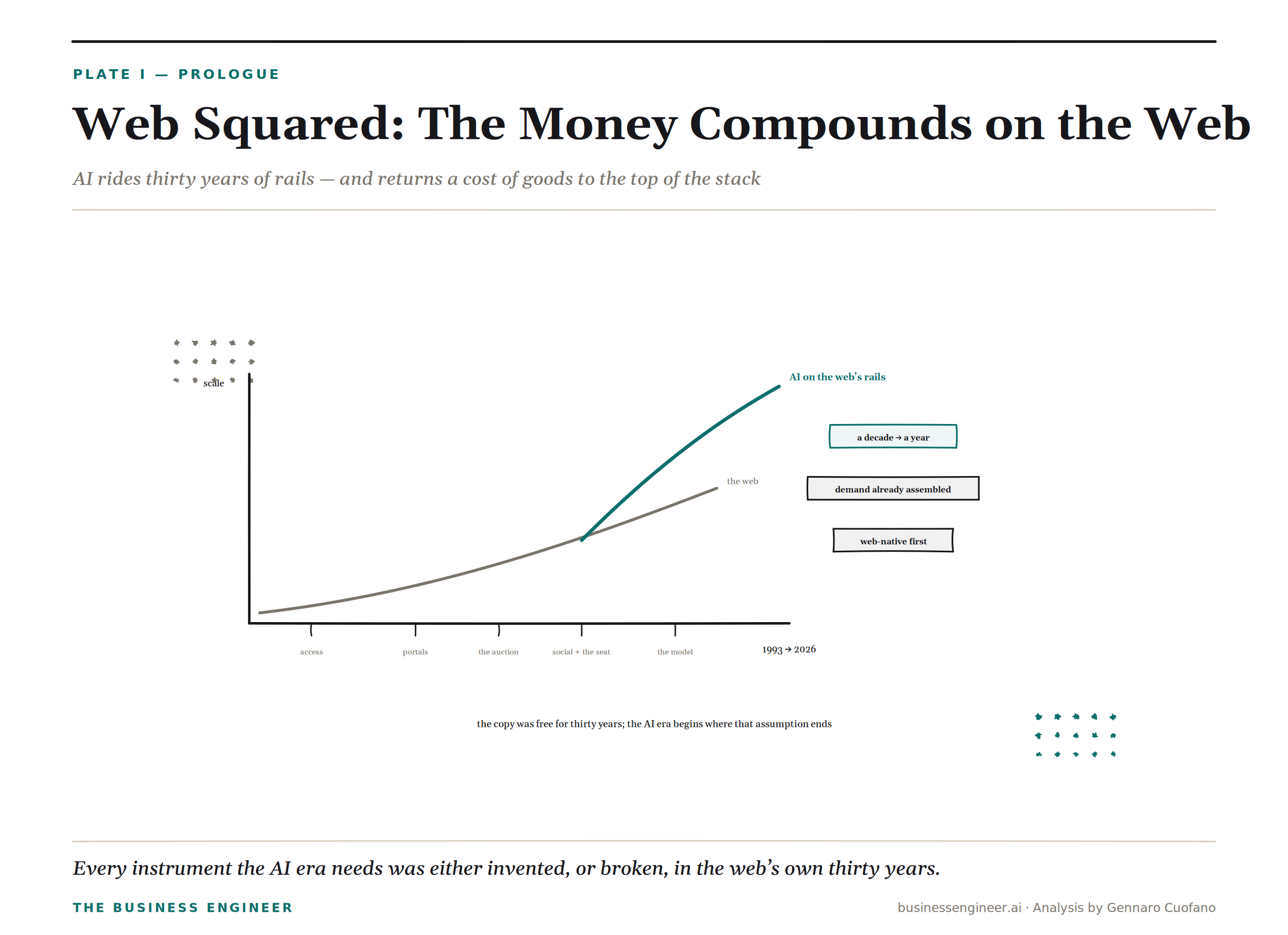
But the money moves differently this time, and the difference is the subject of this volume. The web’s economics were built on a copy that cost nothing to serve; the AI era’s are built on a unit of work that costs something to produce. That single fact reverses the order in which the financial statements change: the cost line moves before the revenue line.
It also returns to the top of the stack the physics the software era had forgotten: cost of goods, depreciation, capital committed ahead of demand. The right way to read this era’s money is therefore historical.
Every instrument the AI era needs was either invented or broken in the web’s own thirty years, and the book begins there, with a dial-up modem and a subscription.
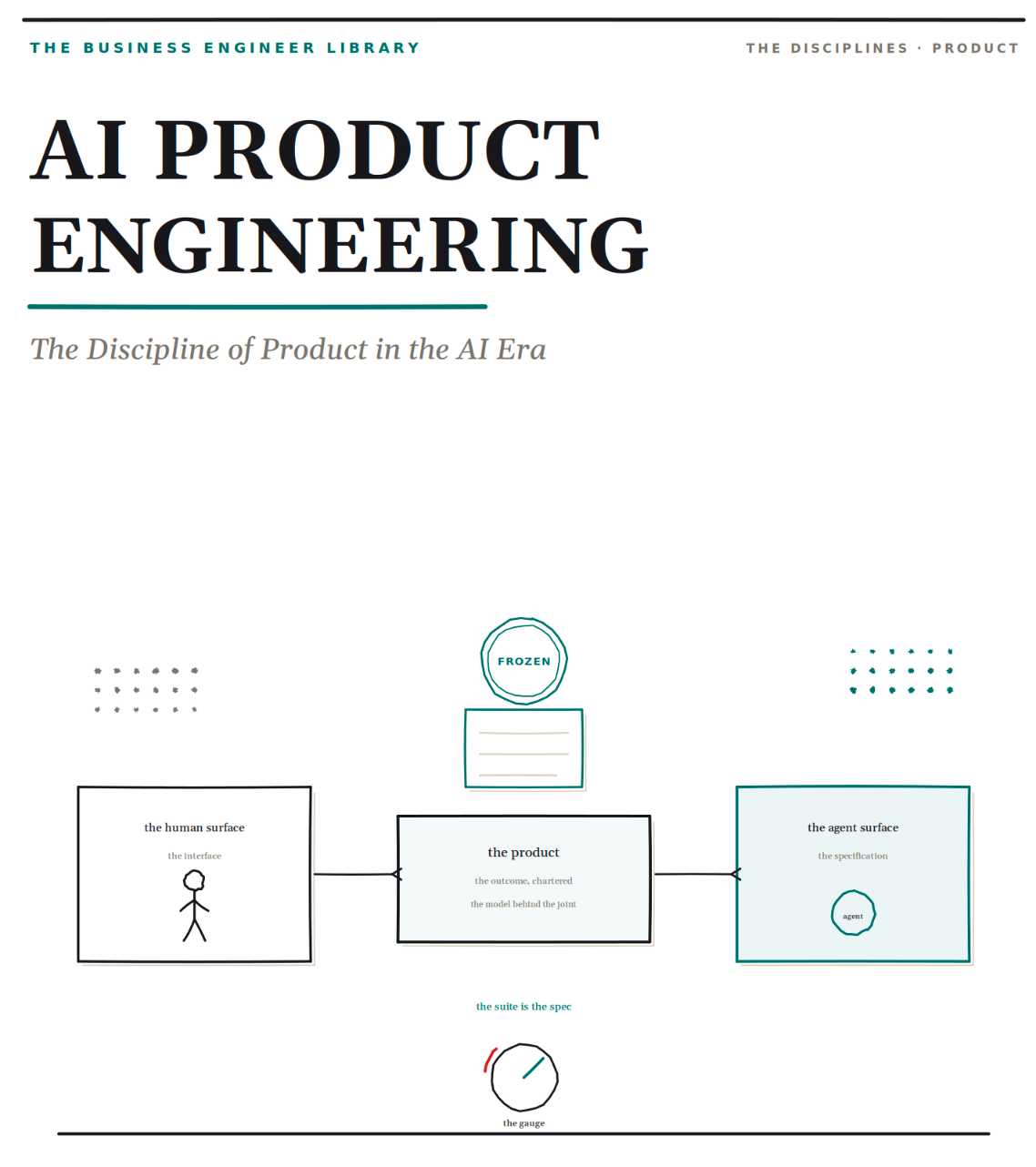
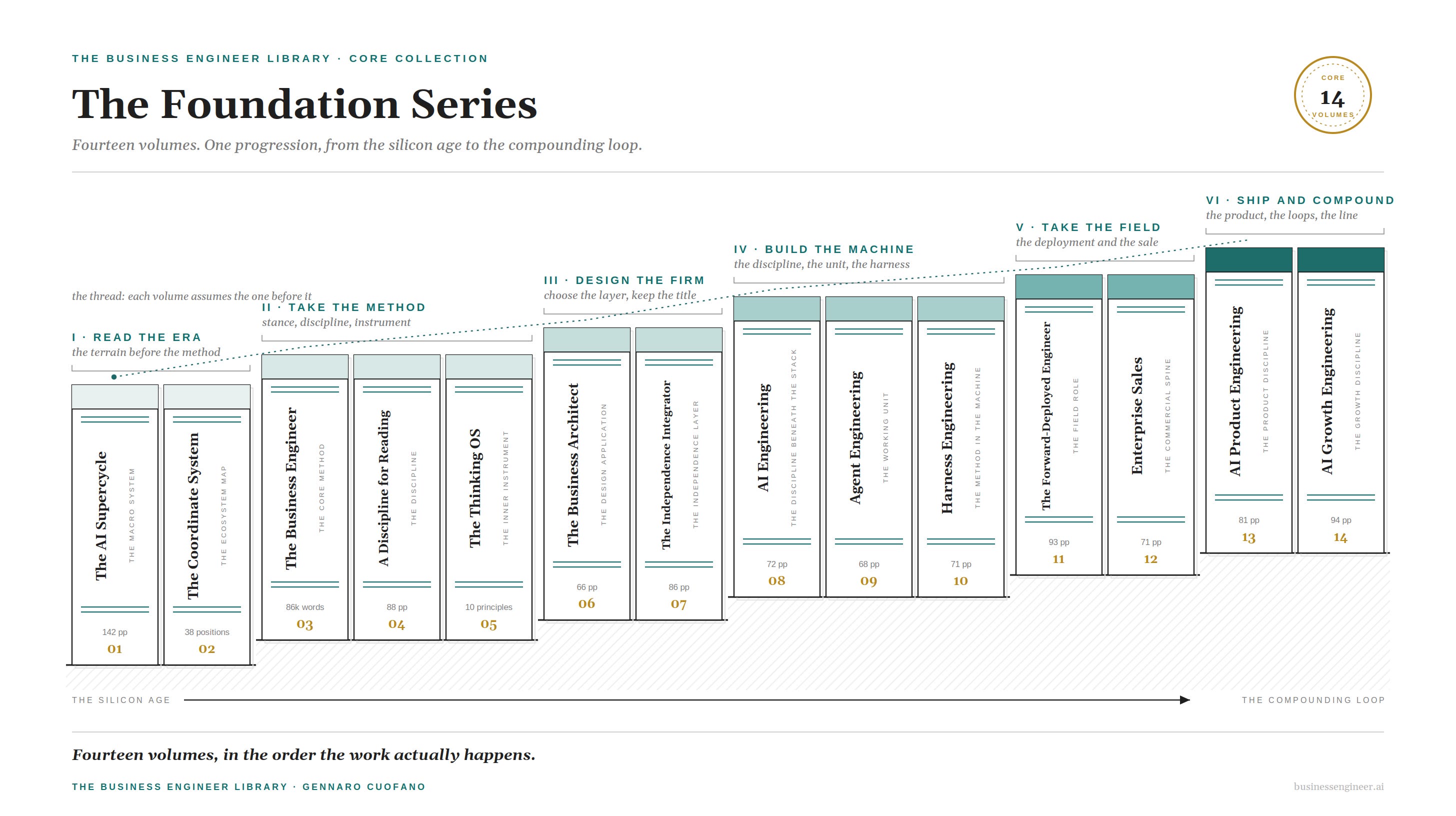
For the last three years, I’ve been rebuilding the Business Engineer’s curriculum from the ground up. That curriculum has now become the foundation of a new discipline, with the entire series taking shape around it.
If you’re already a paid member, simply reply to this email, and we’ll send it your way.