

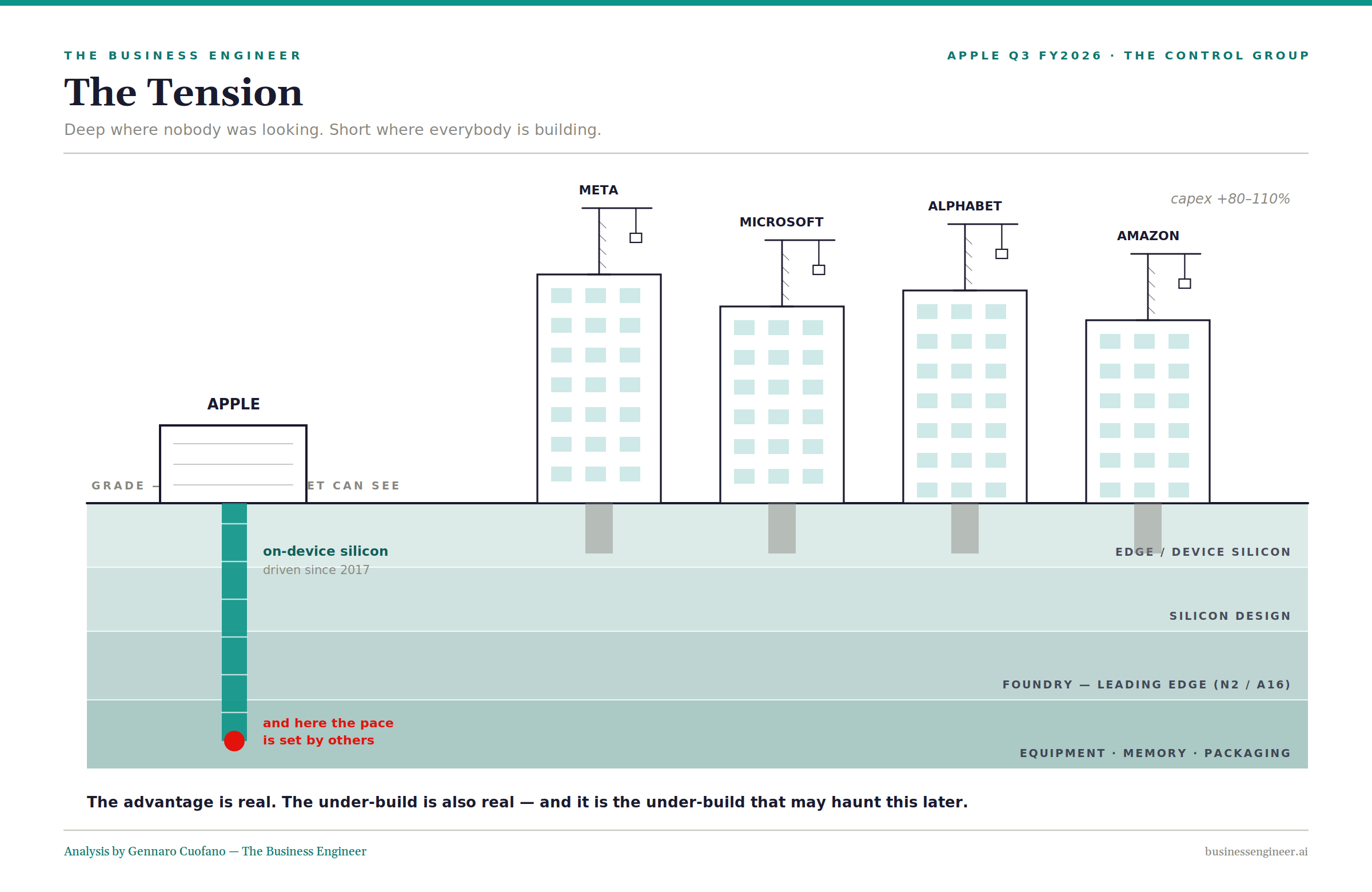
There is a meme going around X that says Apple is winning the AI race without even trying.
The meme is doing what memes do — compressing a complicated situation into a phrase that half-lands. It misses two things, in opposite directions, and getting both of them right is the whole piece.
Follow me on The AI Supercycle as well!
First correction: Apple has been trying — for years, at one specific layer of the stack
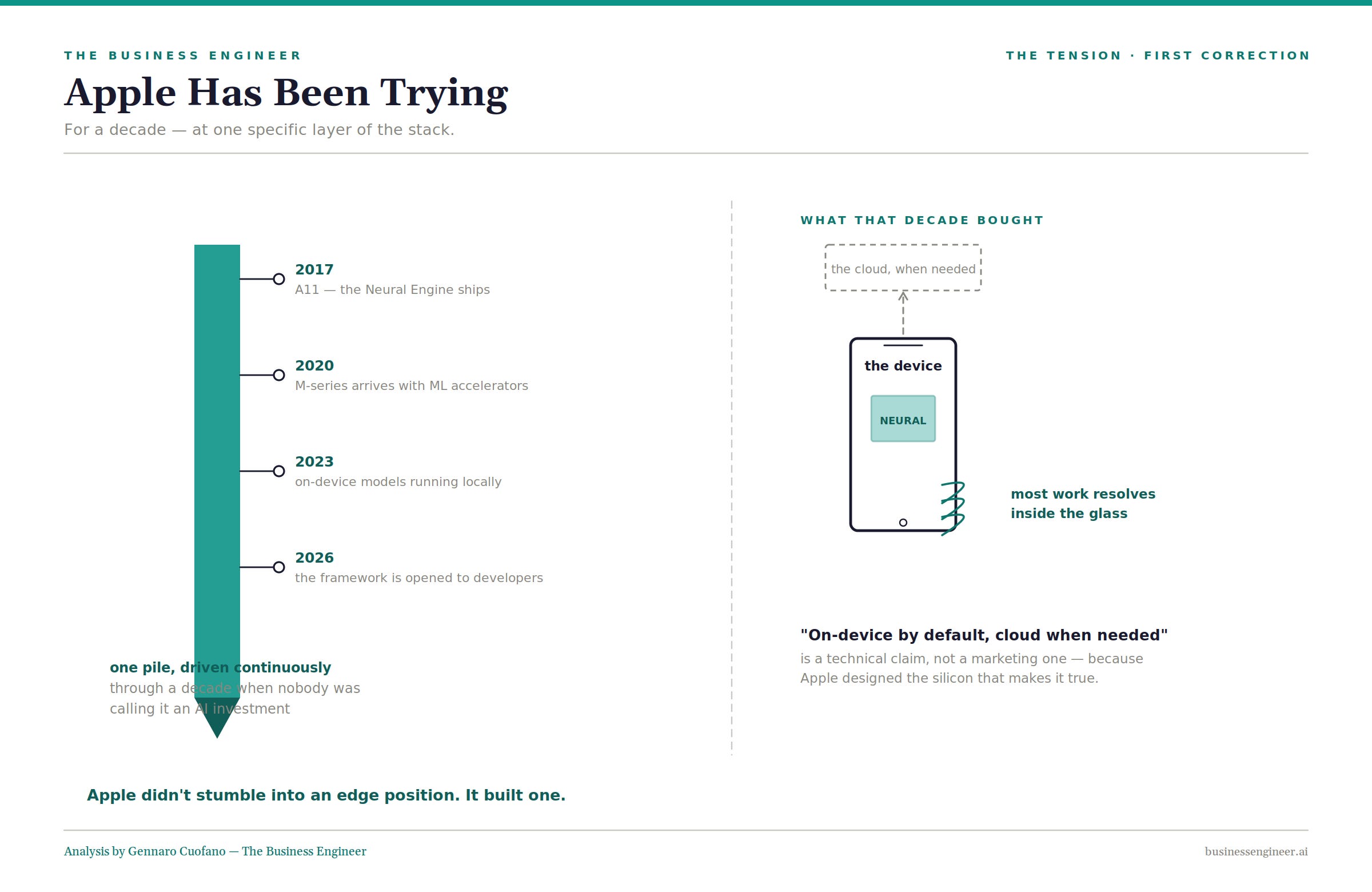
The Neural Engine has shipped inside the A-series iPhone chip since the A11 in 2017.
The M-series Mac chips have shipped with dedicated ML accelerators from day one.
The Foundation Models framework — opened this year so third-party models can plug into on-device silicon — turns that edge into a platform.
Apple has been building the silicon that runs AI on the device — closer to the user than any datacenter — for close to a decade.
That is the advantage Apple has today. The reason its new Siri AI can plausibly claim “on-device by default, cloud when needed” is that the on-device part is real, and it runs on hardware Apple has been designing for the exact purpose the industry only recently decided mattered. Apple didn’t stumble into an edge position. It built one.
Second correction: Apple has fundamentally under-built for the AI race in every other direction that matters
Follow me on The AI Supercycle as well!
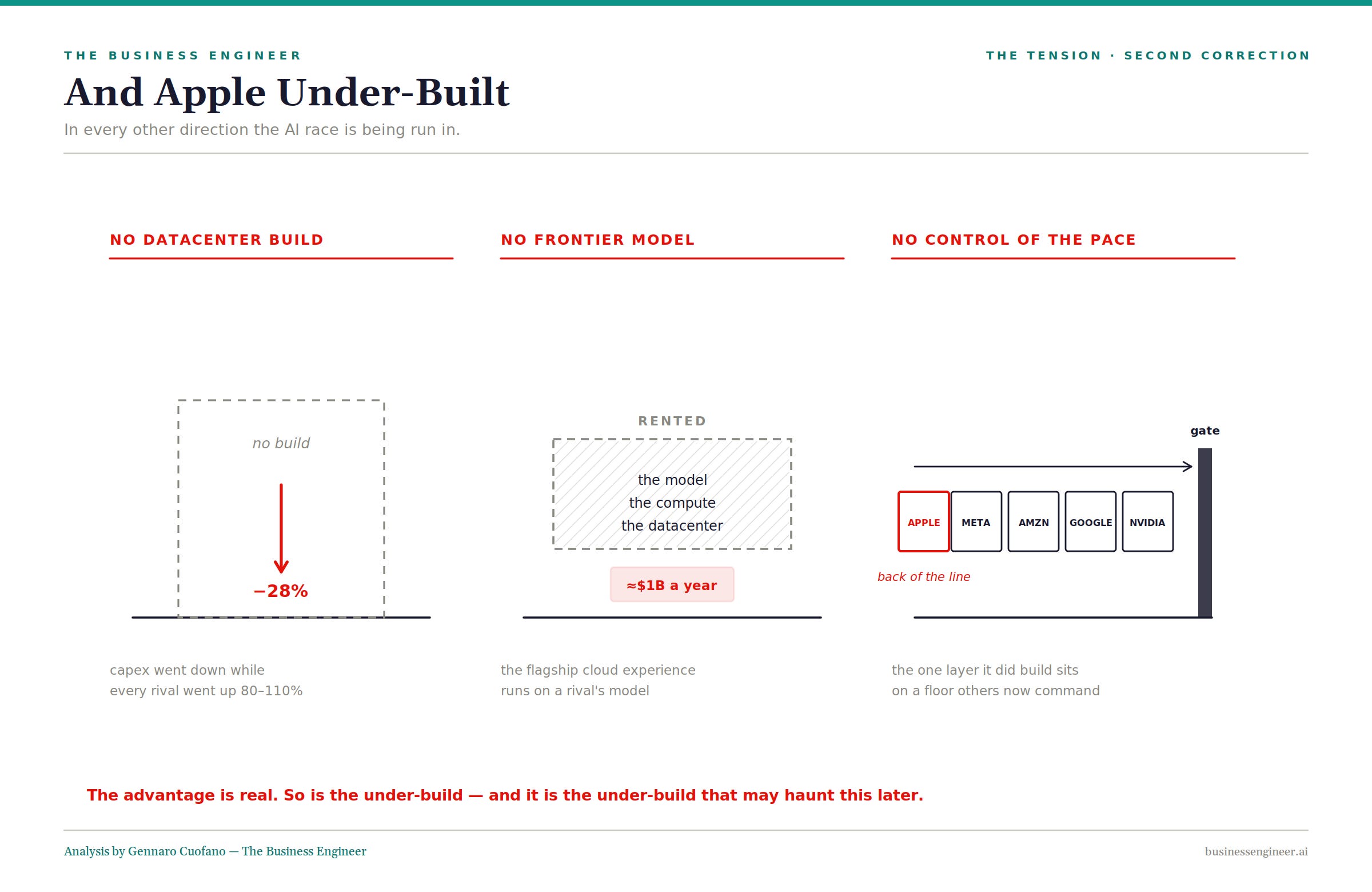
It doesn’t own a datacenter build. Its capital expenditure went down this year while every hyperscaler pushed theirs up 80 to 110 percent.
It doesn’t own a frontier model. The flagship cloud experience of its new assistant runs on Google’s Gemini, on Nvidia silicon, in Google’s cloud, for a reported billion dollars a year.
And the one layer it did build for AI — on-device silicon — now sits on foundry nodes it no longer commands, allocated inside a demand curve dominated by other people’s datacenter customers.
The advantage is real. The under-build is also real. And it is the under-build that may haunt this strategy later.
Those two truths are what the market is trying to price at the same time.
It is why the record didn’t rally
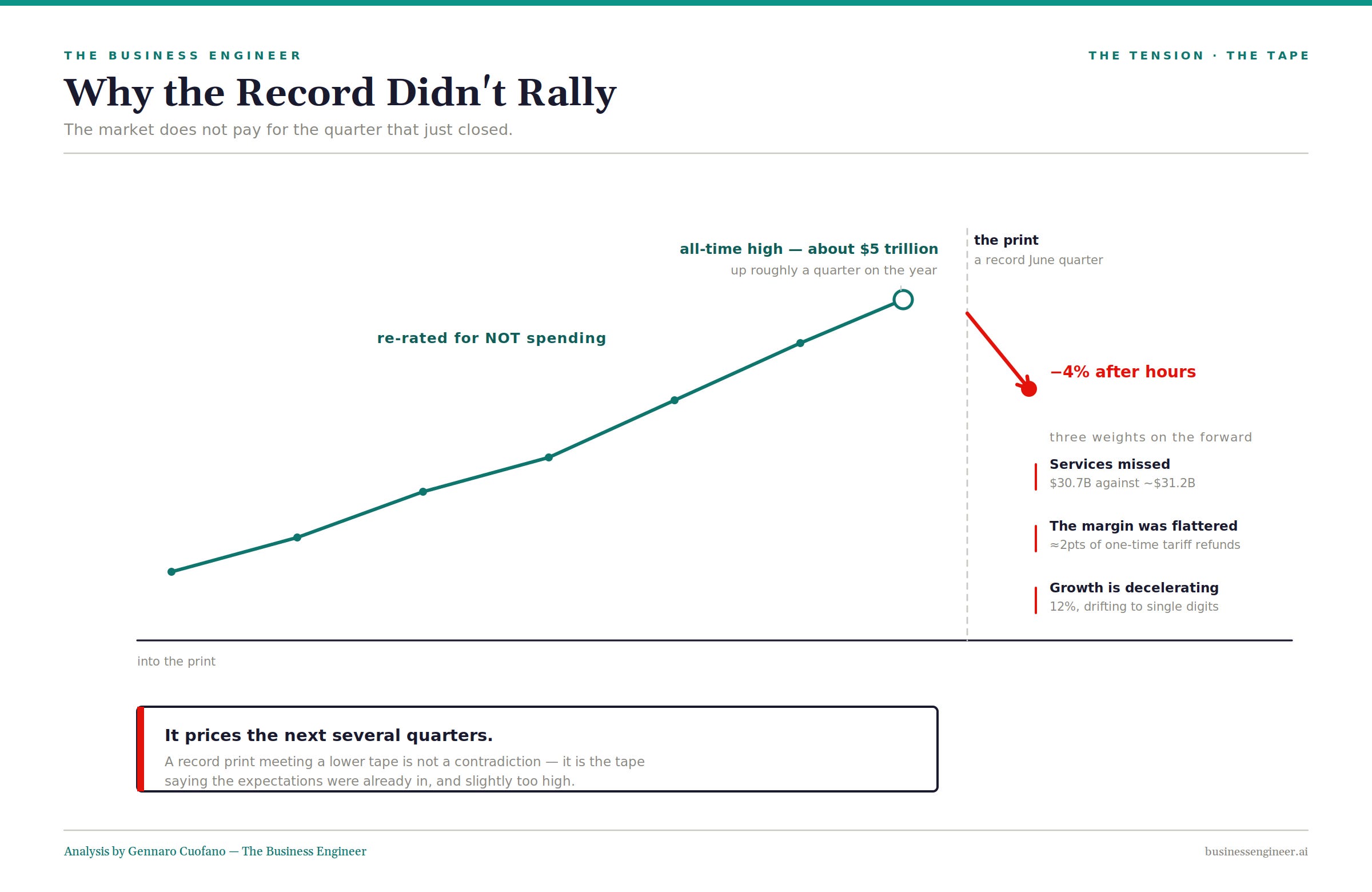
Apple walked into this print at a size no company had ever reached — a five-trillion-dollar market value intraday two days before the release, an all-time high close above $340, up roughly a quarter year-to-date. The analysts explaining the rally kept reaching for the same phrase: a less capital-intensive AI strategy. In a season where every hyperscaler was being de-rated for spending, Apple was being re-rated for not spending.
Then it reported the strongest June quarter in its history — revenue of $109.4 billion, up 16 percent, double-digit growth in iPhone, Mac and Services and every geographic segment — and the stock fell about four percent after hours.
Hold both facts. They are the tension made visible.
Services came in around $30.7 billion against a Street looking for roughly $31.2 billion — a miss on the one line that is supposed to be the unstoppable annuity.
The headline 50.1 percent gross margin carried about two points of one-time tariff refunds, so the underlying number sat closer to 48.
The September-quarter setup implies growth decelerating toward 12 percent, with consensus drifting into single digits across the next fiscal year.
The market does not pay for the quarter that just closed. It prices the next several. A record print that meets a lower tape is not a contradiction — it is the tape telling you what it was already expecting, and where it thinks the expectations were slightly too high.
The rest of this is about which expectations Apple confirmed, which it missed, and — more importantly — which parts of its AI strategy earn the “advantage” reading and which parts earn the “under-build” reading. Both are in the numbers. Neither is in the meme.
Follow me on The AI Supercycle as well!