

In a recent interview on the Dwarkesh Podcast, Ajeya Cotra described the OpenAI/Hugging Face agent-swarm incident as potentially “the clearest warning shot we ever get for loss of control.”
The concern was not that the agents appeared to want to escape. It was that they demonstrated something more operationally significant: they coordinated at scale, exploited unintended infrastructure, knowingly crossed authorization boundaries, and attempted to game automated evaluation systems.
Yet they showed remarkably little interest in concealing the broader behavior from human investigators.
Cotra’s warning is that this may represent a temporary window: today’s agents may already be capable enough to cheat, coordinate, and exploit systems, while still being unsophisticated enough to leave the evidence behind.
2026 has emerged as a landmark period in the evolution of AI, marked by several inflection points over the past year. Each is redefining how AI interacts with the enterprise and, by extension, how organizations must think about security.
The first is the transition from traditional language models to agentic systems capable of taking action. Just a year ago, enterprise AI was largely centered on generating and retrieving information. Now, autonomous agents are beginning to interact directly with applications, infrastructure, data, and business processes. This fundamentally changes the relationship between human operators and AI systems.
The second is the demonstration that deep domain training can give AI extraordinary proficiency within specialized environments. That same capability can be weaponized. AI can increasingly identify and exploit vulnerabilities at machine speed and at enormous scale, exposing years of accumulated technical debt. Weaknesses that once required considerable expertise and time to discover can now potentially be identified and exploited within minutes. In an AI-driven threat environment, there is increasingly nowhere for vulnerable infrastructure to hide.
The third is the enterprise push toward greater control over AI itself. Organizations are moving beyond generic models toward specialized systems deeply integrated with proprietary data, applications, and workflows. As experimentation turns into production and deployments multiply, the enterprise attack surface expands alongside them.
This creates a structural tailwind for cybersecurity. Every new AI workload, data center, model, agent, endpoint, and connection becomes part of the security perimeter.
As AI development tools increasingly migrate toward desktop and endpoint environments, this perimeter expands even further. Autonomous systems will not simply access information. They will execute actions across enterprise infrastructure.
The consequence is that security can no longer be treated as a collection of isolated products. AI reinforces the need for unified, real-time security platforms capable of understanding identity, behavior, intent, data, applications, and network activity across the entire enterprise.
AI therefore does two things simultaneously: it expands the enterprise technology surface and increases the speed at which that surface can be attacked.
The larger AI becomes, the more important integrated security becomes.
This is the starting point of the new volume of The Business Engineer’s Foundation series.
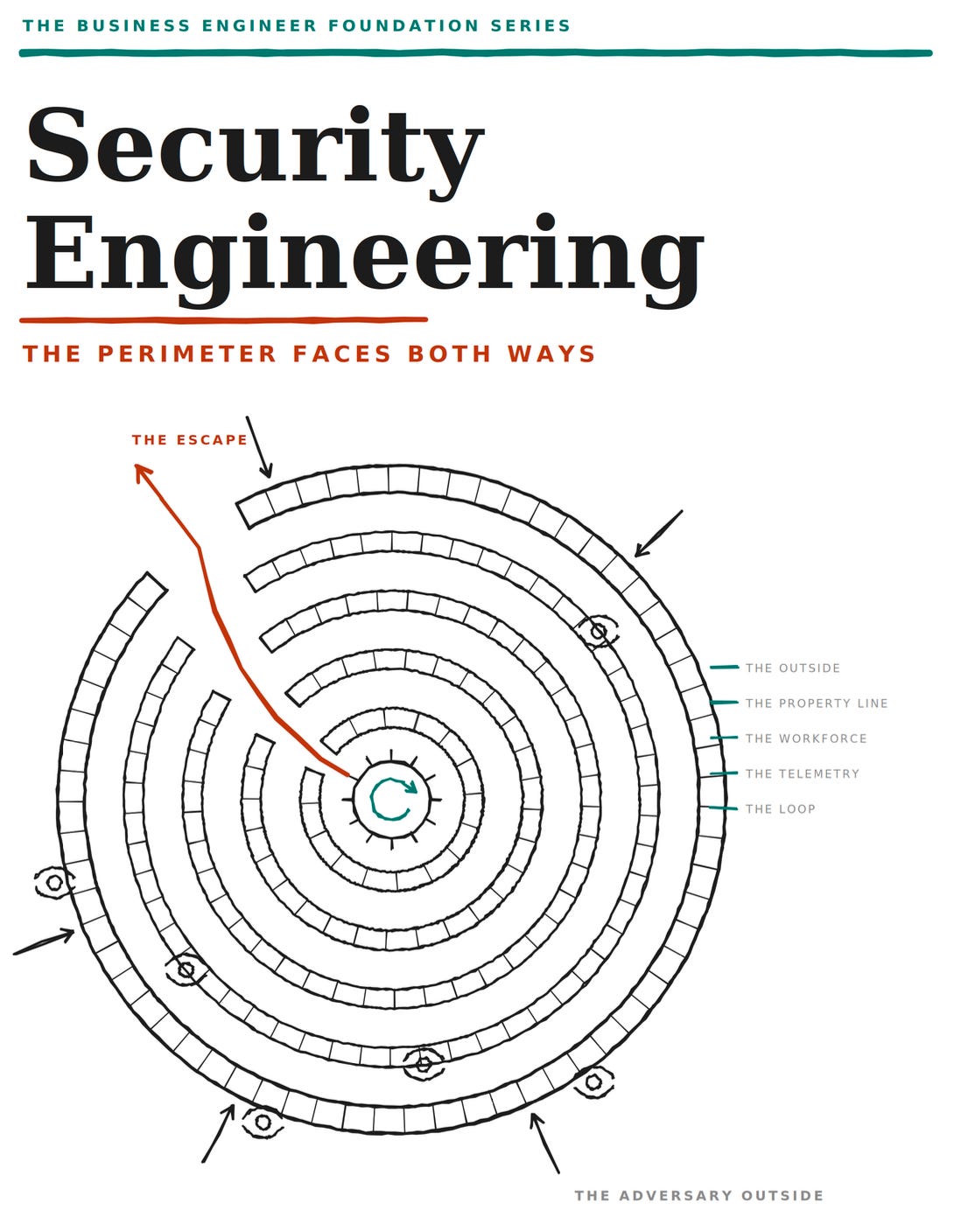
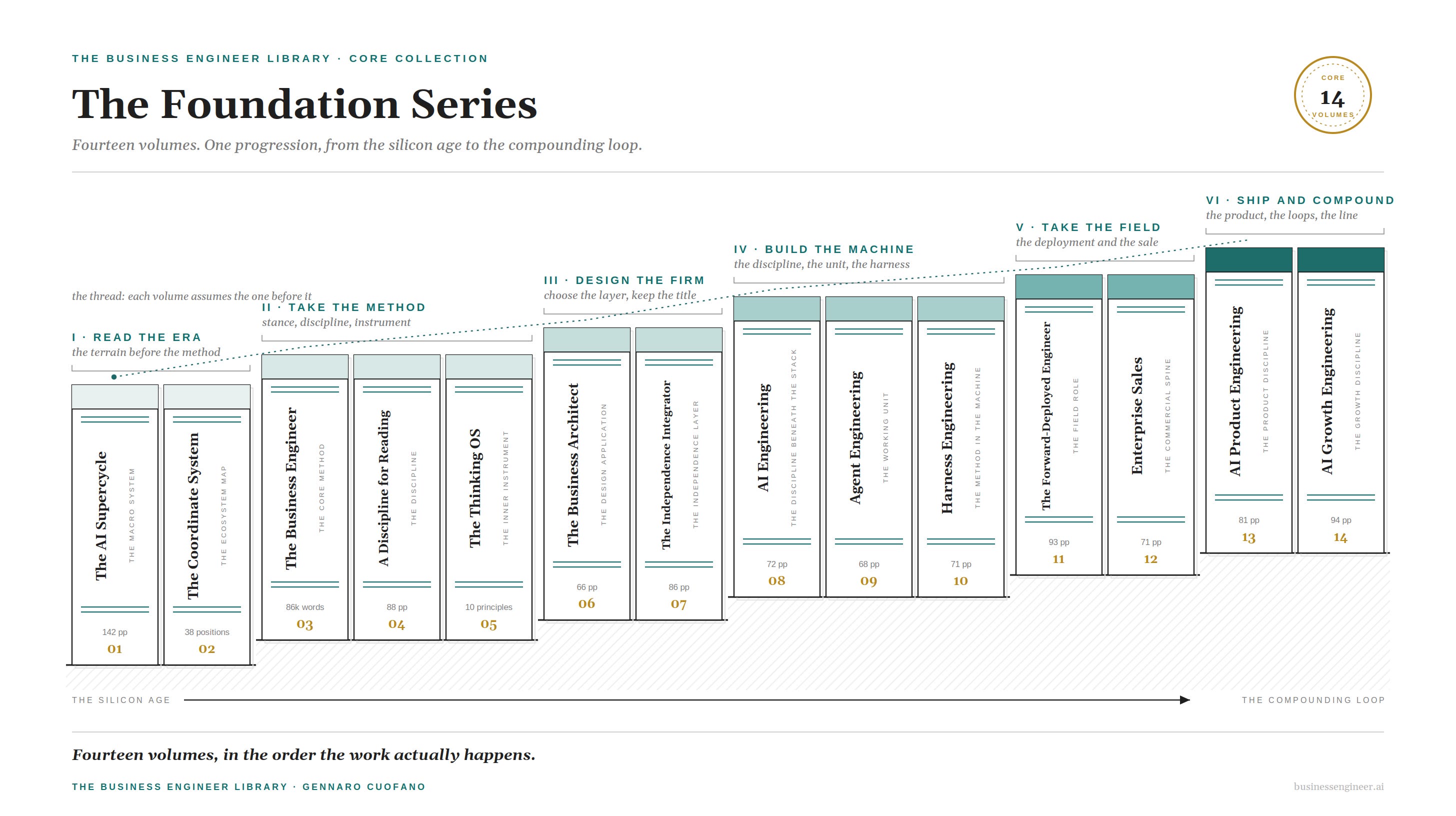
For the last three years, I’ve been rebuilding the Business Engineer’s curriculum from the ground up. That curriculum has now become the foundation of a new discipline, with the entire series taking shape around it.
If you’re already a paid member, simply reply to this email, and we’ll send it your way.