
For almost four years, the development of the AI industry followed a fairly simple assumption: the market would be dominated by closed models. OpenAI established the pattern, Anthropic reinforced it, and together they came to define much of the enterprise market. For a while, it was easy to believe that the question had been settled.
Then DeepSeek changed the picture.
The DeepSeek moment showed that a certain class of open-weight model could compete on cost, capability, and deployability in ways that mattered to enterprises. Through 2026, that opening became harder to ignore. More capable open models arrived, serving infrastructure improved, hosting became easier, and enterprises gained more credible alternatives to a purely closed-model stack.
The picture today is therefore much more nuanced. Closed models still dominate important parts of the market, particularly at the frontier. But open weights are no longer a peripheral alternative. They are becoming part of the production architecture itself.
To understand what changed, we need to separate the different layers: capability, economics, infrastructure, control, and ultimately who captures the value.
In August 2026, open-weight models processed 56% of all tokens on Vercel’s AI Gateway, up from 7% in December 2025. OpenRouter reported a similar pattern, with open models accounting for roughly 60% of US-originating token consumption during the same period. Those percentages are not market share for the entire AI industry. Gateway data sees the workloads routed through those platforms, not every direct API contract, consumer subscription, private deployment, local model, or enterprise agreement.
The reverse is also true: commercial gateways miss some open-model usage precisely because open weights can run privately. The numbers are therefore neither a census nor a curiosity. They tell us something narrower and still important: within major production environments designed around model choice, open weights have moved from experimentation into real production infrastructure.
The more important change, however, is not that open models crossed 50% of token volume. It is what has happened around those models. A model can now be trained by one organization, served by another, routed through a third, embedded inside a fourth company’s product, and specialized by a fifth for an enterprise customer. Training, serving, distribution, customization, and application delivery no longer have to sit inside the same company.
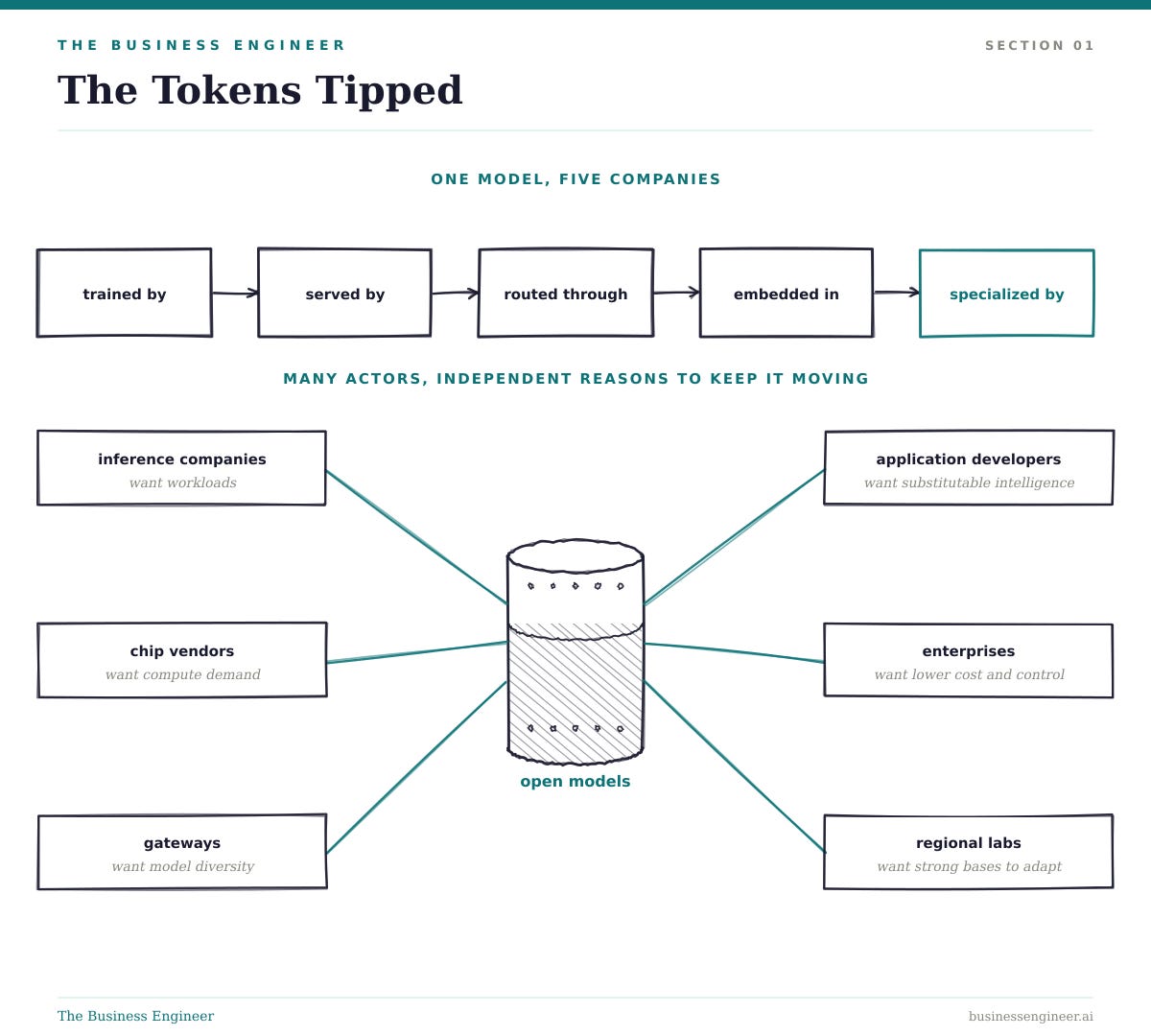
That separation is what makes the current cycle different. For years, the trajectory of open AI depended heavily on whether one or two large organizations continued releasing competitive weights. If Meta slowed Llama, or another major lab changed strategy, the open frontier could lose momentum. Today, many more actors have independent reasons to keep it moving: inference companies want workloads, chip vendors want compute demand, gateways want model diversity, application developers want substitutable intelligence, enterprises want lower costs and greater control, and regional labs want strong bases they can adapt rather than retrain from scratch.
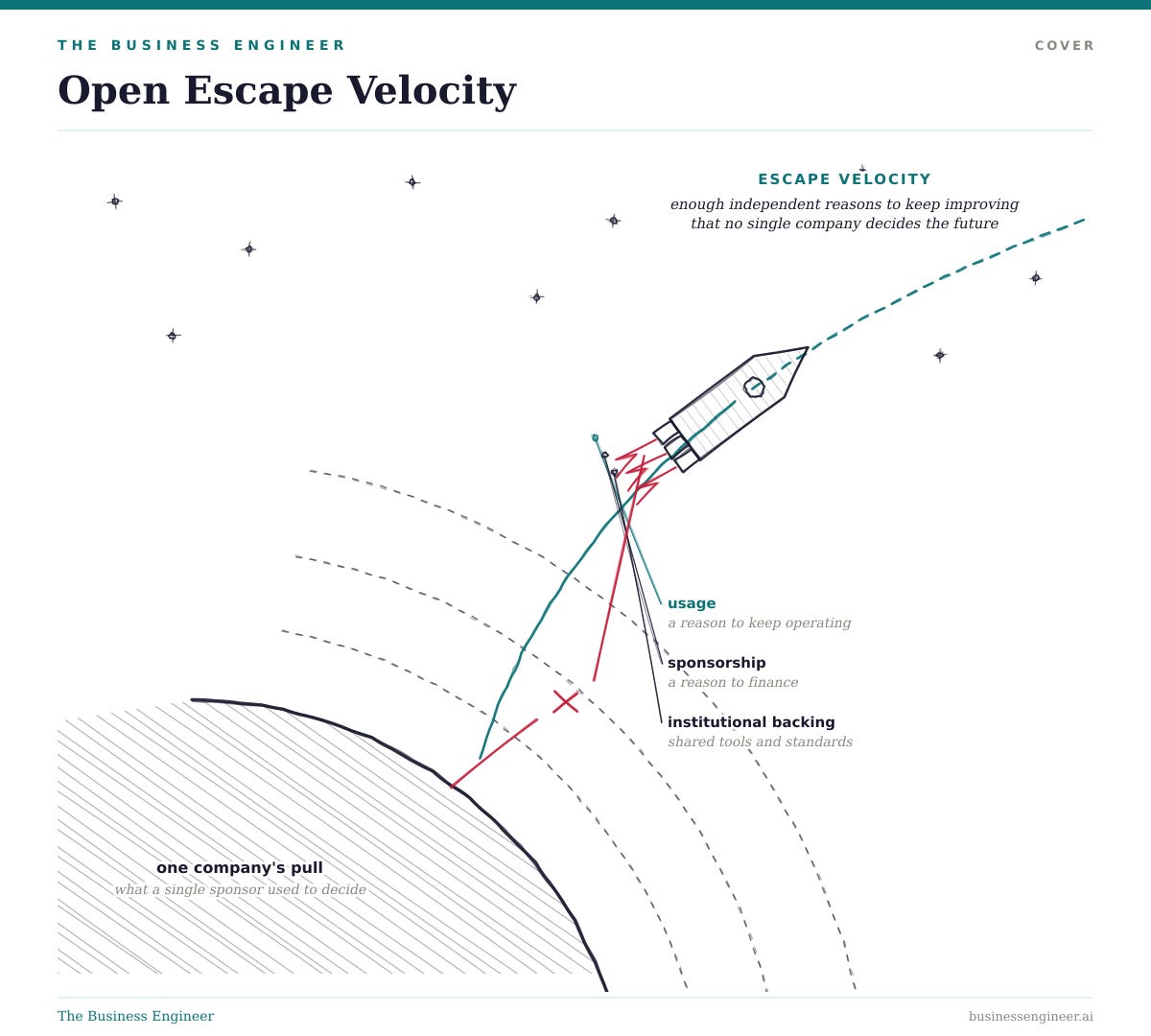
This is what I mean by open escape velocity. Not that open models have defeated closed models. Not that every dependency has disappeared. And not that the ecosystem is already economically self-sufficient. The stronger claim is that open AI is beginning to develop enough independent sources of demand, infrastructure, capital, and institutional support that its future depends less on the strategy of any single model company. But adoption and self-renewal are different things. The gateway data tells us open models are being used. It does not yet tell us whether the ecosystem can sustainably finance the next generation of them.
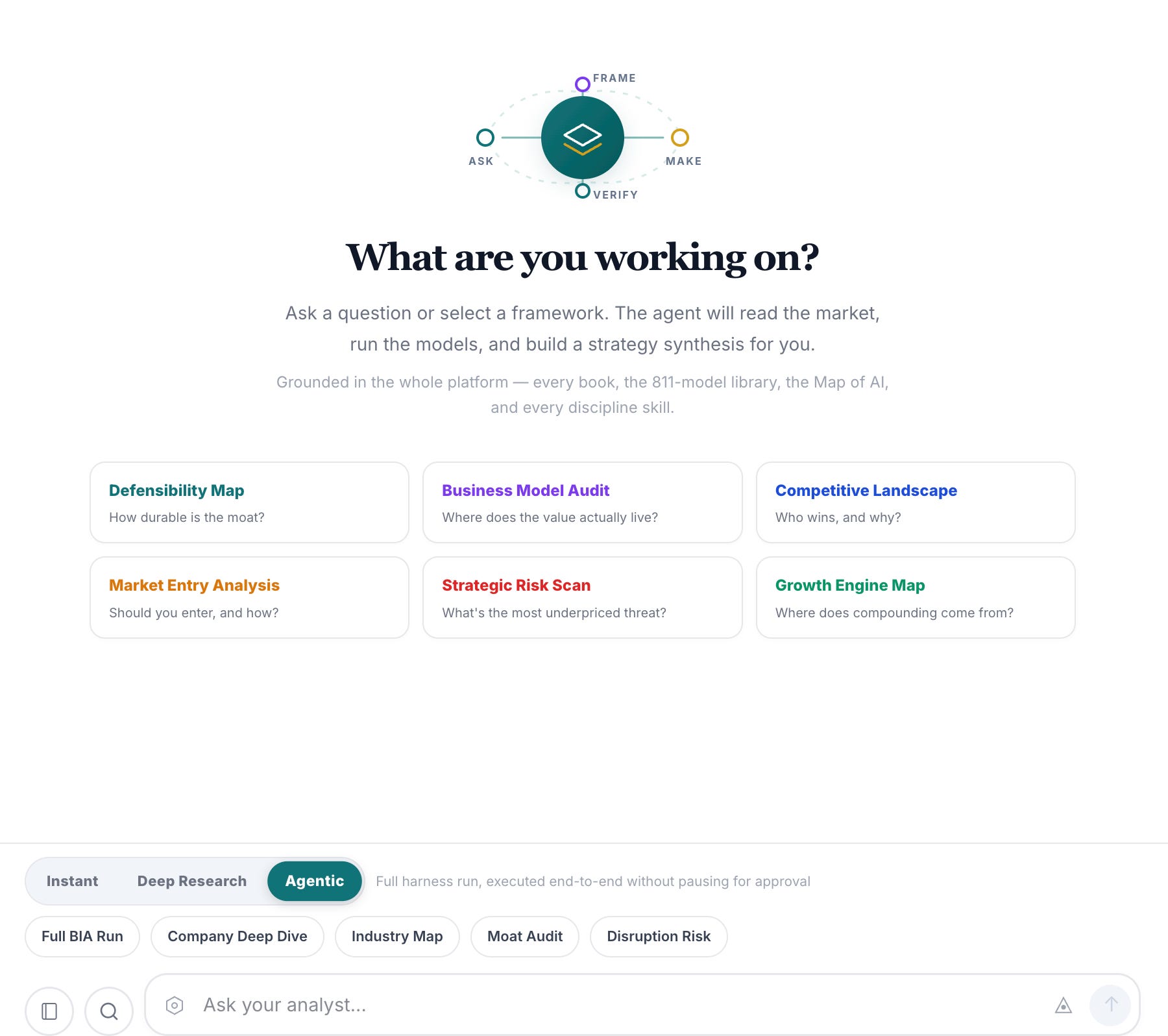
The Business Engineer’s Agenting platform is now available to Executive members. You can start exploring it here: businessengineering.ai/agent
You can preview the platform at Business Engineering AI.
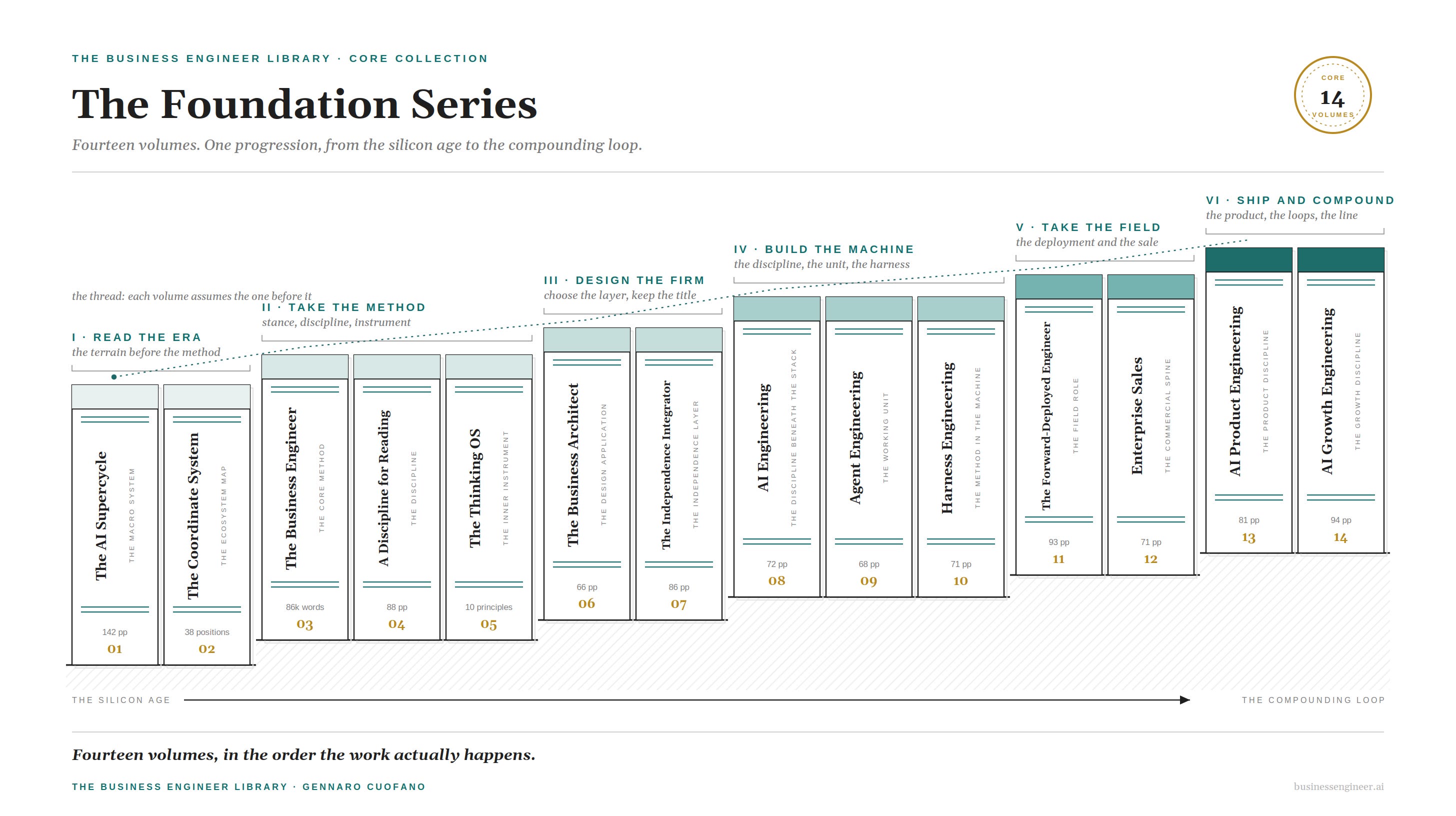
For the last three years, I’ve been rebuilding the Business Engineer’s curriculum from the ground up. That curriculum has now become the foundation of a new discipline, with the entire series taking shape around it.