
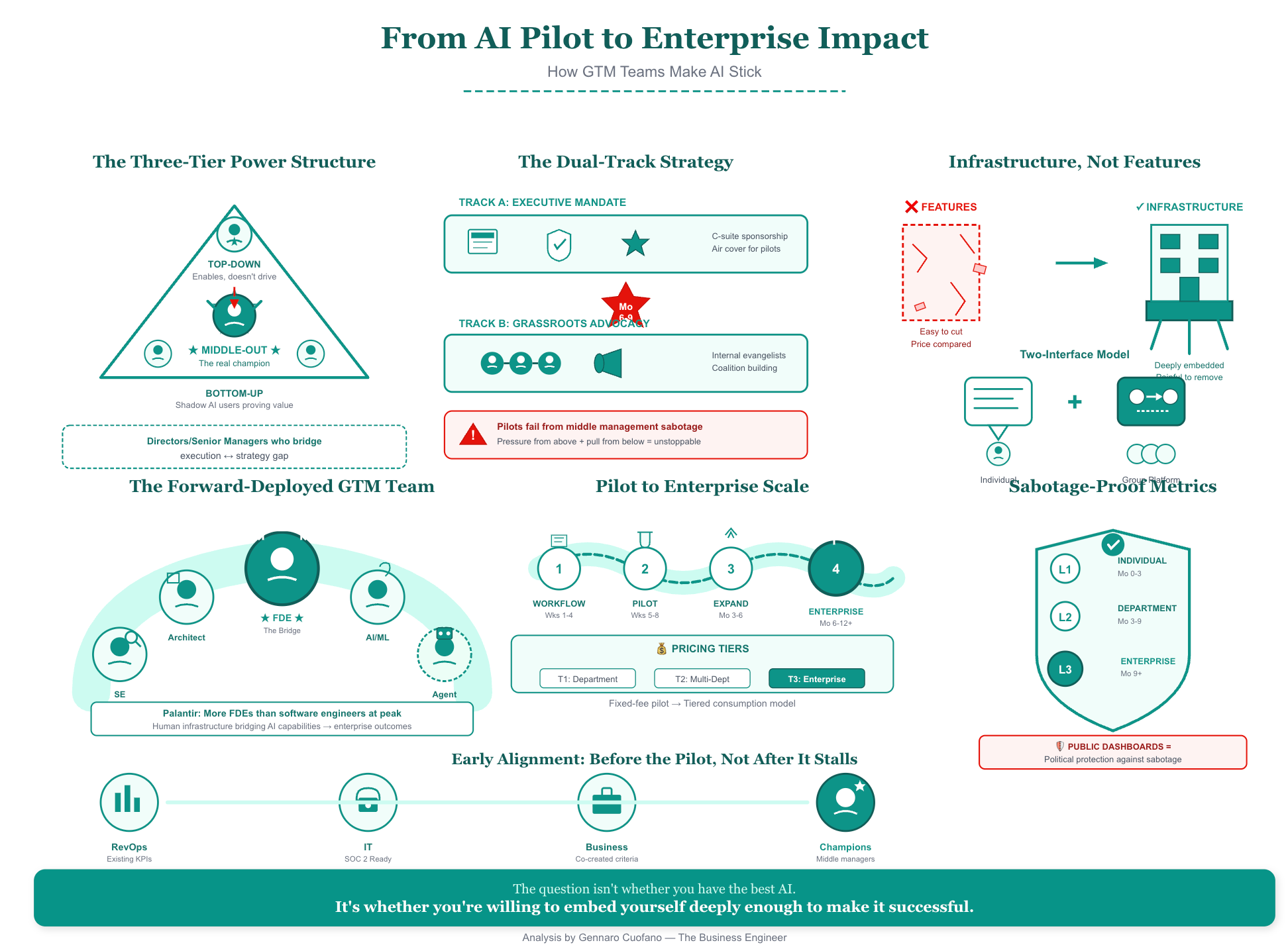
In enterprise environments, AI pilots rarely fail because the technology doesn’t work. They fail because GTM teams aren’t organized to navigate complex buying committees, siloed ownership, and fragmented incentives. What starts as a successful pilot in one function often stalls before it reaches scale.
Ninety-five percent of enterprise AI initiatives are failing. Not delivering disappointing returns—failing completely. This massive failure rate isn’t a technology problem. The models work. The infrastructure exists. The failure is organizational, and it represents the biggest opportunity in enterprise software history.
The paradox is striking: enterprises desperately want AI, with 90% actively exploring solutions, yet they’re structurally incapable of implementing it successfully. GTM teams that understand this dynamic and build their operating model around it will capture massive value while others bang their heads against the procurement wall.
AI note-taking has become instrumental to my daily workflows, but the real game-changer for me has been Circleback. It goes far beyond simple note-taking. It is a fully fledged AI administrative agent. With Circleback AI, you no longer need a traditional administrative assistant.
On the one hand, the note-taking assistant allows me to stay fully present in conversations while an AI works in the background, capturing everything that matters. For that reason, Circleback has become a core component of how I run meetings.
On the other end, Circleback acts as a fully-fledged administrative assistant, on top of everything, from action items I need to follow up on, to a reasoning assistant on top of my meeting notes.
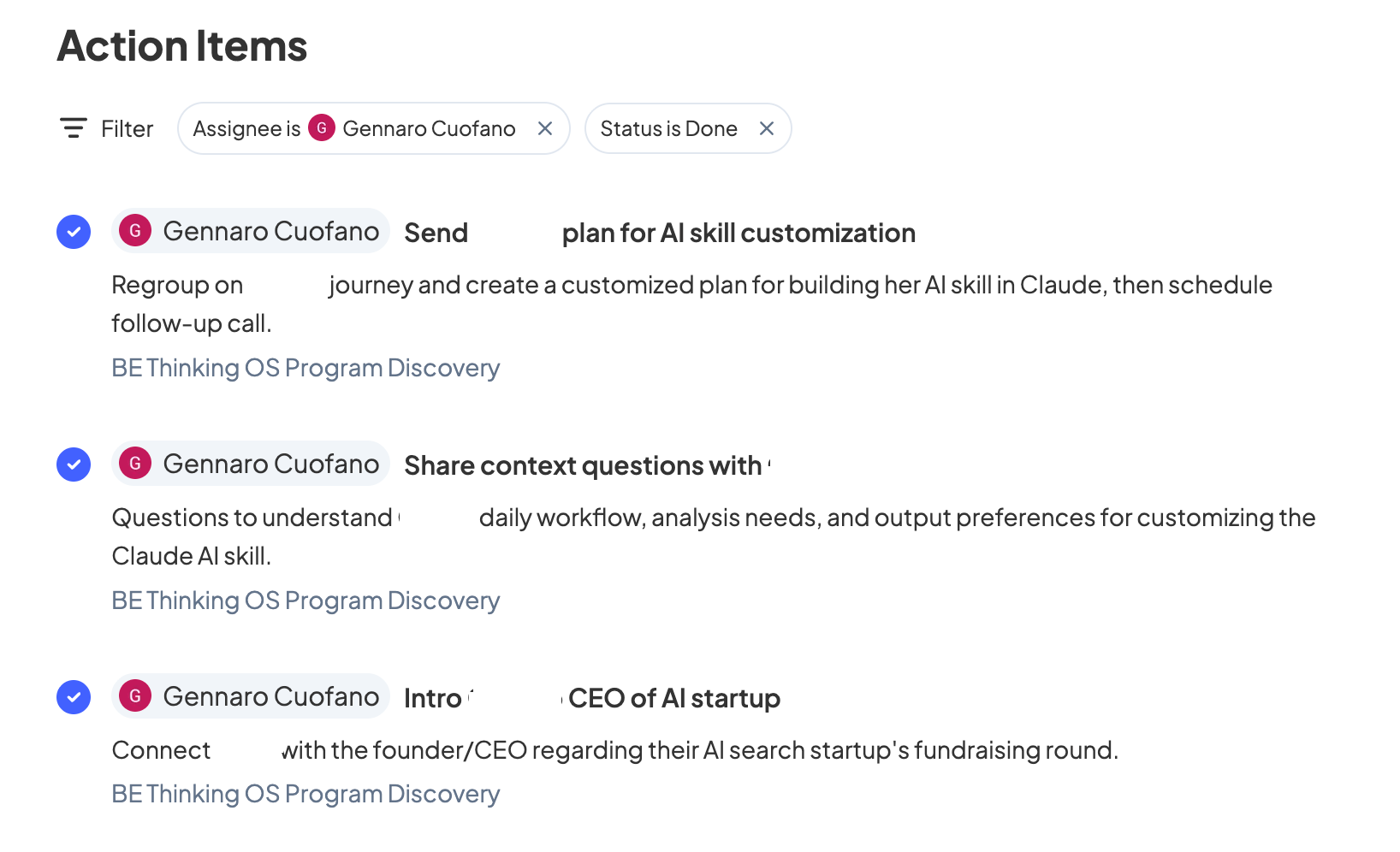
As an example of a workflow I rely on most, Circleback automatically joins my calls and then surfaces a clean action list. This single feature helps me stay organized and operate at a pace. It has become instrumental to running my solo business, functioning as an automated administrative assistant that works quietly in the background.
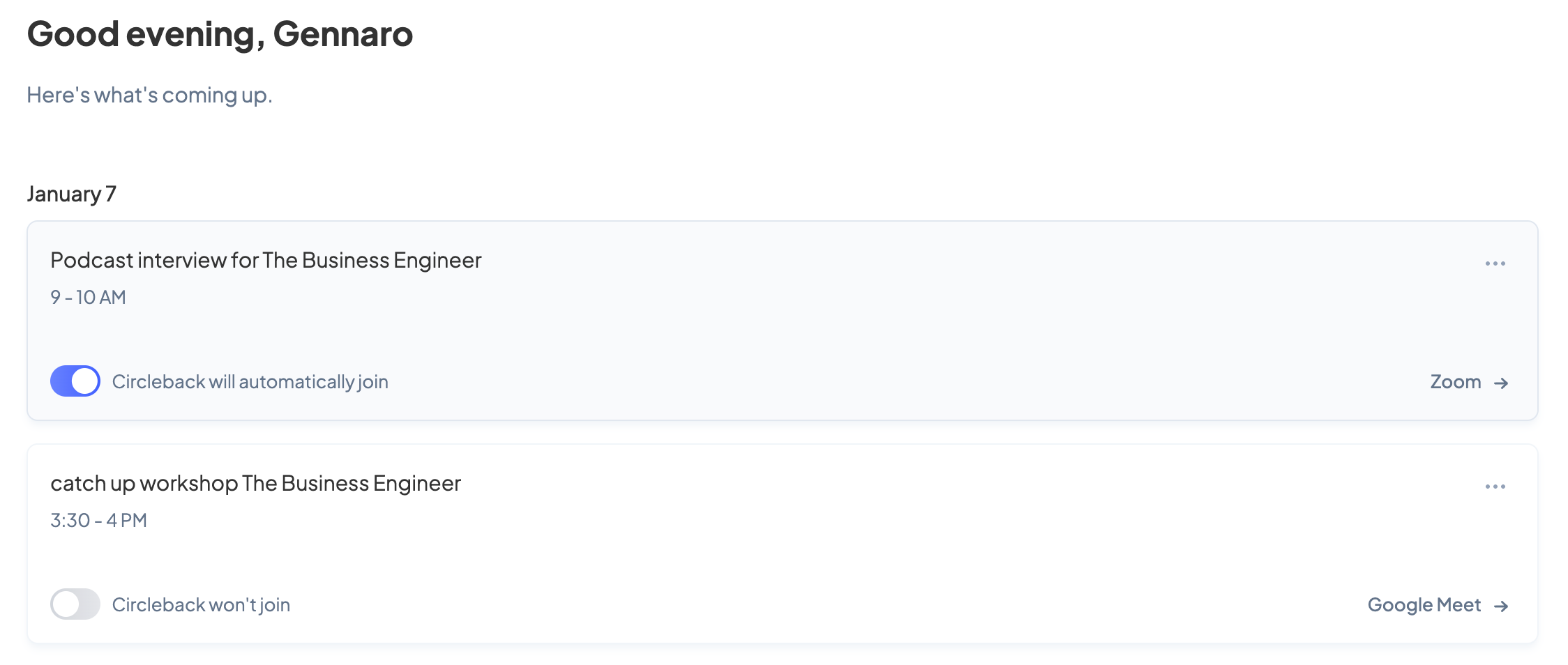
It also gives me complete control over which calls Circleback joins. At the same time, it helps me stay on top of my agenda through seamless integration with the most popular video meeting platforms.
Beyond this, you can ask Circleback anything about your meetings. Its Ask Assistant leverages reasoning and memory to act as an administrative AI agent, scanning past notes to surface the information that matters. A real game changer.
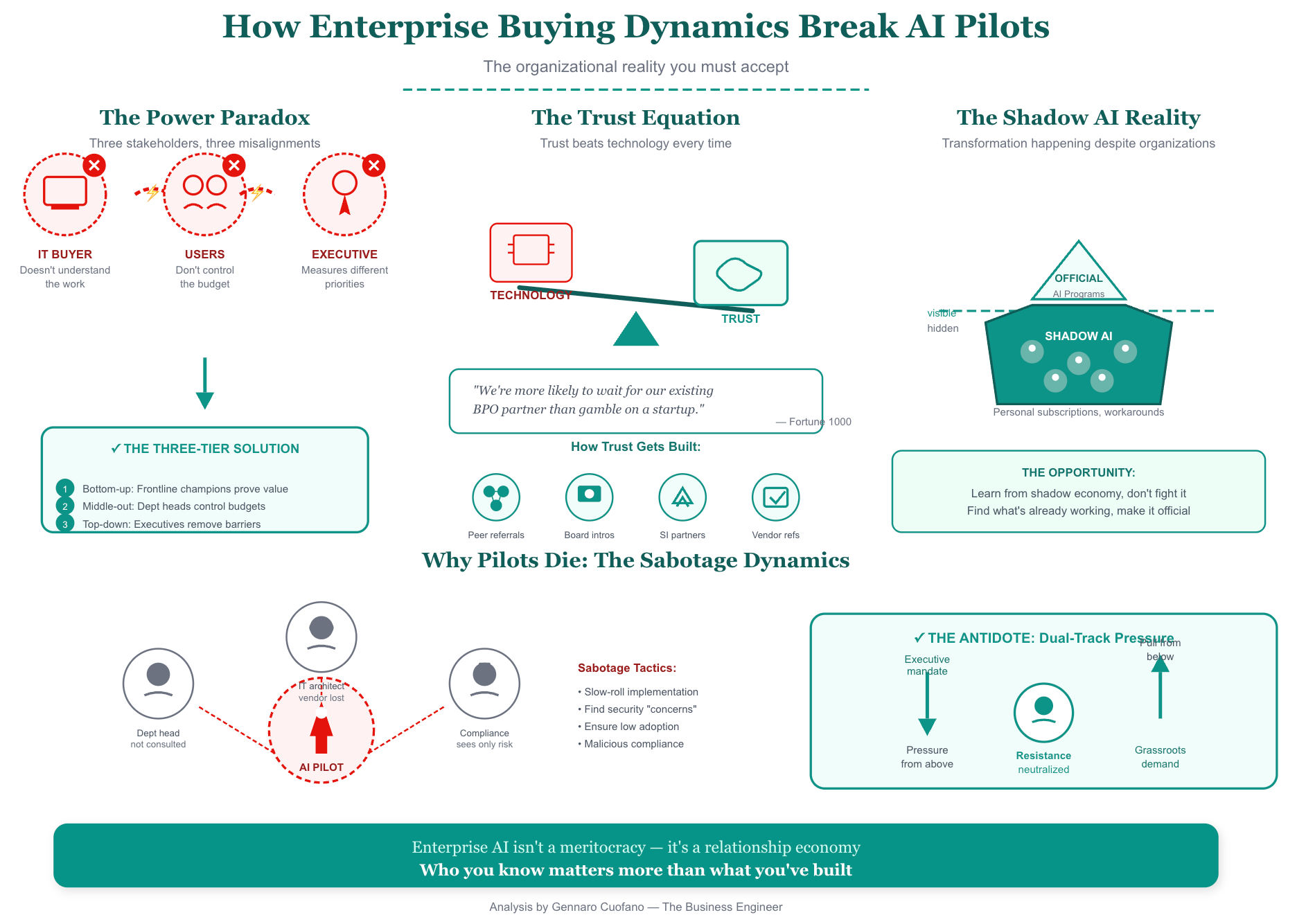
How Enterprise Buying Dynamics Break AI Pilots
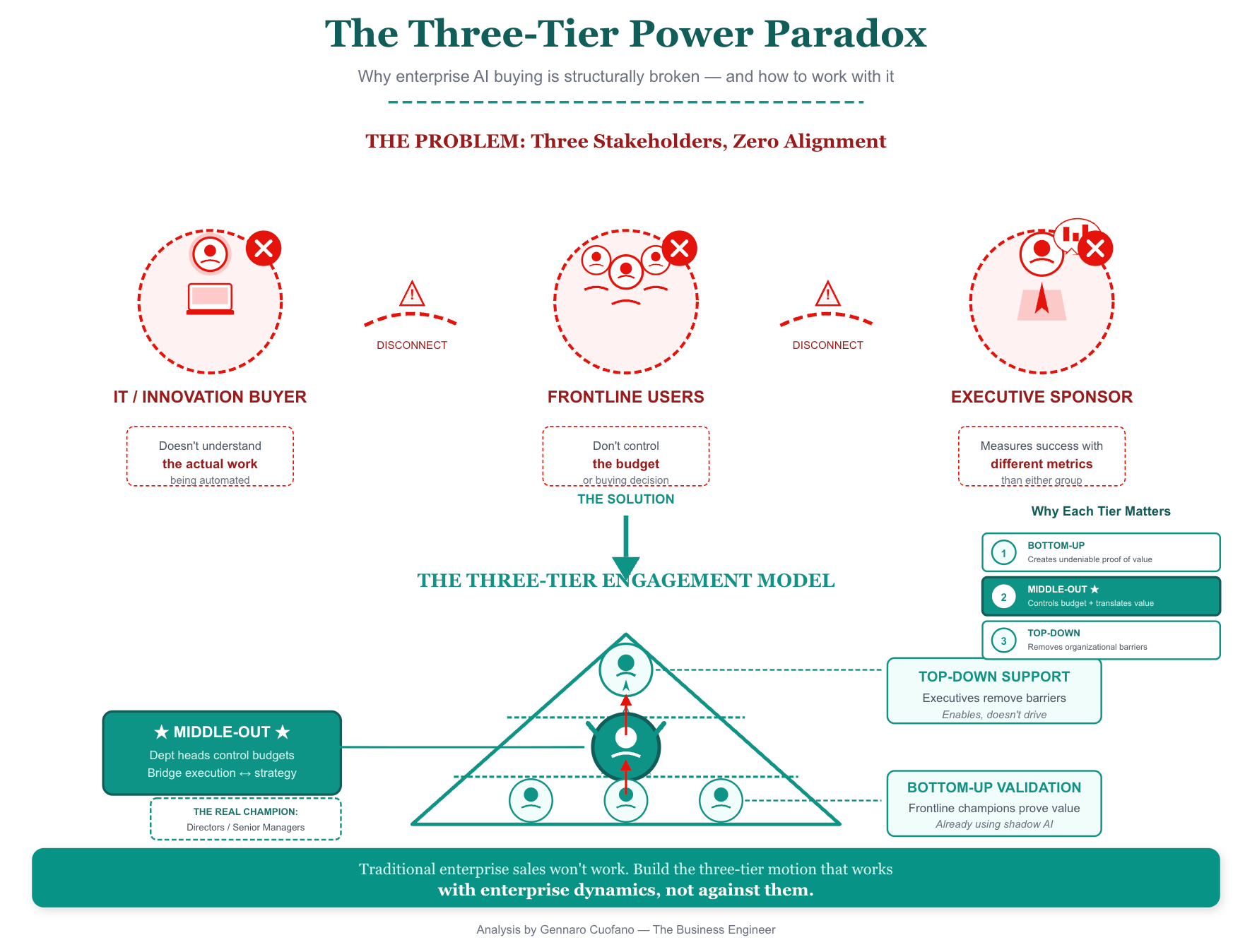
The Three-Tier Power Paradox
Successful AI adoption happens when implementation authority is decentralized but accountability remains clear. This creates a fundamental challenge for GTM teams trying to navigate enterprise sales.
Your buyer in IT or Innovation doesn’t understand the work being automated. Your frontline users don’t control the budget. Your executive sponsor measures success using metrics that align with neither group’s priorities.
The solution requires building a three-tier engagement model that works with, rather than against, these dynamics:
Bottom-up validation starts with frontline champions who can prove value in their daily work. These are the people drowning in manual processes, missing SLA targets, and already experimenting with ChatGPT to survive. They become your internal evidence base.
Middle-out adoption expands through department heads who control discretionary budgets. These Directors and Senior Managers translate executive vision into operational reality. They have enough authority to run pilots but still understand frontline pain. Most critically, they can smooth friction between top-down mandates and bottom-up resistance.
Top-down support accelerates from executives who can remove organizational barriers once value is proven. But here’s the critical insight: executives don’t drive adoption—they enable it. The real work happens in the middle.
This isn’t the traditional enterprise sales motion. It’s messier, takes longer, and requires you to manage multiple stakeholders with conflicting interests. But it’s the only approach that actually works in the current environment.
The Trust Equation That Determines Success
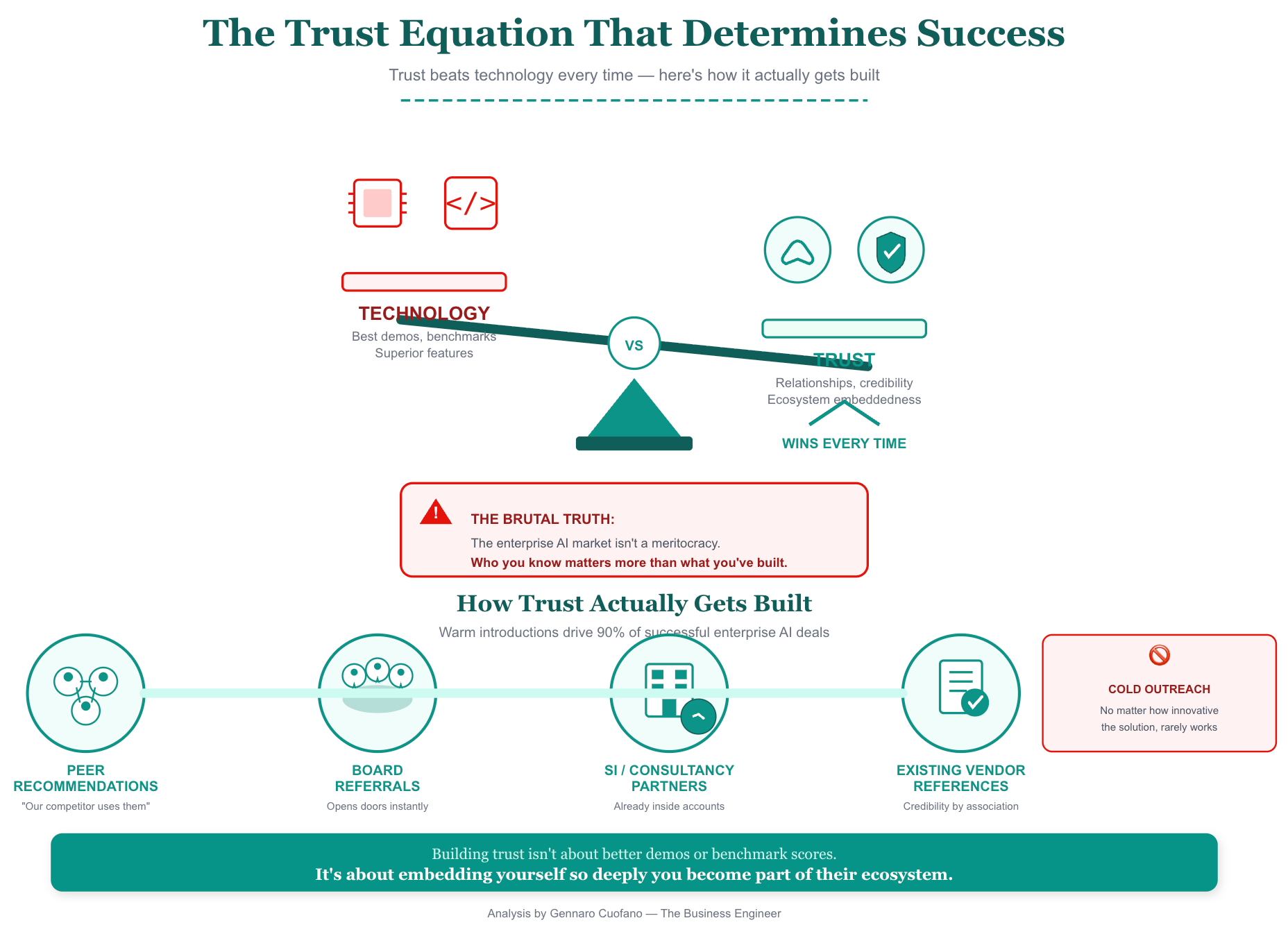
A procurement head at a Fortune 1000 company captured the reality perfectly: “We’re more likely to wait for our existing BPO partner to add AI than gamble on a startup.” This reveals the brutal truth: trust beats technology every time.
Building trust in the enterprise isn’t about having the best product demos or the most impressive benchmark scores. It’s about embedding yourself so deeply into existing relationships that you become part of the enterprise’s extended ecosystem.
Partner with system integrators, BPOs, and consultancies already inside your target accounts. These partnerships might feel like giving away margin, but they’re actually buying you something priceless: credibility by association.
Warm introductions drive 90% of successful enterprise AI deals. Board members, peer recommendations, and existing vendor referrals open doors that cold outreach never will.
The Shadow AI Reality
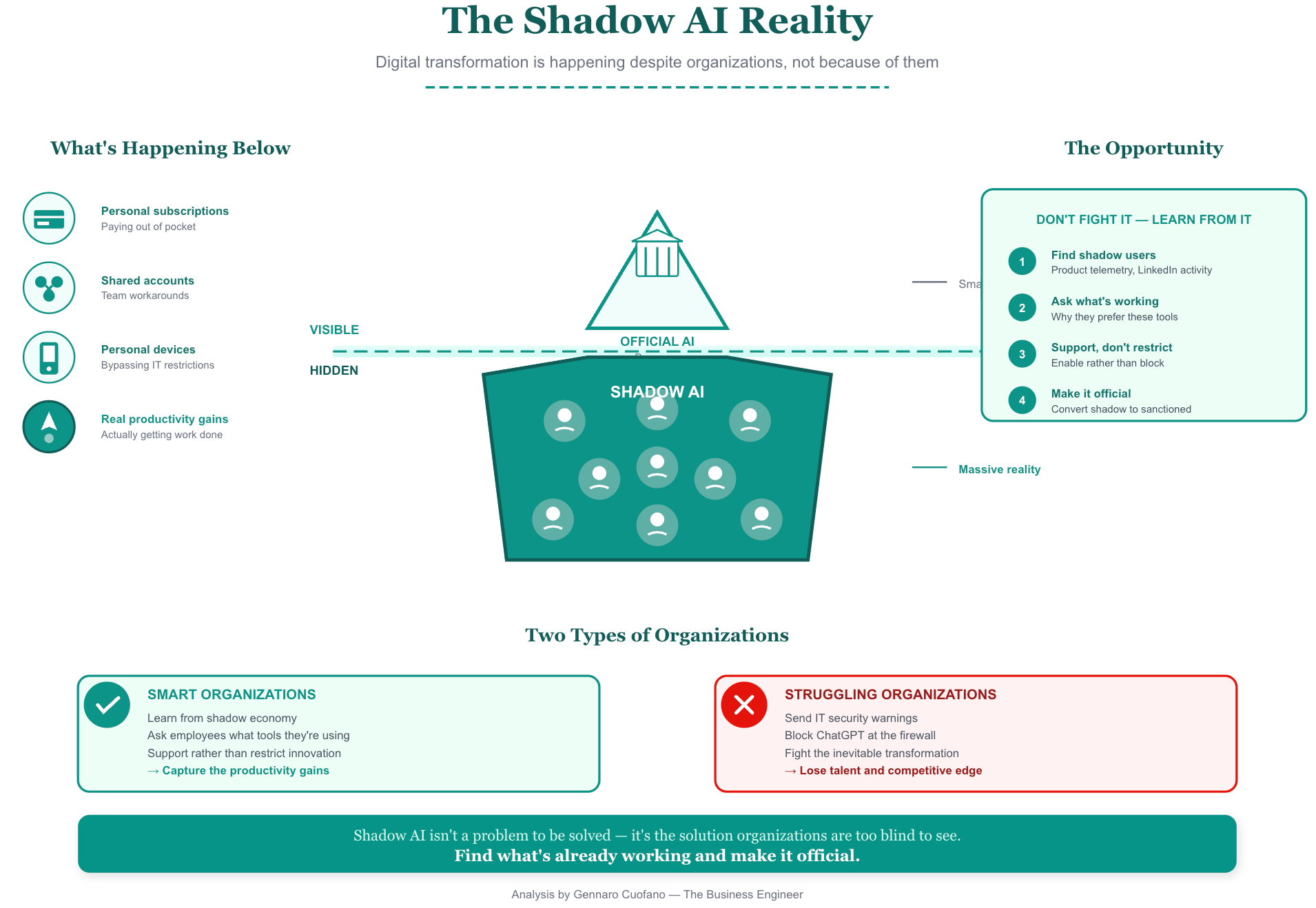
While enterprises fumble with official AI initiatives, 90% of employees are already using AI tools daily through personal subscriptions. This shadow AI economy isn’t a problem to be solved—it’s the solution that organizations are too blind to see.
The gap is extraordinary: only 40% of companies have purchased official LLM subscriptions, but 90% of knowledge workers are using AI regularly. They’re paying out of pocket. They’re sharing accounts. They’re finding ways around corporate restrictions. They’re doing digital transformation despite their organizations, not because of them.
The smart GTM teams are learning from this shadow economy rather than trying to stop it. They’re identifying shadow AI users through product telemetry and LinkedIn activity.
They’re asking employees what tools they’re already using, why they prefer them, and how the organization can support rather than restrict these innovations.
The Roles and Champions Needed to Scale Beyond the First Use Case
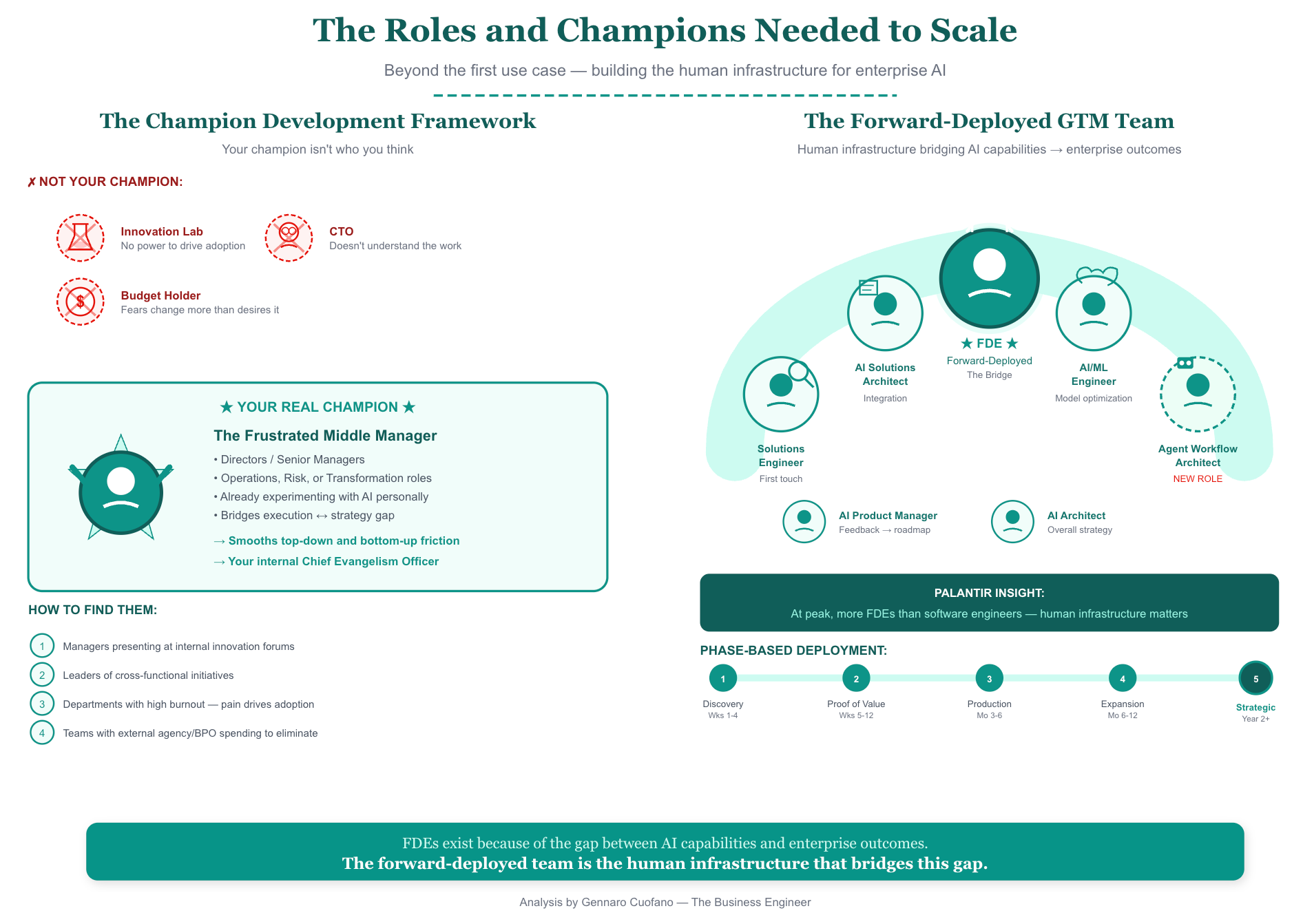
The Champion Development Framework
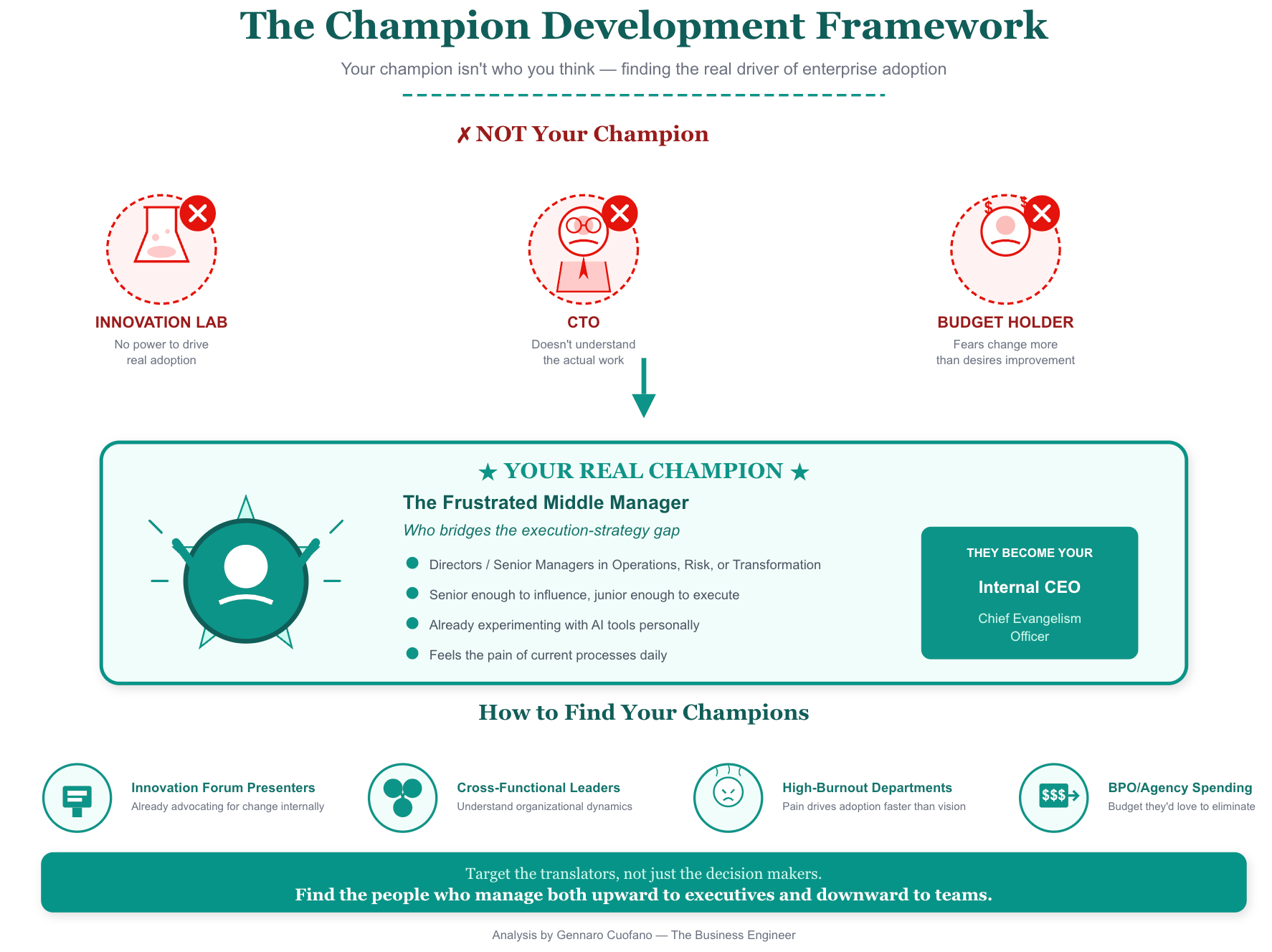
Your champion isn’t who you think. The innovation lab has no power to drive real adoption. The CTO doesn’t understand the actual work being done. Even the budget holder fears change more than they desire improvement.
Your real champion is the frustrated middle manager who bridges the execution-strategy gap. They translate executive vision into operational reality. They have enough authority to run pilots but still understand frontline pain. They navigate both boardroom politics and daily workflows. Most critically, they can smooth friction between top-down mandates and bottom-up resistance.
These champions are typically Directors or Senior Managers in Operations, Risk, or Transformation roles—senior enough to influence but junior enough to execute. They’re already experimenting with AI tools personally. They see the gap between what’s possible and what their organization is doing. They become your internal CEO—Chief Evangelism Officer.
Finding these champions requires strategic targeting:
Look for managers presenting at internal innovation forums who understand organizational dynamics
Identify departments with high burnout and turnover—pain drives adoption faster than vision
Find teams with external agency or BPO spending they’d love to eliminate
Target groups with measurable productivity metrics where improvement is undeniable
Find those managing both upward to executives and downward to teams
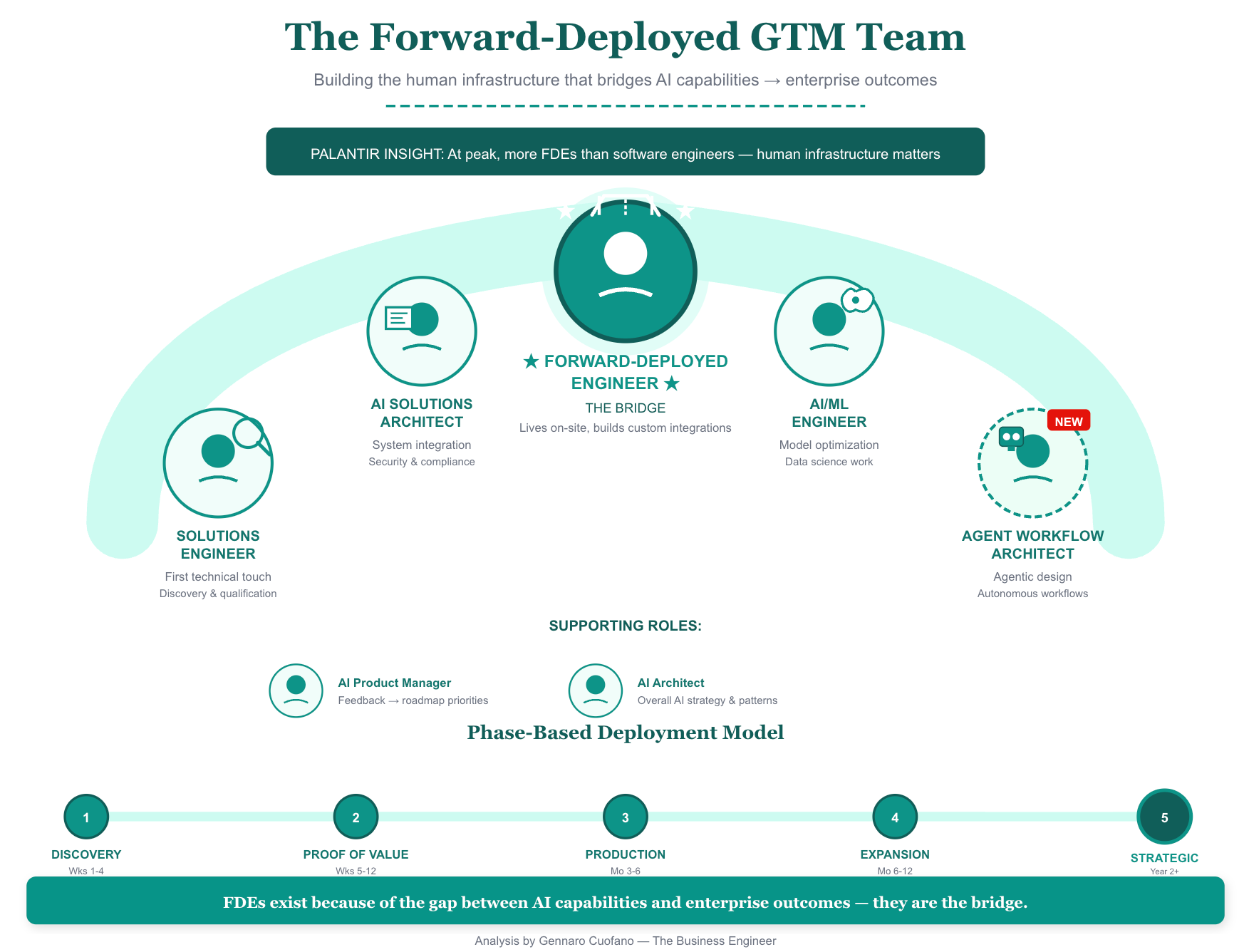
The Forward-Deployed GTM Team