

Traditional SaaS sales teams are built for a world that no longer exists. They assume products sell themselves after a demo, that implementation is a post-sale afterthought, that customer success means checking in quarterly, and that technical depth is optional for sellers.
AI enterprise sales breaks all of these assumptions. The complexity is front-loaded. The value isn’t obvious from a demo. Implementation is the product. And without technical depth, you can’t even understand what problem you’re solving.
The result is predictable: companies try to sell AI with traditional B2B playbooks and wonder why 95% of pilots fail to convert.
The Palantir Lesson
AI note-taking has become instrumental to my daily workflows, but the real game-changer for me has been Circleback. It goes far beyond simple note-taking. It is a fully fledged AI administrative agent. With Circleback AI, you no longer need a traditional administrative assistant.
On the one hand, the note-taking assistant allows me to stay fully present in conversations while an AI works in the background, capturing everything that matters. For that reason, Circleback has become a core component of how I run meetings.
On the other end, Circleback acts as a fully-fledged administrative assistant, on top of everything, from action items I need to follow up on, to a reasoning assistant on top of my meeting notes.
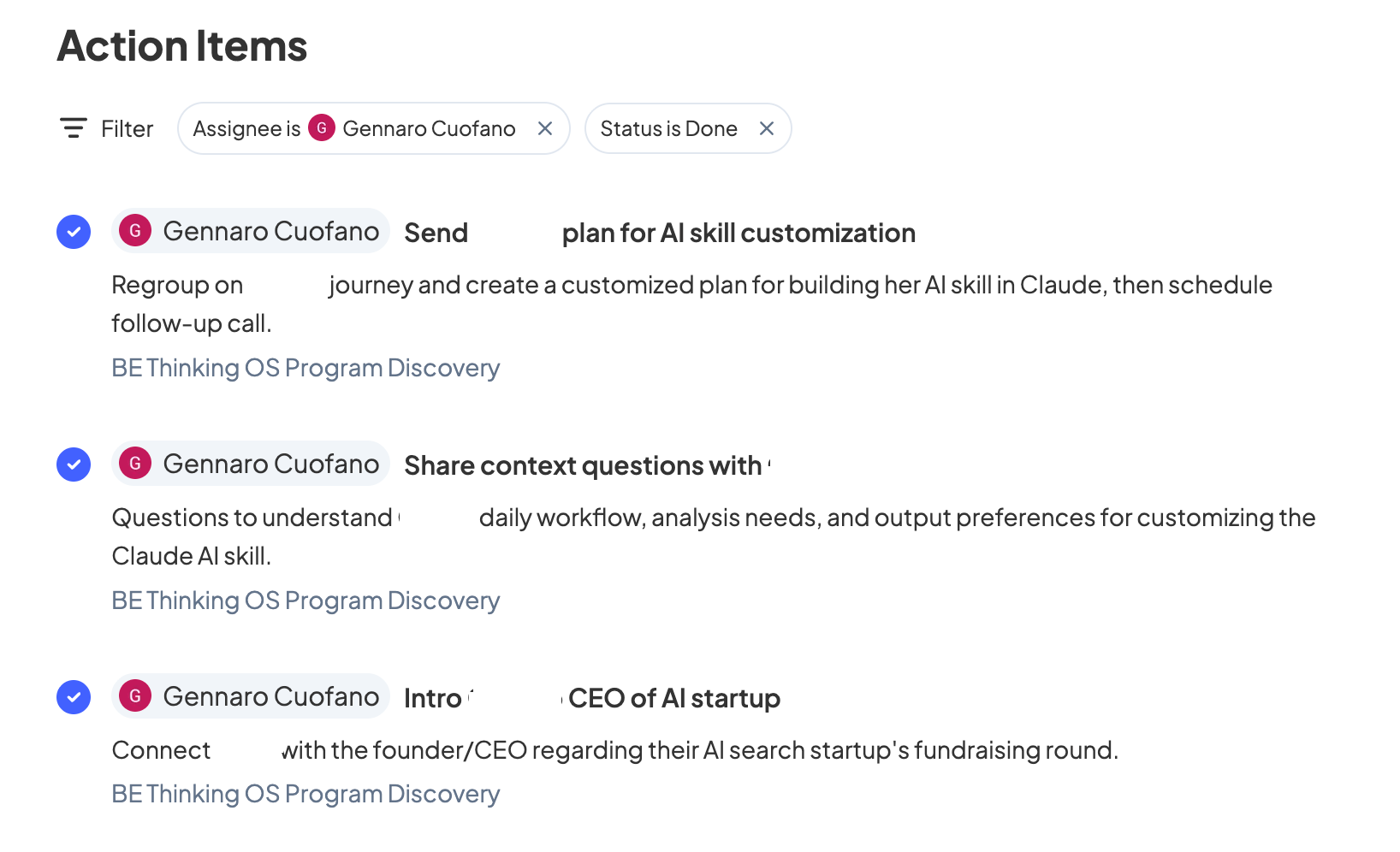
As an example of a workflow I rely on most, Circleback automatically joins my calls and then surfaces a clean action list. This single feature helps me stay organized and operate at a pace. It has become instrumental to running my solo business, functioning as an automated administrative assistant that works quietly in the background.
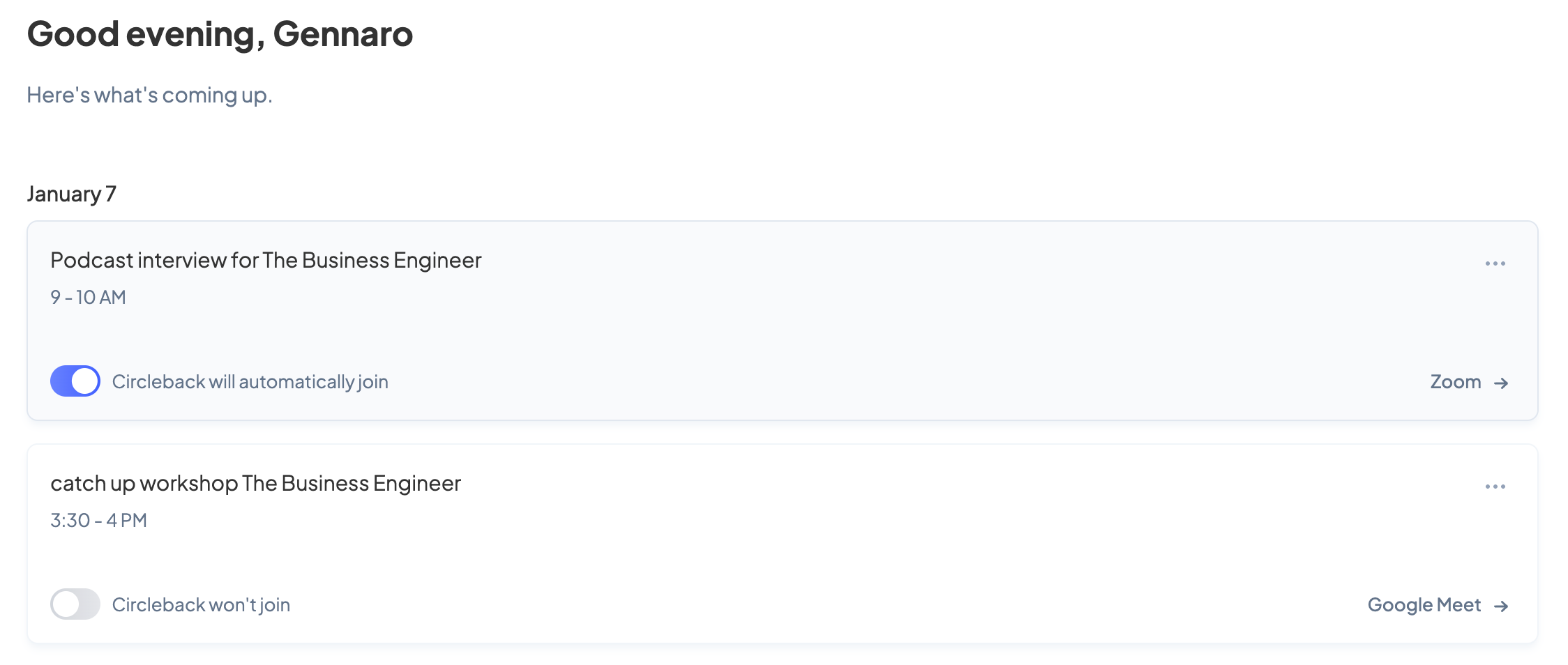
It also gives me complete control over which calls Circleback joins. At the same time, it helps me stay on top of my agenda through seamless integration with the most popular video meeting platforms.
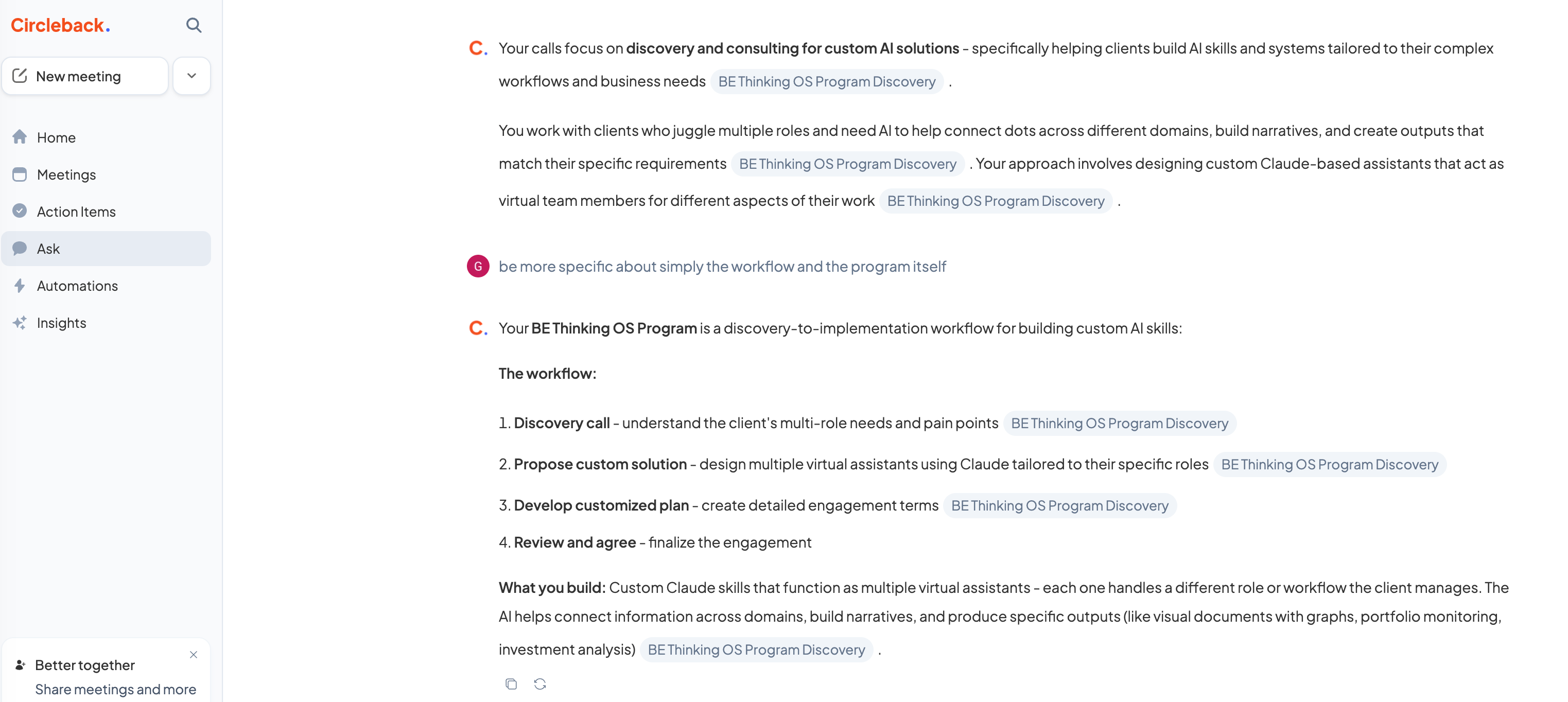
Beyond this, you can ask Circleback anything about your meetings. Its Ask Assistant leverages reasoning and memory to act as an administrative AI agent, scanning past notes to surface the information that matters. A real game changer.
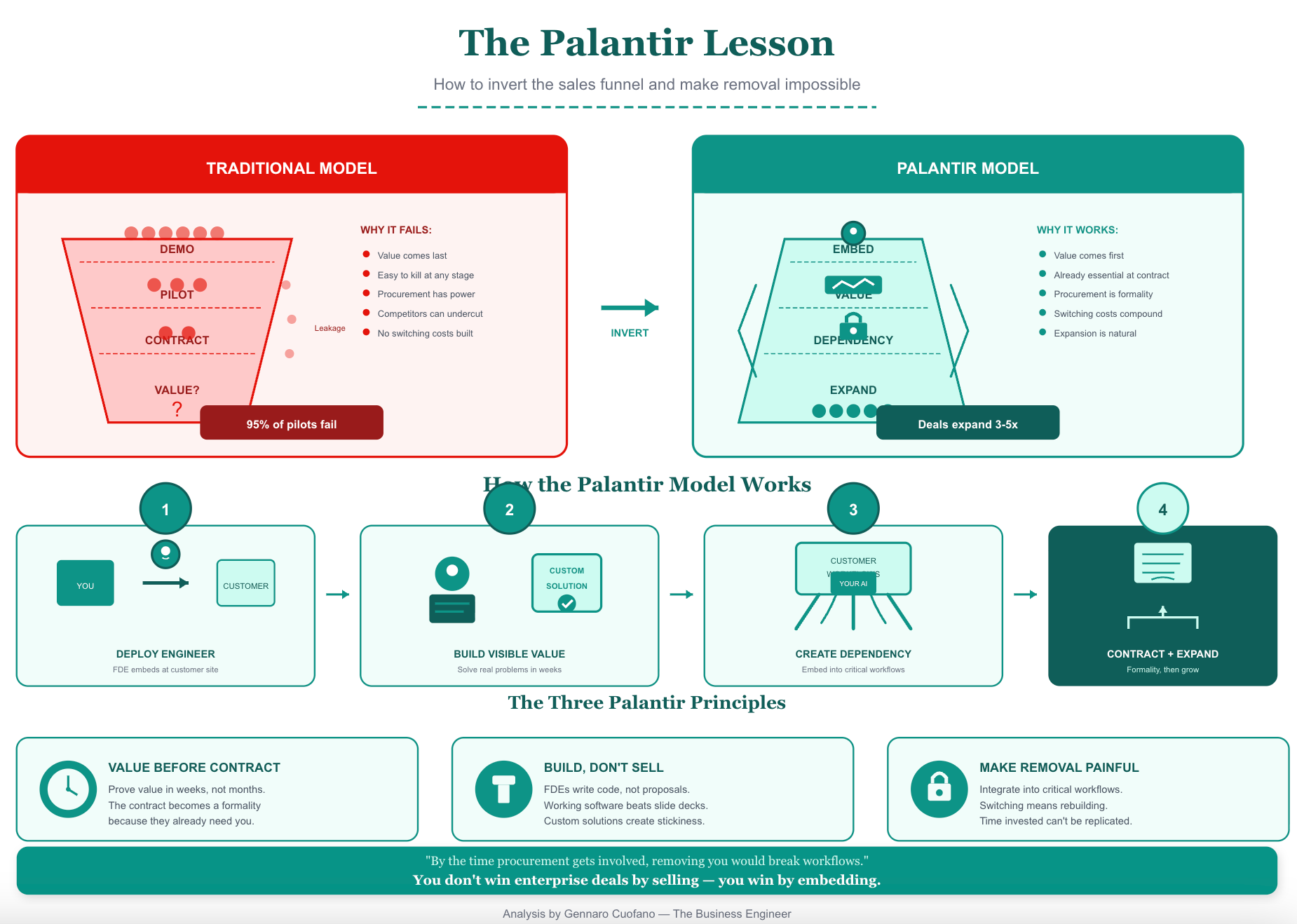
Palantir figured this out a decade ago. They don’t sell software — they deploy engineers who live at customer sites, build custom solutions, and make themselves essential before anyone signs an enterprise contract.
The Forward-Deployed Engineer model inverts the traditional sales funnel:
Traditional: Demo → Pilot → Contract → Implementation → Value
Palantir: Embedded Engineer → Custom Value → Dependency → Contract → Expansion
The contract comes after you’re already essential. By the time procurement gets involved, removing you would break workflows. This is the insight that most AI companies miss: you don’t win enterprise deals by selling — you win by embedding.
The Evolution of GTM Structure
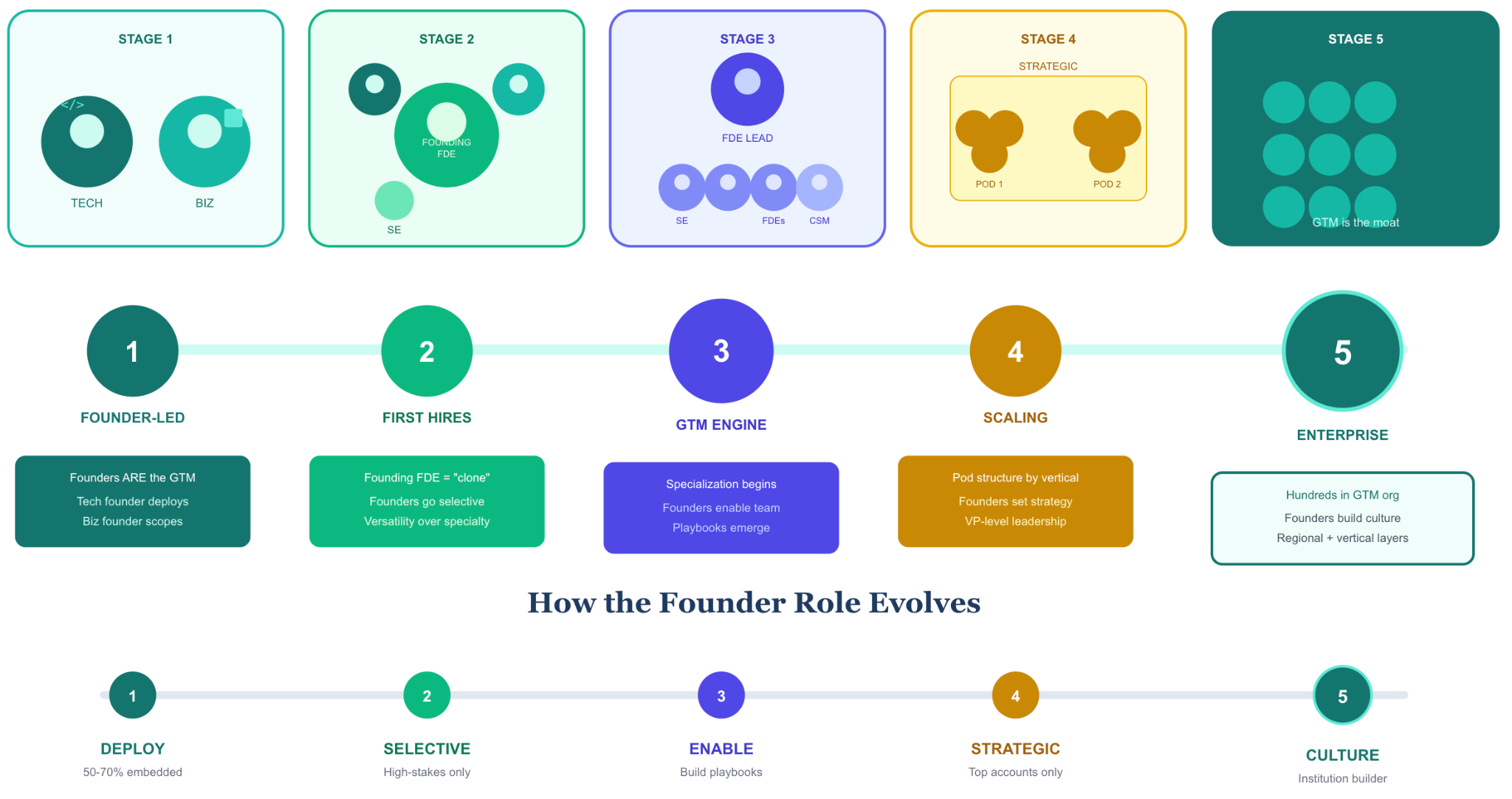
The AI-native GTM structure isn’t static — it evolves dramatically as companies scale. What works with your first ten customers will break at fifty, and what works at fifty becomes bureaucratic overhead at two hundred. Understanding this evolution is critical because hiring for the wrong stage is one of the most expensive mistakes AI startups make.
The key insight: in early stages, founders are the GTM team. They forward-deploy themselves. As the company scales, they must systematically replace themselves with specialized roles — but the founder DNA should remain in the culture.
Stage 1: Founder-Led GTM
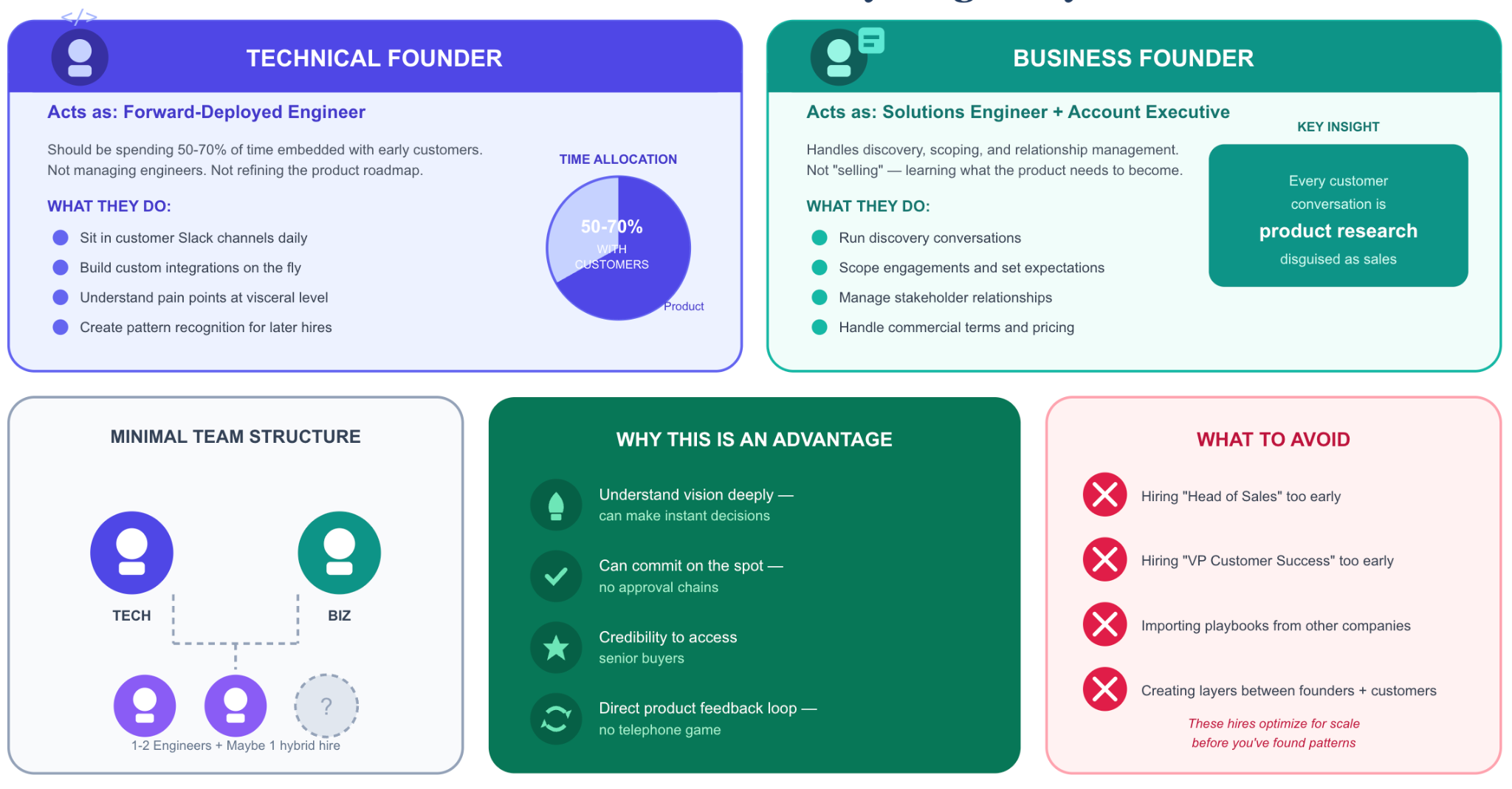
When you’re here: First handful of customers, no dedicated GTM hires yet, every deal requires founder involvement.
At this stage, there is no GTM “team” — there are founders wearing every hat. This is actually an advantage. Founders have context that no hire can replicate: they understand the product vision, can make commitments on the spot, and have the credibility to access senior buyers.
The founder as Forward-Deployed Engineer. The technical co-founder should be spending 50-70% of their time embedded with early customers. Not managing engineers. Not refining the product roadmap. Sitting in customer Slack channels, building custom integrations, understanding pain points at a visceral level. These early deployments create the pattern recognition that informs everything that follows.
The founder as Solutions Engineer. The business co-founder handles discovery, scoping, and relationship management. They’re not “selling” in the traditional sense — they’re learning what the product needs to become. Every customer conversation is product research disguised as sales.
The team structure at this stage is minimal:
Technical Founder: Forward-deployed engineering, architecture, product decisions
Business Founder: Discovery, scoping, relationship management, commercial terms
One to two Engineers: Building product, supporting founder deployments
Maybe one early hire who combines solutions engineering with customer success
What to avoid: Hiring a “Head of Sales” or “VP of Customer Success” too early. These hires optimize for scale before you’ve found repeatable patterns. They’ll import playbooks from previous companies that don’t fit your product or market. Worse, they create a layer between founders and customers exactly when that direct connection matters most.
The transition trigger: You’re ready to evolve when founders are the bottleneck on growth — when qualified opportunities sit in pipeline because there’s no one to deploy against them. Not before.
Stage 2: First GTM Hires
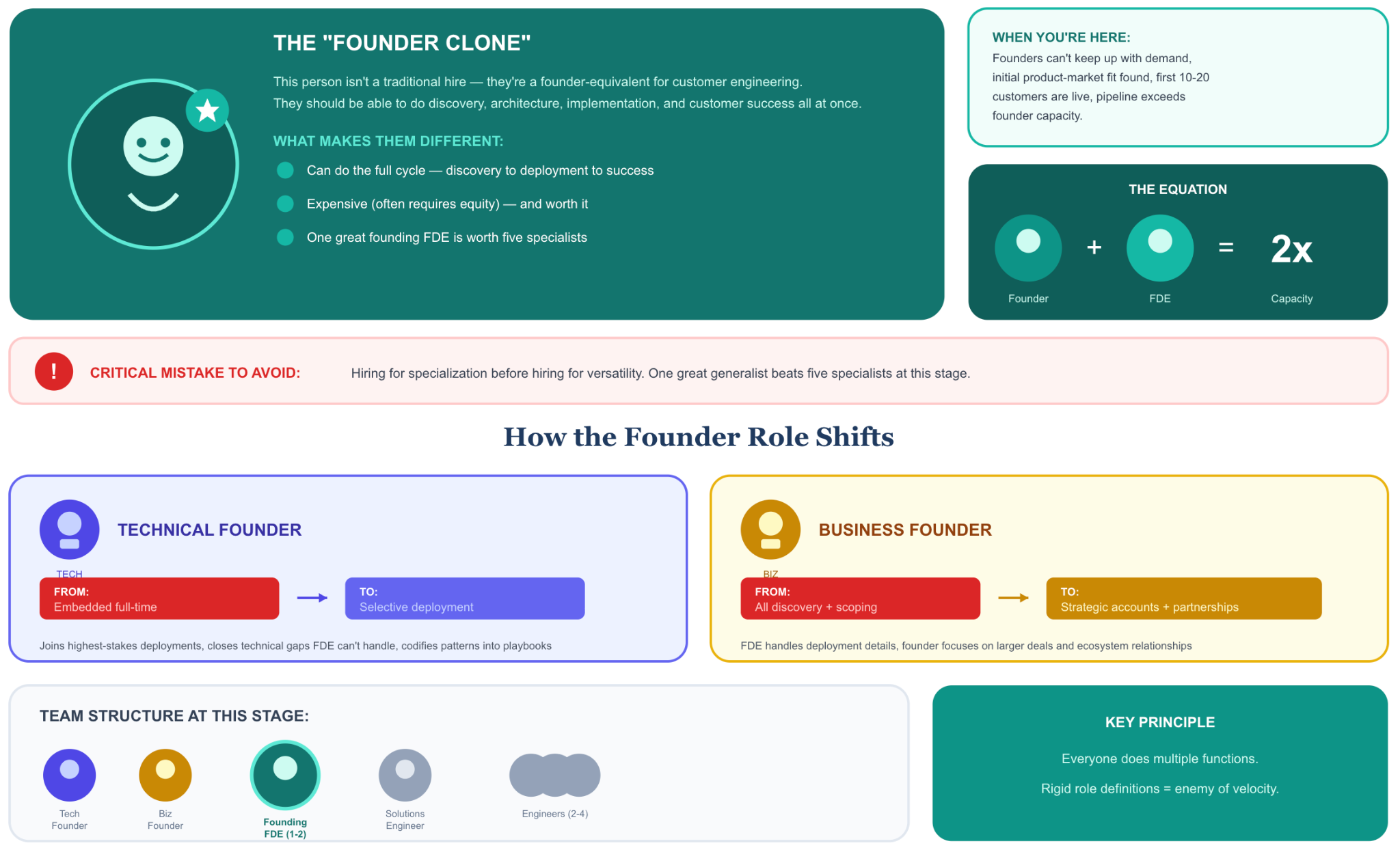
When you’re here: Founders can’t keep up with demand, you’ve found initial product-market fit, first ten to twenty customers are live.
This is the most dangerous stage. Founders must start delegating GTM functions without losing the founder-led magic. The mistake most companies make: hiring for specialization before hiring for versatility.
The first critical hire is a Founding Forward-Deployed Engineer. This person isn’t a traditional hire — they’re a founder-equivalent for customer engineering. They should be able to do discovery, architecture, implementation, and customer success all at once. They’re expensive (often requiring equity), and they’re rare. But one great founding FDE is worth five specialists at this stage.
The founders’ role shifts but doesn’t disappear. The technical founder moves from being embedded full-time to being embedded selectively — joining the highest-stakes deployments, closing technical gaps the FDE can’t handle, and starting to codify patterns into playbooks. The business founder shifts toward larger strategic accounts and partnership conversations while the founding FDE handles the deployment details.
The team structure expands carefully:
Technical Founder: Selective deployment, architecture oversight, playbook creation
Business Founder: Strategic accounts, partnerships, commercial leadership
Founding FDE (1-2): Primary deployment resource, the “founder clone”
Solutions Engineer (1): Discovery and scoping, freeing founders from early-funnel work
Engineers (2-4): Product development with some deployment support
What to avoid: Creating silos too early. At this stage, everyone should still be able to do multiple functions. The Solutions Engineer should be able to do basic implementation. The FDE should be able to handle customer success conversations. Rigid role definitions are the enemy of early-stage velocity.
The transition trigger: You’re ready to evolve when you have three to four FDEs and clear patterns in what works. When you can describe your ideal customer profile, your typical deployment timeline, and your expansion playbook without hesitation.