

For over a decade, I’ve been a digital entrepreneur. Since 2014, I’ve been building businesses from scratch by leveraging digital channels.
The web was extraordinary because it was both a distribution channel and a business model enabler. Yet the companies that extracted the most value from it were those that eventually understood that the web wasn’t simply a new marketing channel. It was an opportunity to reshape the business model itself.
One of the most important lessons of the web era is that product and distribution eventually become the same thing. When the two merge, you create a flywheel where distribution is no longer something added to the product. It becomes part of how the product works, grows, and compounds.
From the Web to Web²
AI entered a very different environment. It could immediately leverage more than 30 years of infrastructure, data, behaviors, and distribution built by the web.
In fact, the web itself helped make the current AI paradigm possible. Without the enormous amount of data generated and distributed through the web, we would not have reached this stage of AI development.
But the relationship works in both directions.
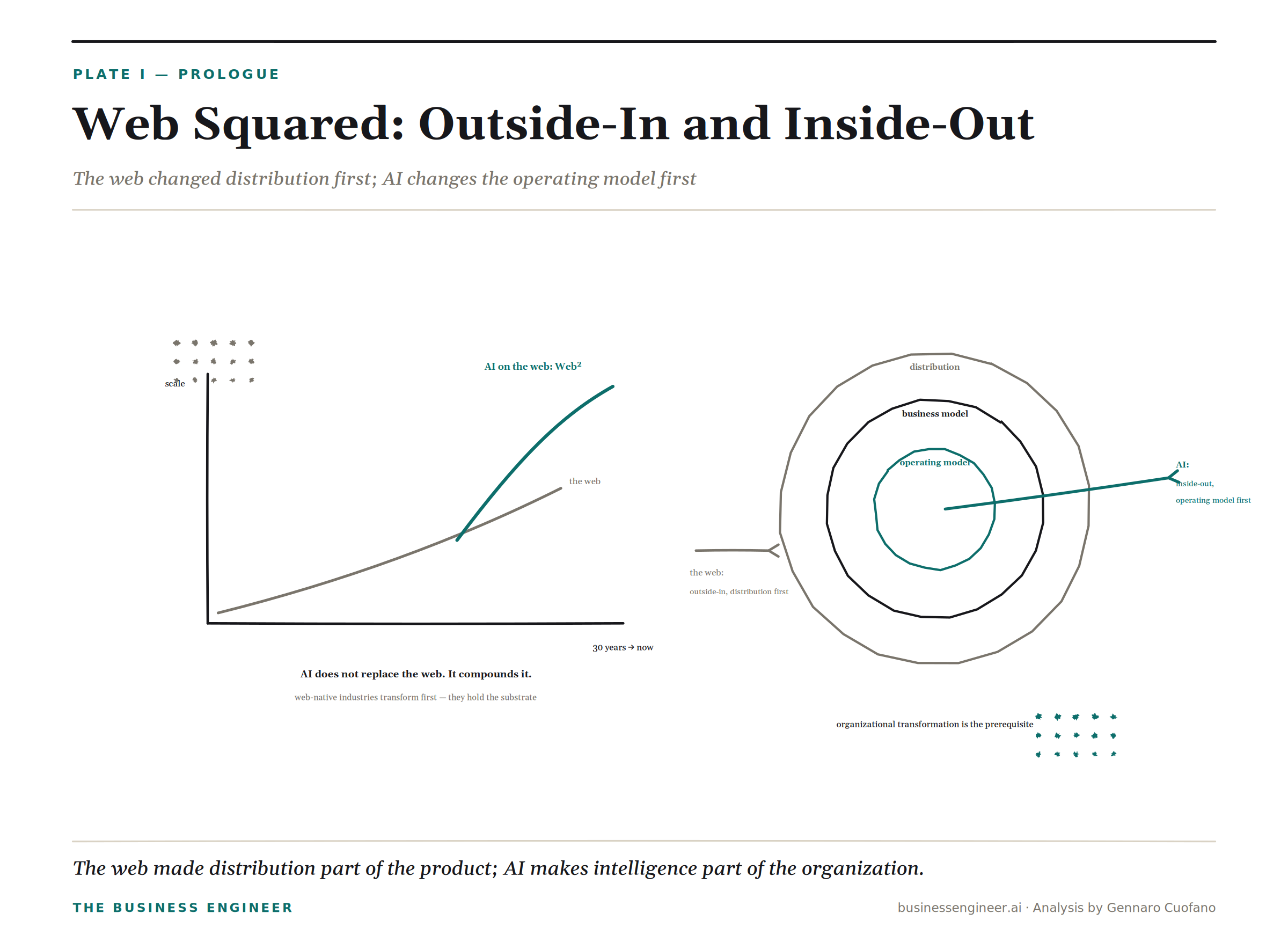
As AI plugs into the web’s existing distribution infrastructure, it can generate growth curves at a scale and speed we have rarely seen before. I’ve described this paradigm for years as Web², or Web Squared: AI doesn’t replace the web. It compounds it.
This is also central to my AI Supercycle thesis. Paradoxically, the first industries to be disrupted, expanded, extended, and amplified by AI would be precisely the industries that emerged from the web itself: search, social media, digital publishing, cloud computing, software, and more.
The web-native economy gets transformed first because it already has the infrastructure, data, distribution, and economics that AI can immediately amplify.
The Web Was Outside-In. AI Is Inside-Out.
There is another distinction that is even more important.
The web and AI represent fundamentally different technological paradigms.
The web developed during a very different historical and technological period. As I explain in the AI Supercycle thesis, it was primarily an outside-in technology.
Take an existing business and put it on the web. Initially, what changes?
Distribution.
The underlying organization, operating model, and economics can remain largely intact. A retailer gets a website. A newspaper publishes online. A bank launches internet banking. The distribution layer changes first.
It took years, and arguably until the 2010s, before the web began transforming entire business models at their core.
AI works in almost the opposite direction.
I think of AI as an inside-out technology.
When you embed intelligence into an organization, the first-order effect isn’t necessarily a new distribution channel. It is a transformation of how the organization operates: how work gets done, how decisions are made, how knowledge moves, what gets automated, what humans do, and ultimately how value is created and captured.
AI changes the operating model first, which can then reshape the business model and ultimately redefine distribution.
This also explains why enterprise AI is proving so difficult to implement effectively. The challenge isn’t simply technological. To capture AI’s full value, organizations often need to change themselves. Organizational transformation becomes the prerequisite for business model transformation.
Why AI Growth Engineering Is Different
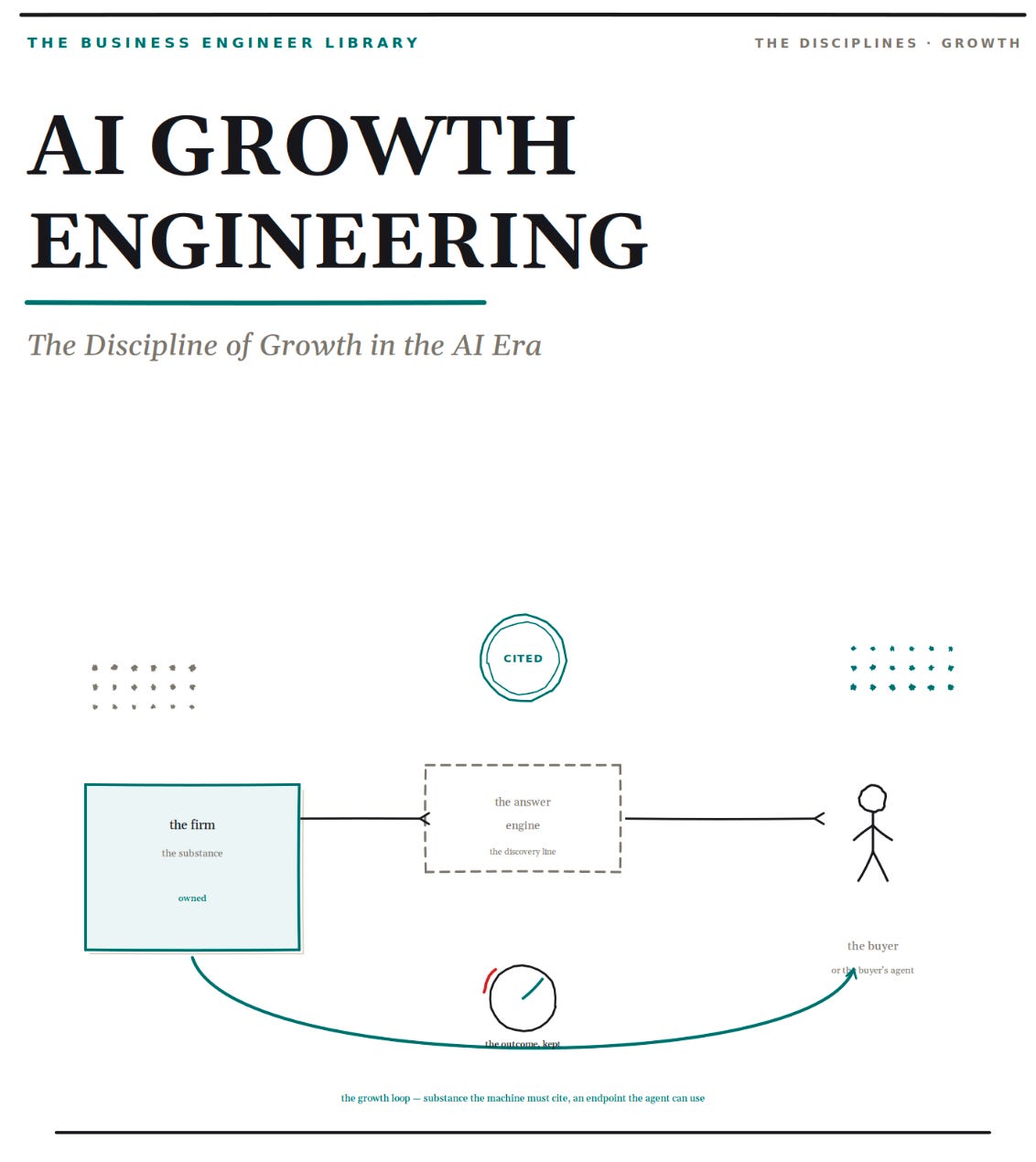
This is why AI Growth Engineering, while descended from decades of web growth engineering, is fundamentally different from it.
Web growth engineering largely learned how to make product and distribution compound together.
AI Growth Engineering must go deeper. It connects intelligence, product, operations, business model, and distribution into the same compounding system.
The web taught us how distribution could become part of the product.
AI is teaching us how intelligence can become part of the organization itself.
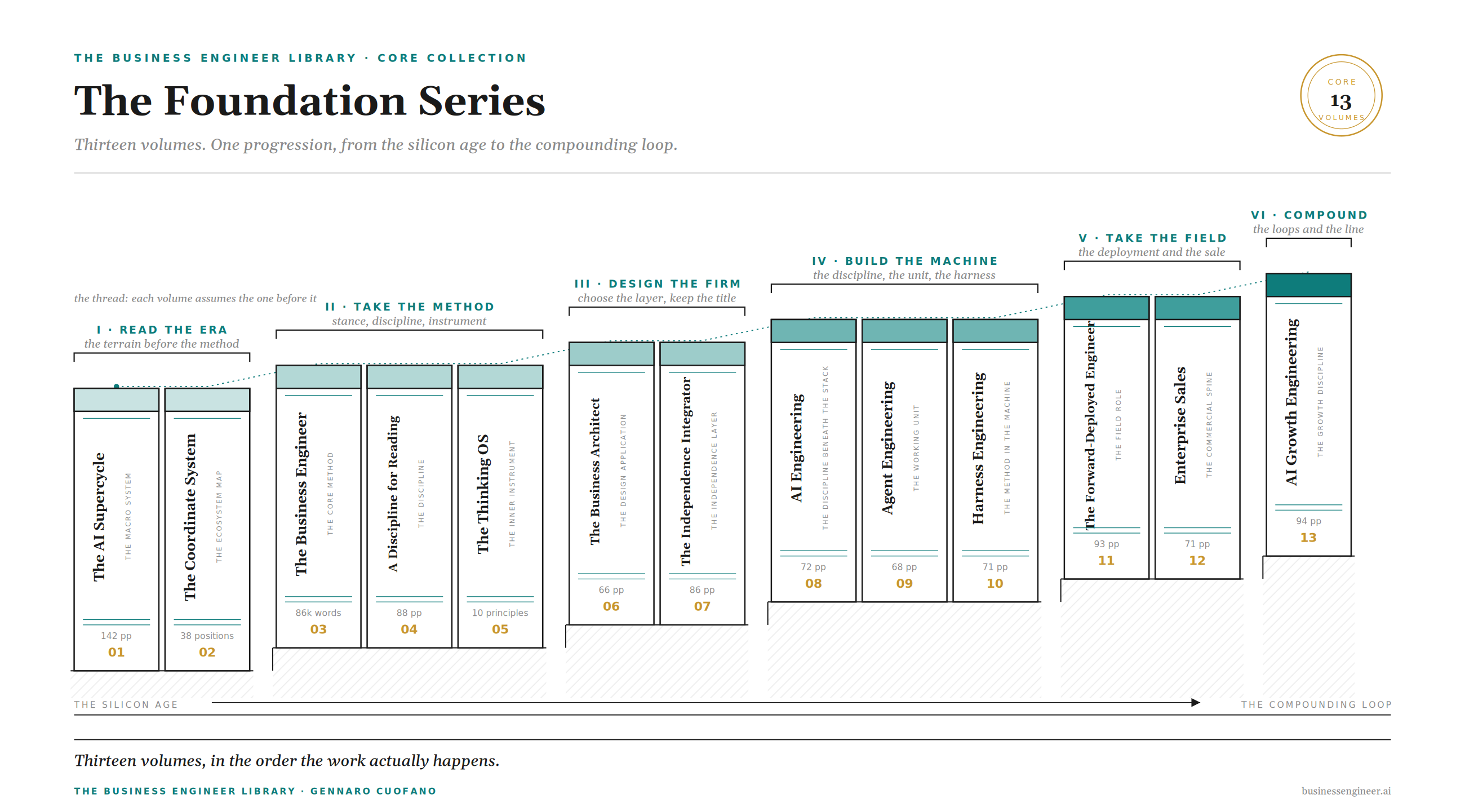
That distinction is at the heart of the latest addition to The Business Engineer Foundation Series, and I hope it gives you a useful framework for understanding why AI growth will look fundamentally different from what came before.
If you’re already a paid member, simply reply to this email, and we’ll send it your way.