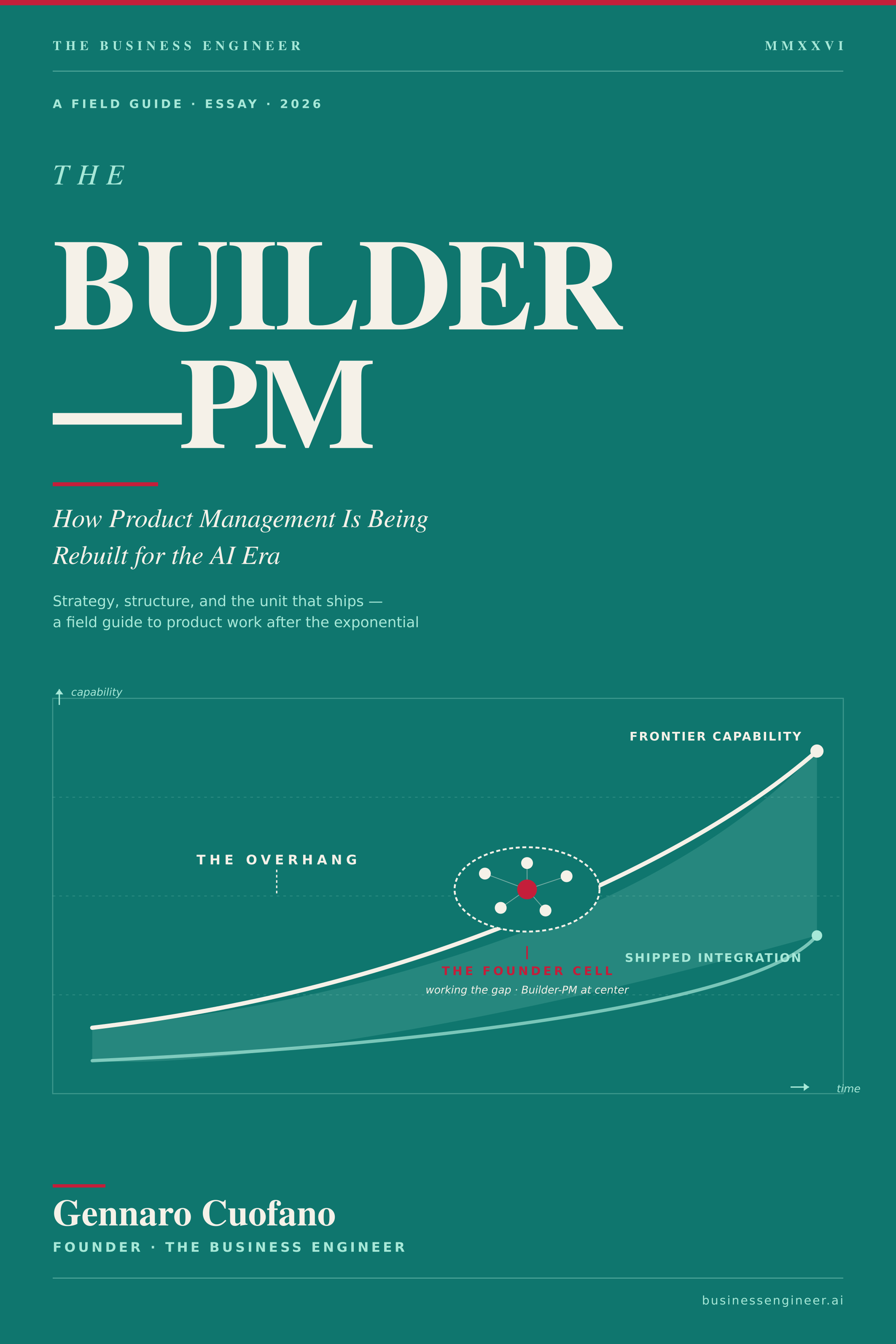

When a small team ships in a quarter what a large team ships in two years, the conventional explanation is great people. This is the narrative most observers reach for first, and it is true at the surface — the people in these units are exceptional. But “great people” is not a structural answer; it is a description of an output.
The real question is what arrangement of those people produces output disproportionate to their headcount, and the answer turns out to be geometric, not motivational.
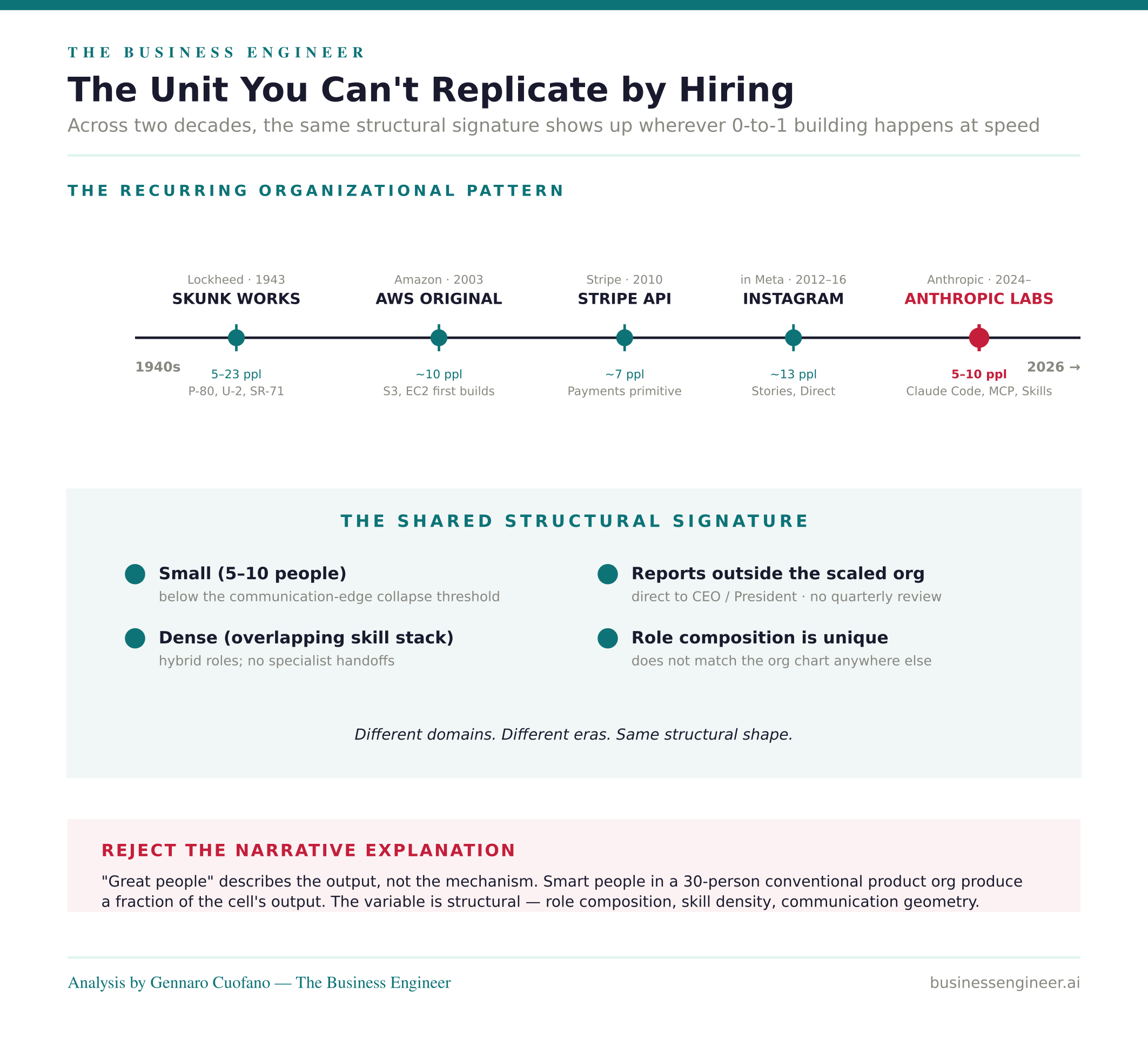
Across two decades and many industries, a recurring organizational pattern shows up wherever 0-to-1 building happens at speed. Skunk Works at Lockheed in the 1940s. The original AWS team inside Amazon. Stripe’s API team in its first few years. Instagram inside Facebook for roughly four years post-acquisition. The original iPhone team. More recently, Anthropic Labs — the five-person unit that shipped Claude Code, MCP, Skills, and the Claude desktop app, and that now sits at the center of the discourse on AI-era product organizations.
These units differ in domain, era, and the specific products they ship. They share a structural signature: small, dense, reporting outside the scaled product org, with role composition that does not match the org chart anywhere else in the company. The signature is what this piece reverse-engineers.
The piece is the founder cell at unit-resolution. The headcount window. The role composition. The negative space — what is deliberately absent, and why each absence is a feature. The operating practices that follow from the composition rather than being arbitrary choices. The reason incumbents cannot replicate the unit by hiring more of the same roles into their existing product org.
The frame is anatomy, not doctrine. We are taking the unit apart to see how it works.
Join Yearly Premium Membership To Get The Builder-PM