

For three years, the enterprise AI market has been organized around one assumption: the model is the center of gravity.
The assumption made sense. When ChatGPT launched in November 2022, the model was the breakthrough. It packed an extraordinary amount of intelligence into a chat window anyone could use. Work that had needed specialist teams, dedicated infrastructure and narrow machine-learning systems suddenly looked like a general-purpose platform. So the first questions were about capability. Which model reasoned better, held more context, wrote better code, or ran faster, cheaper and safer? Every company added a copilot. Every software product became “AI-powered”. Every enterprise started testing model providers, private deployments, retrieval systems, and internal assistants.
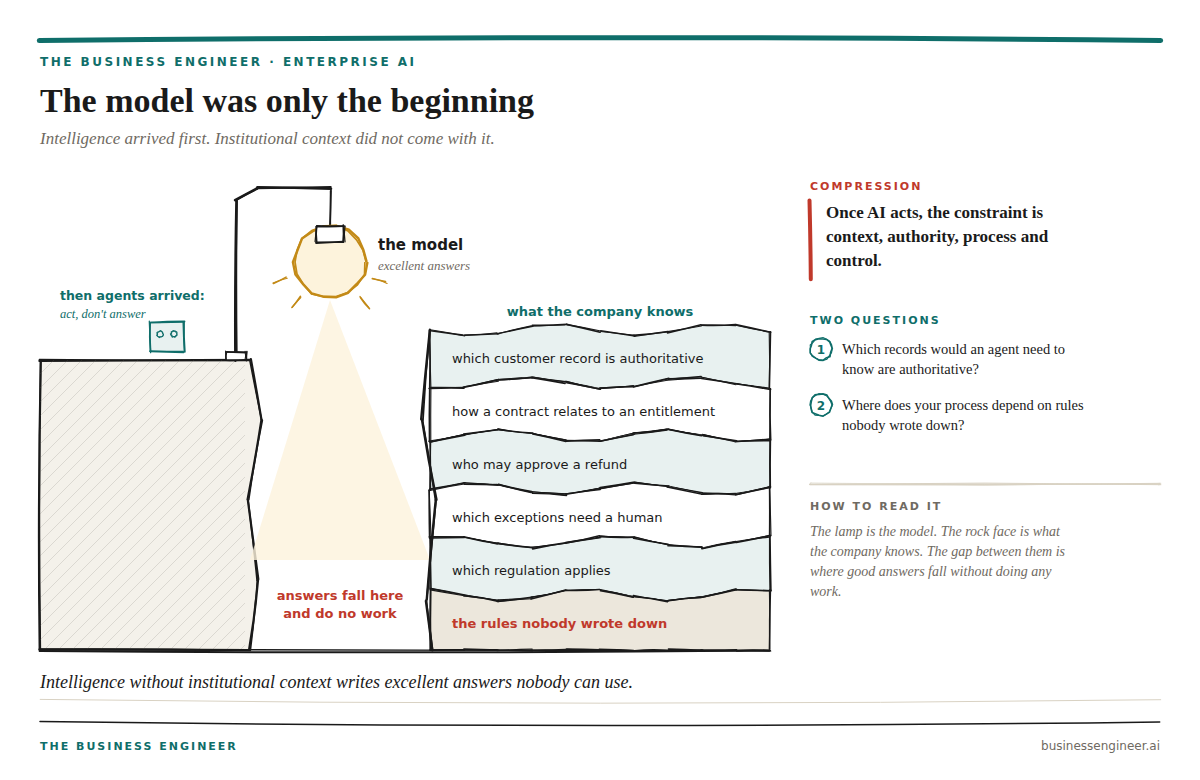
Deployment exposed the limit. A model could write an excellent answer and still be nearly useless in a real operation. It did not know which customer record was authoritative. It did not understand how a contract related to an entitlement. It could not tell whether an employee could approve a refund, which exceptions needed human review, or which regulation applied to a given transaction. The model had intelligence without institutional context.
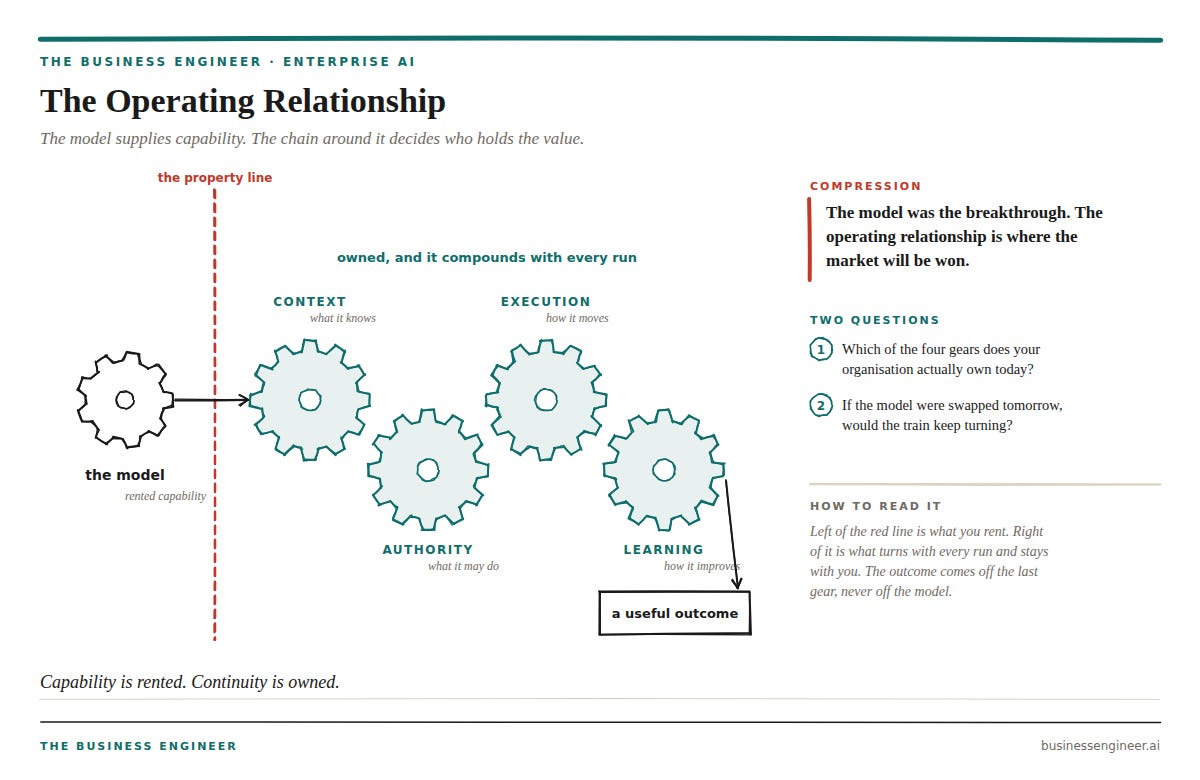
Then agents arrived, and the ambition moved from answering questions to doing work. The system would no longer recommend an action. It would open the case, update the record, contact the customer, issue the refund, escalate the exception, and document what happened.
The adoption record shows how far that ambition still is from reality. Ali Ghodsi, who runs Databricks, describes asking enterprise audiences how many of them manage fleets of agents that coordinate with each other. Almost nobody raises a hand. Most are using a chatbot as a faster search engine, plus coding assistants. His diagnosis is blunt: the frontier models are already smart enough, but they lack the context that exists inside any organisation. He sells a platform built to capture that context, so the view is not disinterested. It still matches what most deployments show. For the typical enterprise, a smarter model is not the bottleneck.
That changed the nature of the problem. Once AI begins to act, the constraint is no longer intelligence. It is context, authority, process and control. This is the market now taking shape.