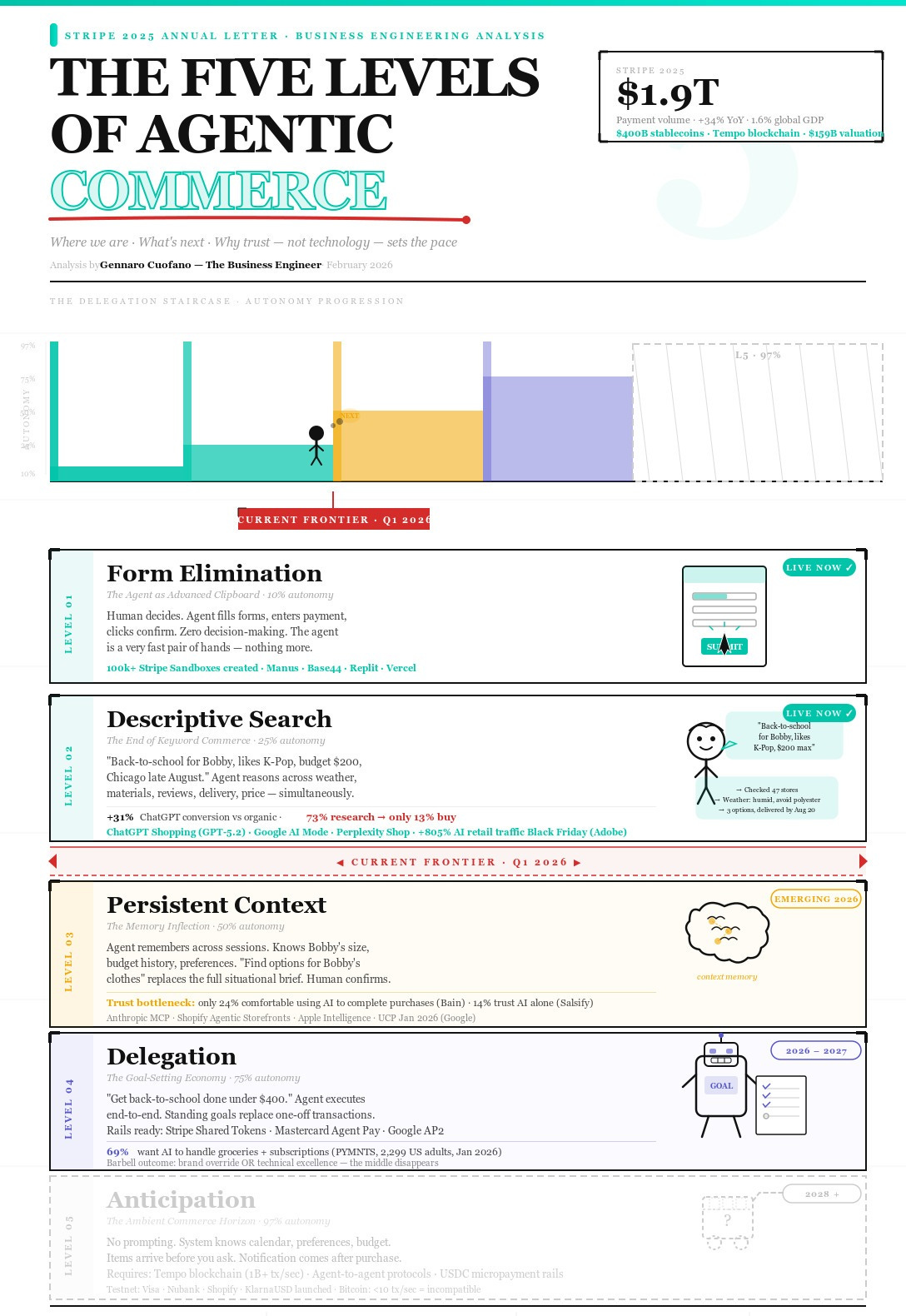

A growing number of global consumers now use AI in their shopping journey, and more and more are completing purchases after being referred by an AI assistant. That gap between research behavior and transaction behavior is not a technology problem. Every model capable of reasoning across weather, materials, price, delivery windows, and consumer taste profiles simultaneously already exists. The infrastructure for agent-initiated payments — cryptographically signed mandates, shared payment tokens, stablecoin micropayment rails — is either live or in active testing.
The gap is a trust problem. And trust problems close through accumulated evidence, not just through technical capability announcements.
This piece is about what happens to digital commerce when that gap closes — and it will close, faster than most businesses are prepared for. I am going to work through five distinct levels of delegation: the progression from AI agents filling out checkout forms on your behalf to systems that anticipate your needs before you voice them. Each level represents not just a technical milestone but a trust threshold — a point at which consumers become comfortable handing a new category of decision to a machine.
Understanding where we are, where the next inflection point is, and what the structural consequences of each level look like is the most important strategic analysis any commerce business can run right now.
This classification is inspired by The Stripe Annual Letter and by a mental model John Collison uses to understand where the agentic commerce world is headed.