
There is an interesting pattern in every technology cycle. The moment a profession becomes the hottest thing in the market is often the moment its limitations start to become visible.
And I think we’re reaching that point with Forward Deployed Engineering.
What started as a rather peculiar approach pioneered by Palantir has now become one of the hottest trends in enterprise AI. OpenAI, Anthropic, Microsoft, and AWS are all pouring billions into getting engineers closer to customers, with the promise of finally bringing AI into the enterprise.
And to be clear, this approach works. In fact, it works extremely well.
Yet there is a fundamental distinction that I think is getting lost in all the excitement.
Getting AI to work inside an enterprise is not the same as getting AI to run the enterprise.
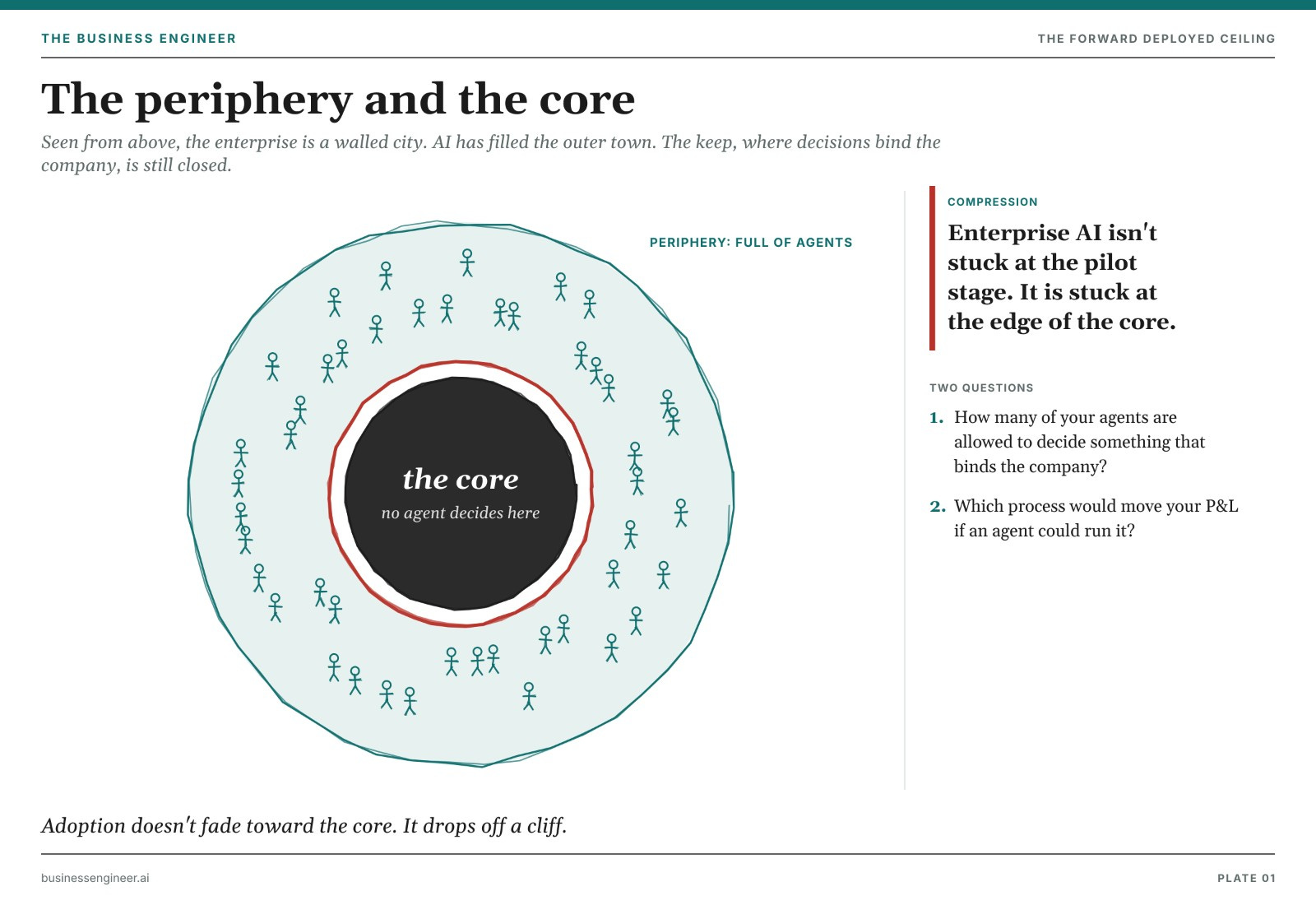
You can deploy hundreds of agents, automate thousands of tasks, and demonstrate impressive productivity gains. Yet the decisions that actually determine how the business operates, from approving a loan to underwriting an insurance policy or managing a complex supply chain, might remain almost entirely untouched.
Why?
Because the closer you get to the core of an organization, the less the problem is about technology and the more it becomes about something that companies have spent decades accumulating, often without even realizing it: institutional knowledge and judgment.
The expertise of the people who know why a decision should be made, when an exception is justified, who has the authority to approve it, and what happens when things go wrong.
Most of that knowledge has never been properly written down. It lives in people’s heads, in the way teams negotiate decisions, and in processes that have evolved over decades.
You can’t simply send an engineer into a company, connect a frontier model to its systems, and expect all of that to become executable.
And herein lies the paradox of the current FDE boom.
The very work that made Forward Deployed Engineering successful is increasingly being automated by AI itself. Meanwhile, the work that would unlock the largest economic value remains largely unsolved.
I think this is where the next major shift in enterprise AI will happen. From Forward Deployed Engineering to what I call Deep Domain Engineering: moving beyond deploying intelligence into an organization, toward capturing the organization’s own intelligence and turning it into something that AI can execute.
To understand why this matters, we first need to look at the invisible boundary that separates where enterprise AI is succeeding today from where its real economic potential sits.
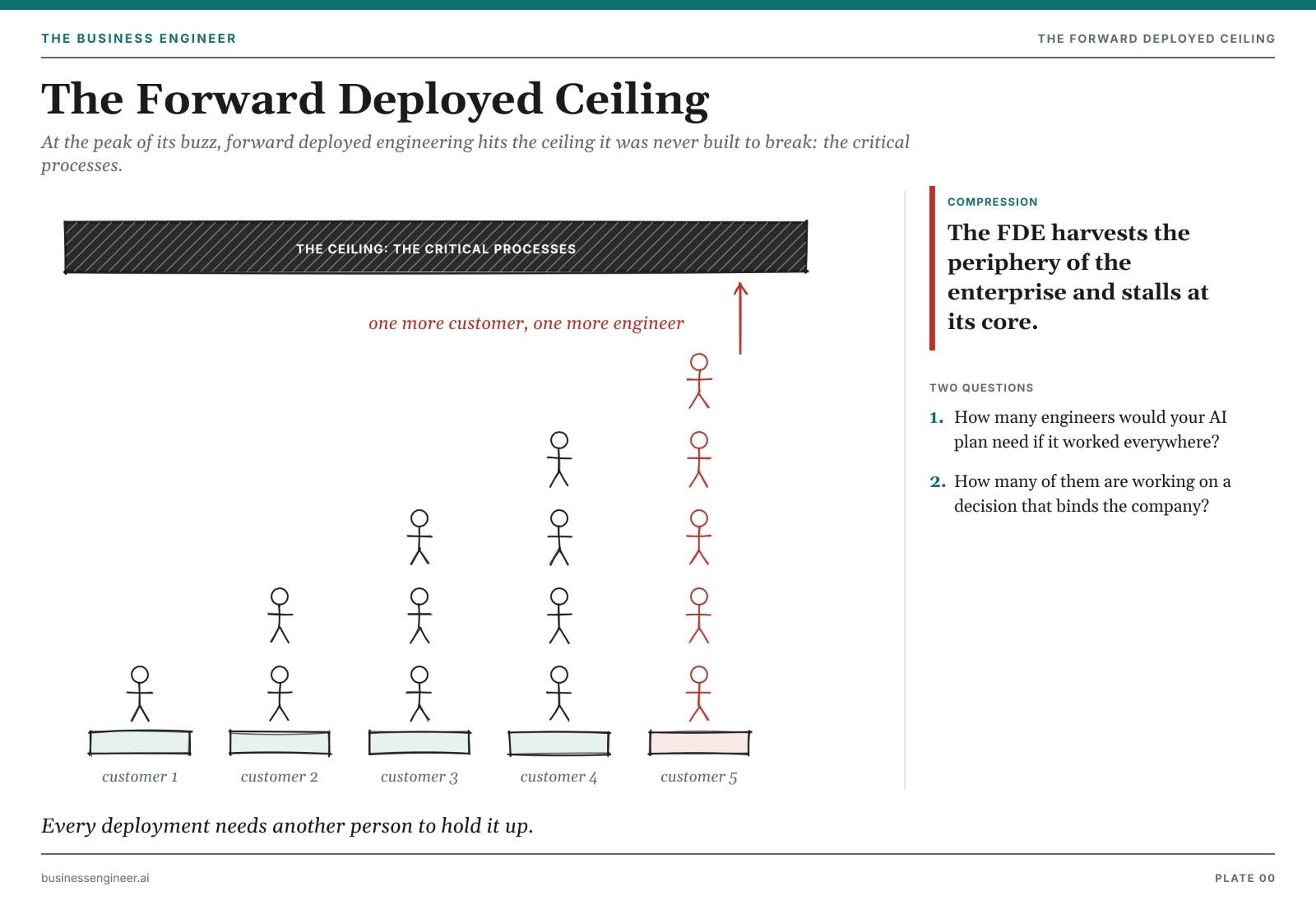
This is the paradox of the current FDE boom: just as Forward Deployed Engineering has become one of the most sought-after professions in AI, we are beginning to see the ceiling of what it can actually achieve.
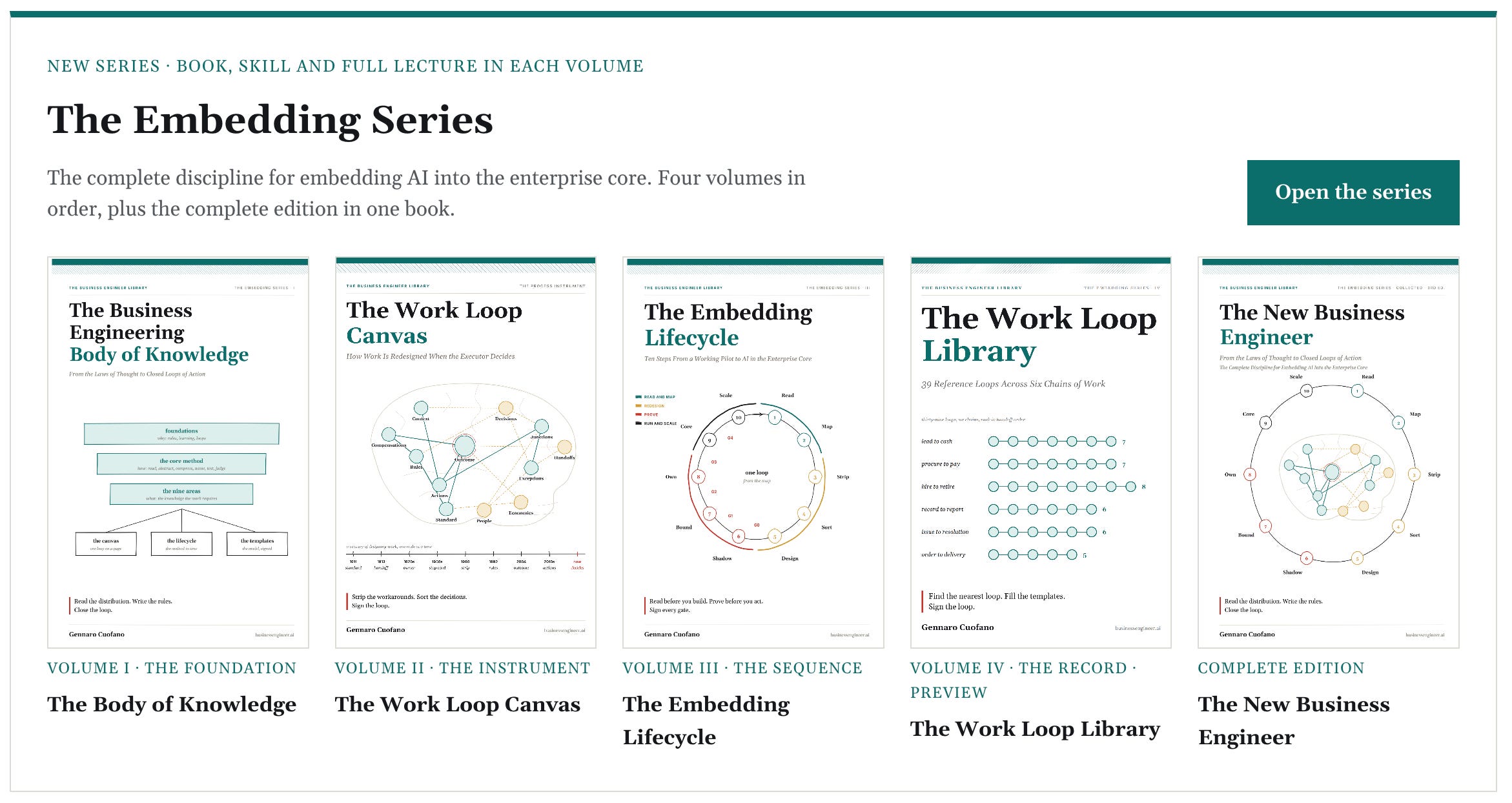
Get The New Enterprise AI Embedding Series

Professions tend to peak at a particular moment. It comes when they have proven what they can do, and just before the market learns what they can’t. Forward deployed engineering is at that moment now.
What it has proven is real. Put a capable engineer inside a company, give them a frontier model and a sponsor, and something works within weeks. That is no longer in doubt, and the money has followed. OpenAI built a deployment company with more than $4 billion behind it. Anthropic formed a $1.5 billion venture with Blackstone, Hellman & Friedman and Goldman Sachs. AWS committed $1 billion to an FDE organization. Microsoft put $2.5 billion and 6,000 engineers behind a division it says goes beyond the label.
What it hasn’t proven is the thing all that capital is implicitly pricing. The bet is that sending engineers in is how AI reaches the processes a company actually runs on: the credit decision, the claims adjudication, the clinical pathway, the pricing exception, the supply plan. These are the processes where a decision binds the company. They are where the economic case for enterprise AI is supposed to come from.
The argument here is that the FDE motion, by its design, harvests the periphery of the enterprise and stalls at its core. That isn’t because the engineers are weak. It’s because the core is blocked by things engineering doesn’t control. And the peak of the buzz is the right moment to see it, because the peak is when the easy ground runs out.
The periphery and the core