

In 1933, a young lawyer named Marvin Bower joined a small Chicago consulting firm founded seven years earlier by James O. McKinsey.
Bower did not found McKinsey, nor did he invent management consulting. But he became one of the central architects of the modern profession. Harvard Business School goes further, calling him the father of modern management consulting.
Bower believed consulting should operate as a profession rather than simply another commercial trade. Over the following decades, McKinsey institutionalized many of the practices that would come to define elite consulting: the firm above the individual, an independent obligation to tell clients what consultants believed to be true, recruitment of exceptional young graduates, apprenticeship, and eventually the up-or-out system.
Together, those choices helped institutionalize one of the most successful organizational models of the twentieth century.
The pyramid.
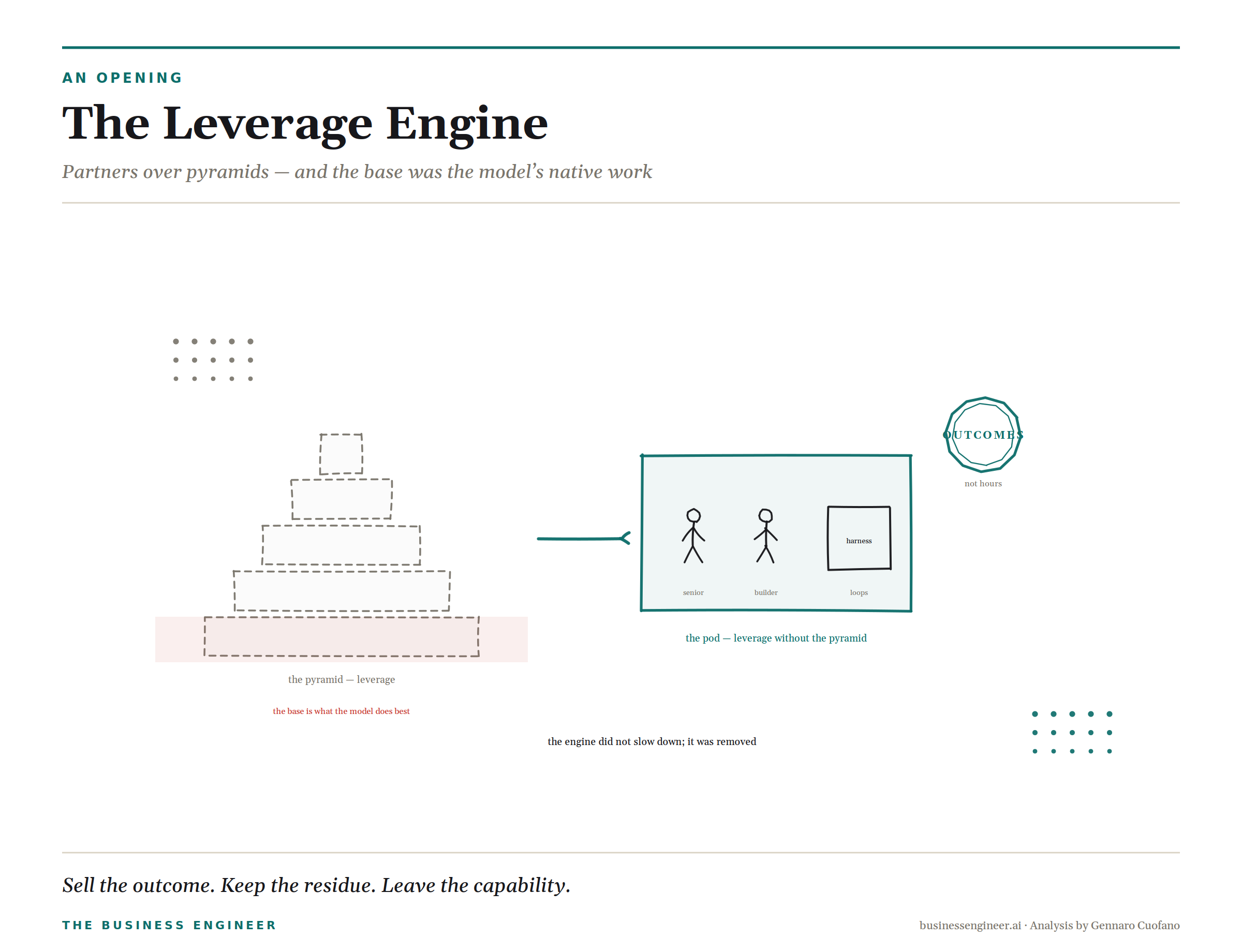
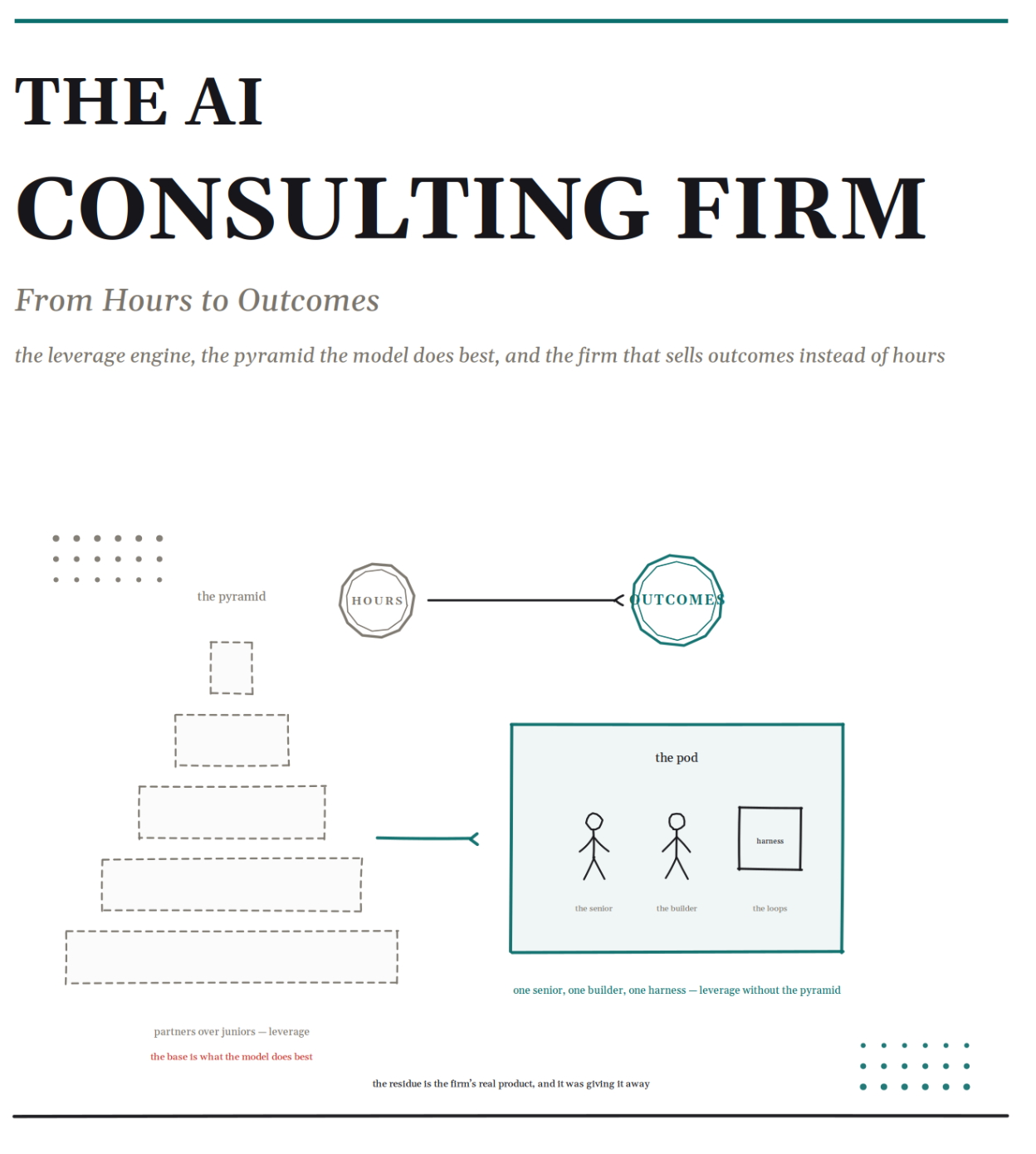
A small number of expensive partners sat at the top. Beneath them were layers of bright, relatively inexpensive juniors who researched, interviewed, modeled, synthesized, and built the slides. The client paid for the partner’s judgment, while much of the work was produced by the pyramid underneath.
For decades, that was the economic engine of consulting: leverage.
Then AI arrived.
For seventy years, the consulting business model ran on a quiet engine: leverage.
A small number of expensive partners sat atop a large pyramid of bright, inexpensive juniors who researched, modeled, interviewed, synthesized, and built the slides. The client paid for the partner’s judgment but received, for the most part, the pyramid’s labor.
The economics followed from that ratio: billing rates, utilization, up-or-out promotions, profit per partner. A firm became more valuable when each partner could sell more junior hours beneath them.
AI attacks precisely that layer.
Research and synthesis. First-draft analysis. Public-source benchmarking. The first model. The first slide. The base of the consulting pyramid was among the first categories of professional work to become legible to a machine.
The engine did not merely become more efficient.
It was removed.
Three consequences follow:
The base became rentable. Leverage that once belonged to the firm can now be purchased by almost anyone for a subscription.
The hour begins to lose its role as the unit of value. Once clients can see the approximate cost of producing an outcome, charging for the time between input and output becomes harder.
The deliverable loses scarcity. For seventy years, the document was what the firm left behind. Now the document is cheap.
What the client increasingly wants instead is the capability.
And what the firm should have been accumulating all along is the residue of every engagement it ever ran: decisions, exceptions, cases, methods, and patterns that repeated across clients.
Instead, most of that knowledge left inside the deck.
The industry is therefore not disappearing. It is splitting between firms using AI to produce the old product faster and firms rebuilding what the product is.
This volume is for the second group.
Sell the outcome. Keep the residue. Leave the capability.
This is a new book in The Business Engineer’s Series.
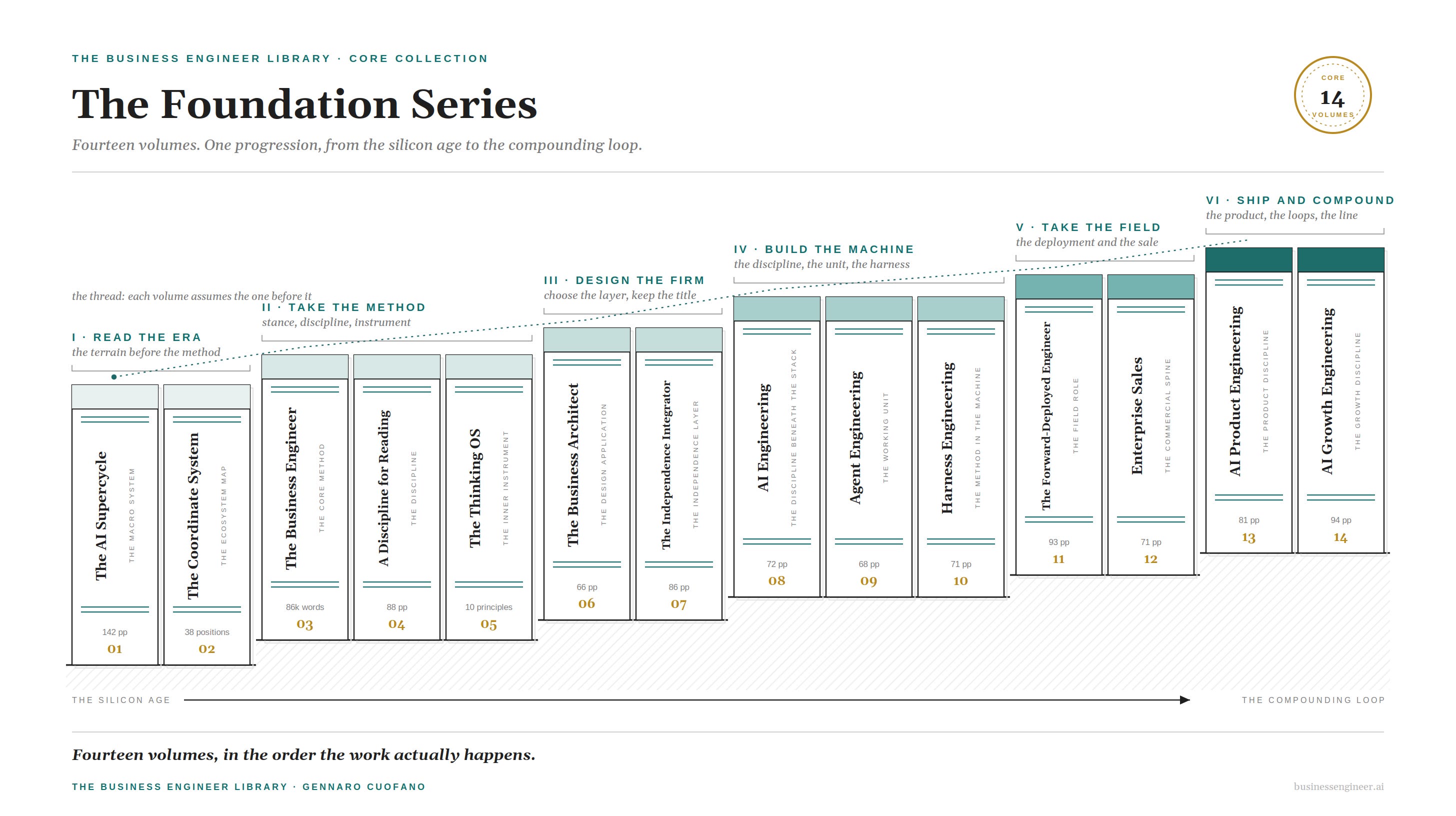
For the last three years, I’ve been rebuilding the Business Engineer’s curriculum from the ground up. That curriculum has now become the foundation of a new discipline, with the entire series taking shape around it.
If you’re already a paid member, simply reply to this email, and we’ll send it your way.