

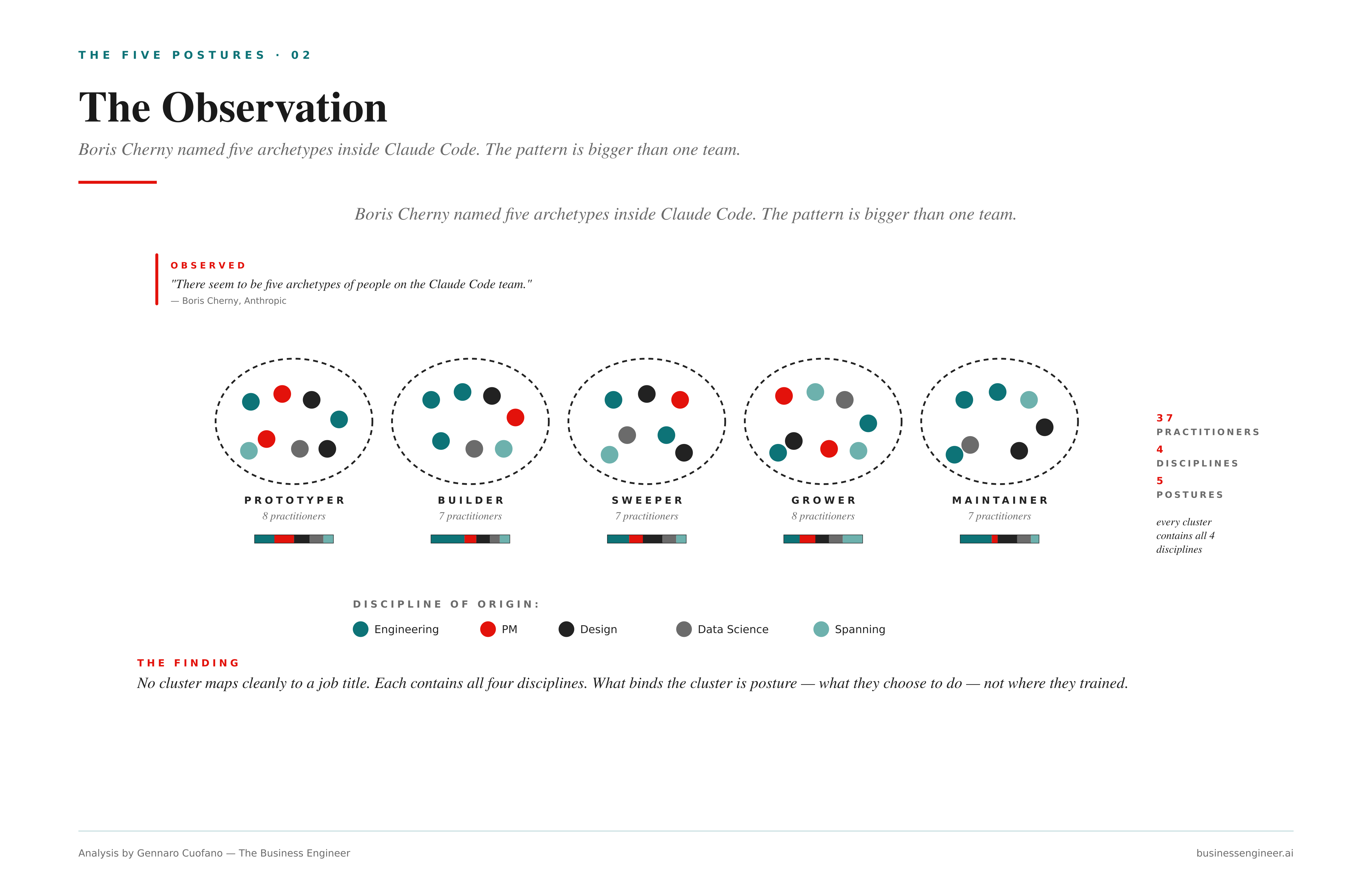
Boris Cherny — Anthropic, Claude Code — posted an observation about role taxonomy that is worth taking seriously. The substance: looking at the Claude Code team, he identifies five archetypes not tied to traditional job functions.

He calls them Prototyper, Builder, Sweeper, Grower, and Maintainer. Some people span two of these, sometimes three. The archetypes cut across disciplines — some designers operate as Prototypers, some as Sweepers; the same is true for engineers, PMs, data scientists. And the right mix changes with where a product is in its lifecycle.
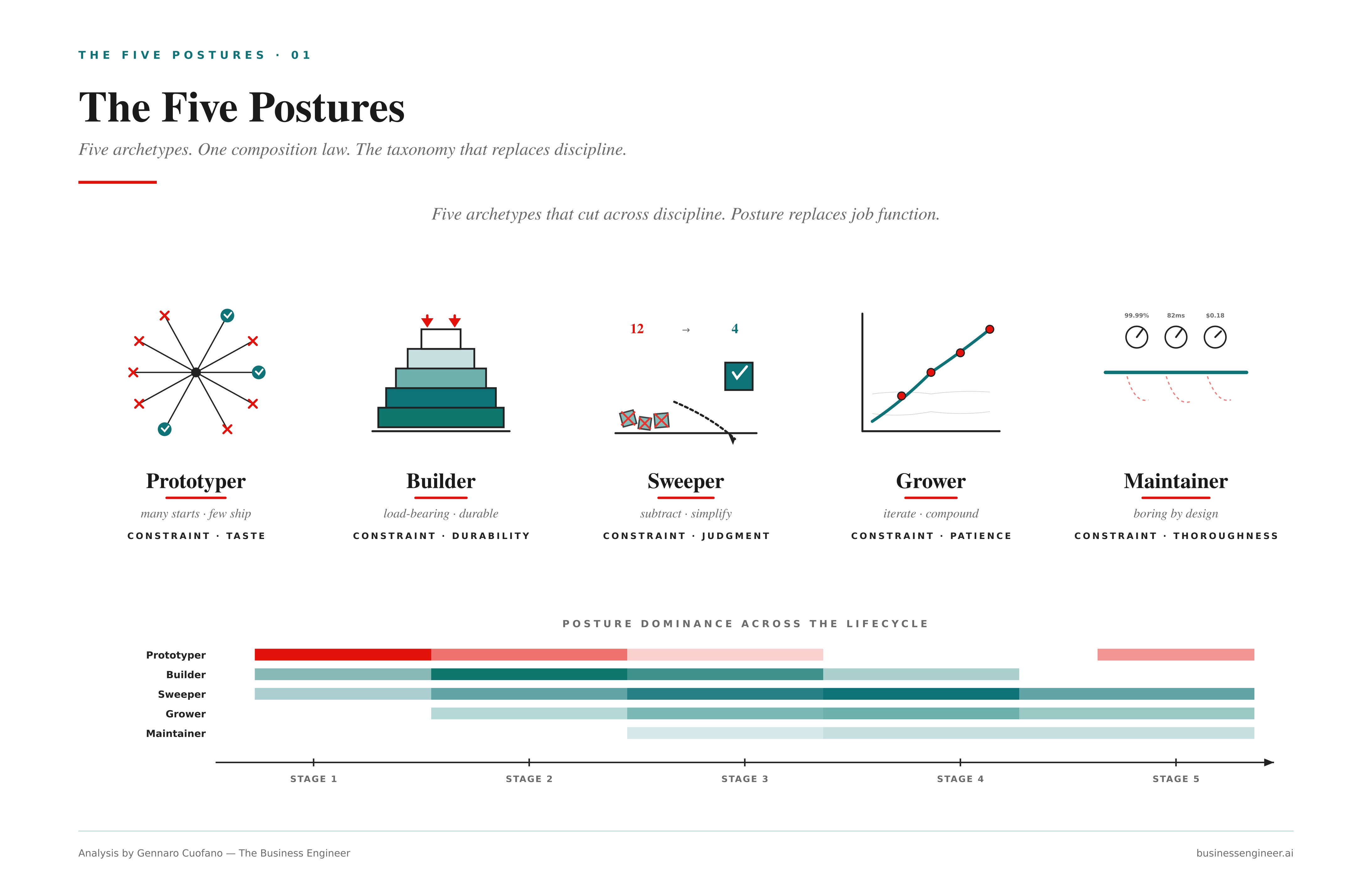
The framing is provisional — Cherny closes with a question, not a claim: maybe product roles of the future will look more like this, and less like the domain-specific roles of today. The provisional tone is correct. The observation itself is more important than its provisionality.
What he is describing is not a curiosity inside one team. It is the visible surface of a structural change that has been working its way through software work for three years, and that is now legible enough to name. The taxonomy that organized software work for the last two decades — we hire engineers, PMs, designers, data scientists, and they collaborate across functional lines — is being replaced by a lifecycle taxonomy that organizes the same people differently.
The new question is not what discipline you are trained in. It is what posture and intersection you take toward the work at this stage.
This piece does three things:
Anatomizes each of the five postures in operational detail — what the posture is, how it shows up in real work, its binding constraint, its failure modes, and where it ships value versus where it destroys it
Builds a proper structural framework — the Posture Lifecycle — naming five stages of an AI-native startup and the composition rule at each, including transition signals and characteristic failure modes
Names the implications for hiring, for careers, and for the founders building these companies
Follow me also on The AI Supercycle!
Join theYearly Premium Membership To Get The Builder-PM
Or