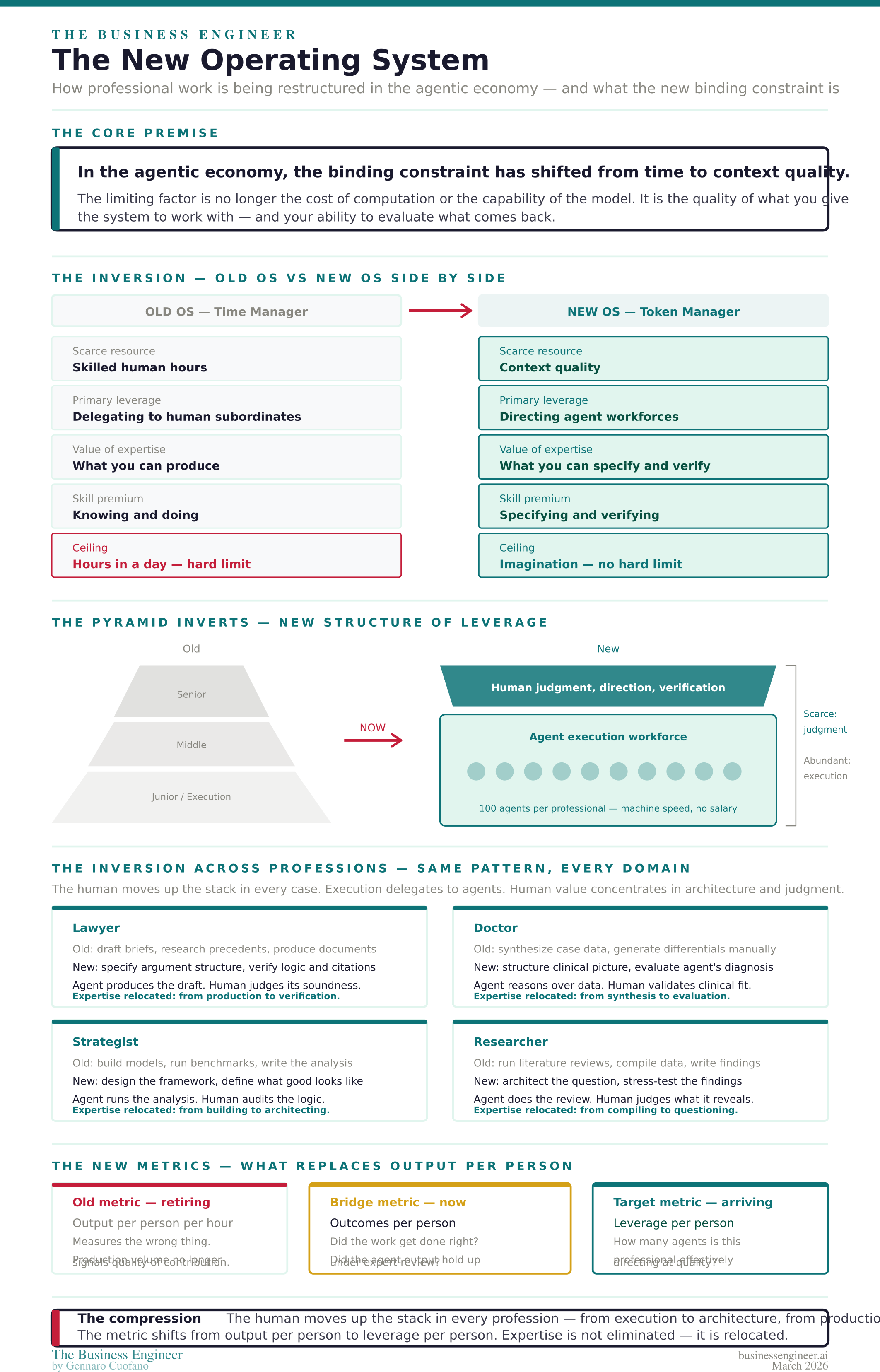

There is a transformation happening to every knowledge professional alive today, and most of them are experiencing it without a framework for what it actually is.
They can feel it. The engineer who now has Claude code whole modules while they review the architecture. The lawyer who runs contract analysis in minutes rather than hours. The researcher who wakes up on a Sunday, boots up an agentic system, and produces in thirty minutes something that would have been a seven-year PhD thesis. They feel the ground shifting. But they don’t yet have the conceptual vocabulary to describe what they’ve become.
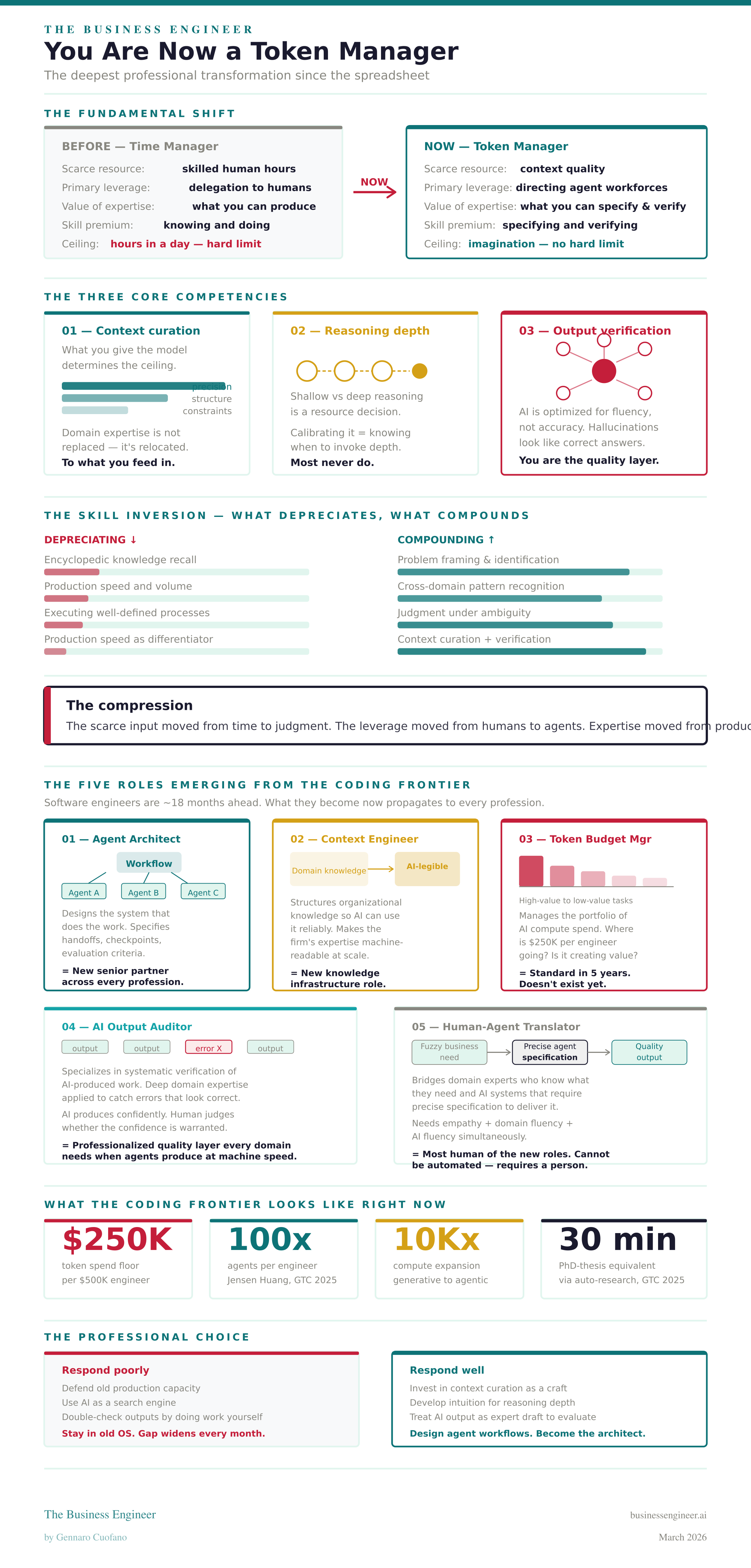
Here is that vocabulary: you are now a token manager or even better, an AI Orchestrator.
Not metaphorically. Not as a cute rebranding of “AI user.” Structurally, mechanically, and economically, a token manager is the most accurate description of what a high-performing knowledge professional is in 2025 and beyond. Understanding what that means in depth changes how you think about work, skills, hiring, measurement, and competitive advantage.
What a Token Actually Is
Before the role can be understood, the resource has to be understood.
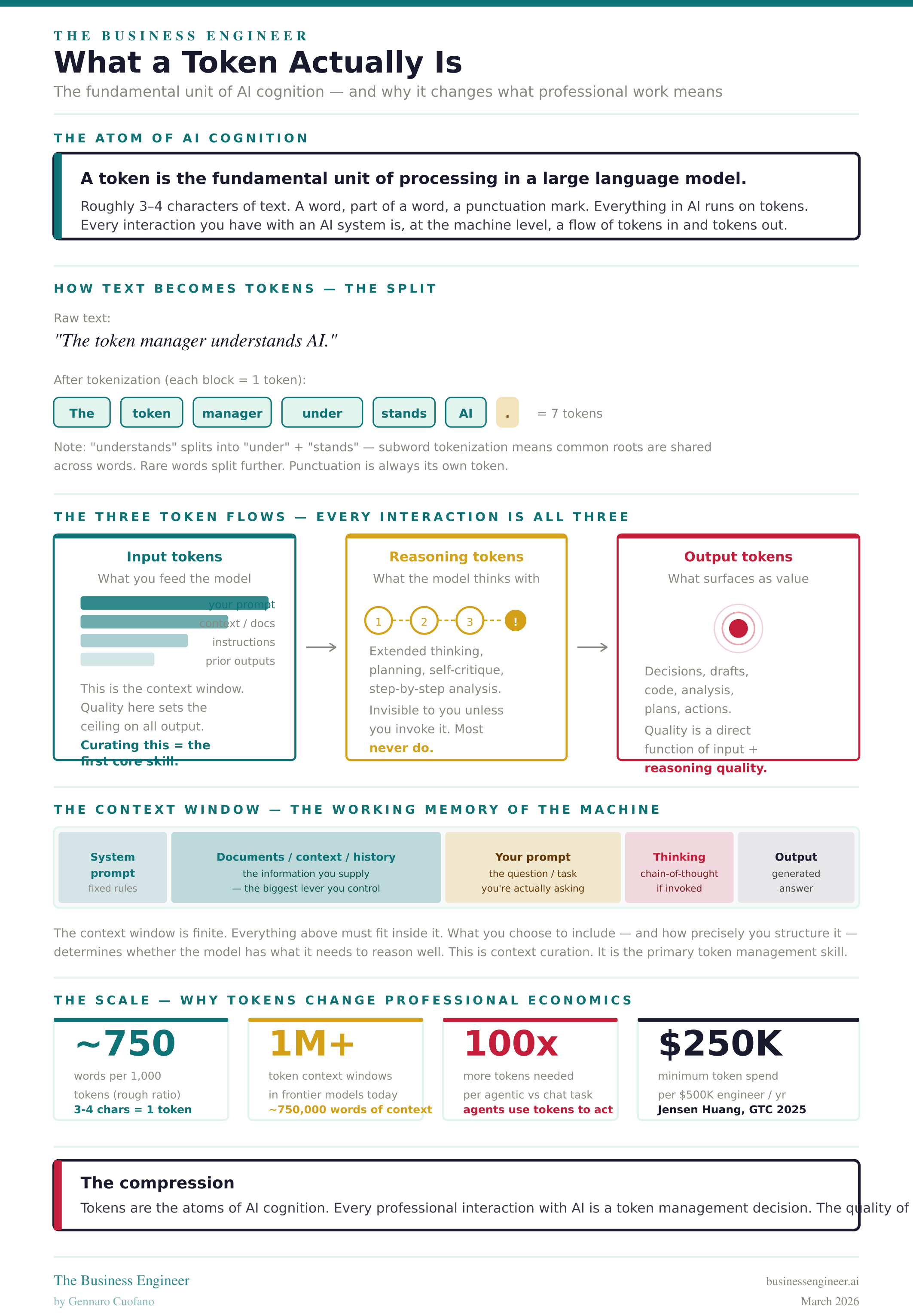
In the architecture of large language models, a token is the fundamental unit of processing — roughly three to four characters of text. When you write a prompt, it is converted into tokens. When the model thinks — chains through reasoning steps, evaluates possibilities, self-corrects — those thoughts are tokens being processed. When the answer appears, those are output tokens.
Everything that happens inside an AI system, from the moment you initiate an interaction to the moment a result is returned, is a function of token processing. Tokens are the atoms of AI cognition.
What this means is that when you interact with an AI system, you are not simply “using a tool.” You are making resource allocation decisions:
How much context to provide — and how precisely to structure it
How deeply to engage the model’s reasoning capacity — shallow answer or multi-step analysis
Which tasks to route to which models — the right workload on the right chips, as Jensen Huang put it
How to evaluate the quality of what comes back — and whether to iterate
Each of those decisions has a direct effect on the quality, speed, and cost of the output. Each is, in the strictest sense, a token management decision.
The person who understands this operates in a completely different mode from the person who does not. The person who does not sees AI as a question-answering interface. The person who does sees it as a reasoning infrastructure to be engineered, a cognitive resource to be allocated, a workforce of agents to be directed. These are not stylistic differences. They produce different outcomes by orders of magnitude.
The Old Operating System
To understand what has changed, you have to be precise about what the old operating system was.
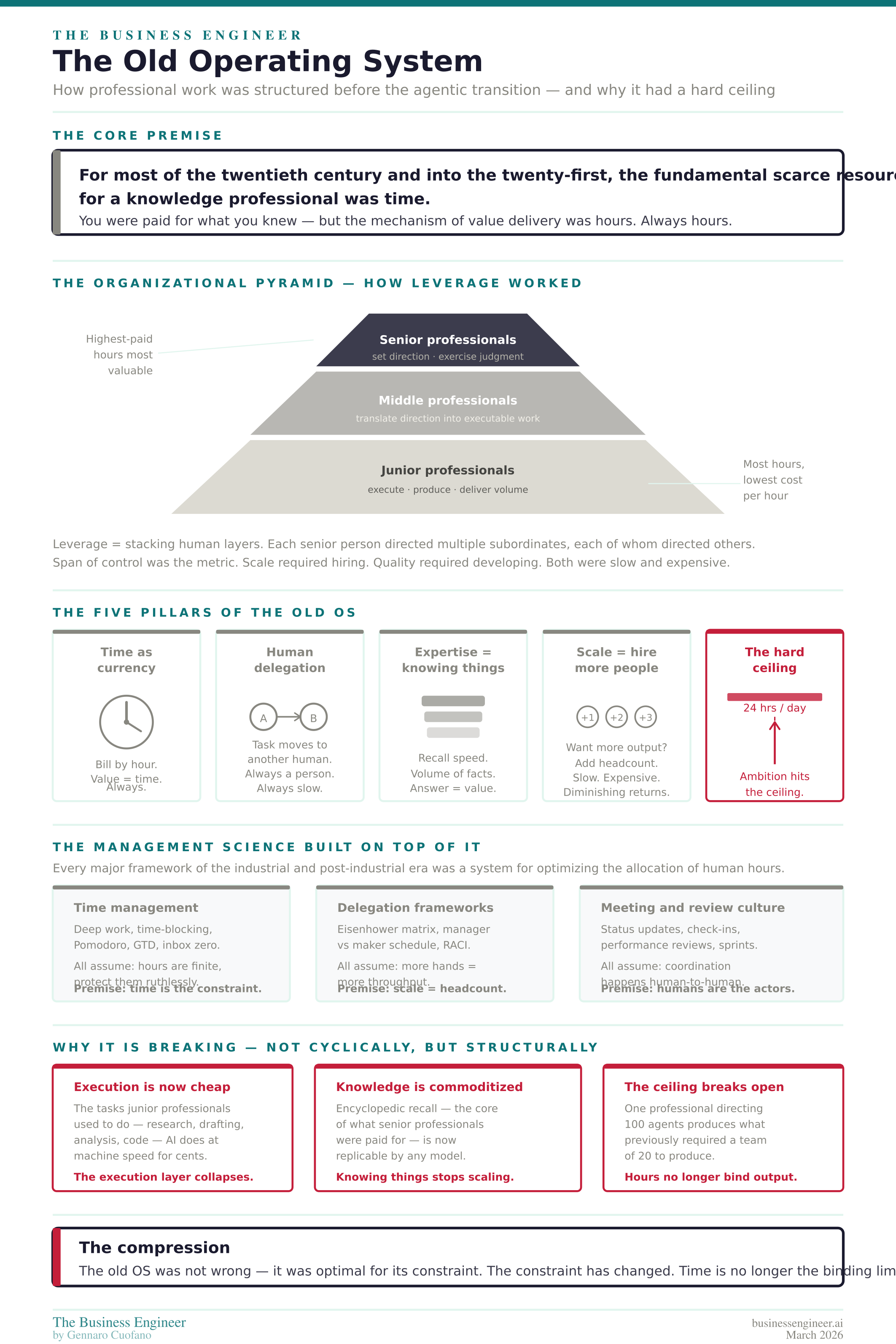
For most of the twentieth century and into the twenty-first, the fundamental scarce resource for a knowledge professional was time. You were paid for what you knew, yes, but the mechanism of value delivery was hours. You billed by the hour. You were evaluated based on output per unit time. You delegated to subordinates because you could not do everything yourself, and the thing you could not scale was the number of hours in a day.
The entire management science of the industrial and post-industrial era was a system for optimizing the allocation of human hours:
Time management, deep work protocols, prioritization frameworks — all built on the premise that the binding constraint was human time
More skilled people commanded more money because their hours produced more value
Organizations were pyramids that directed the most skilled hours toward the most valuable problems
Scale required hiring. Quality required developing. Both were slow, expensive, and subject to diminishing returns
The fundamental unit of production in a knowledge economy was the skilled human hour. This model produced extraordinary results. It also had a hard ceiling.
That ceiling was the number of hours a skilled human could produce. And that model is now breaking — not cyclically, but structurally.
The New Operating System