

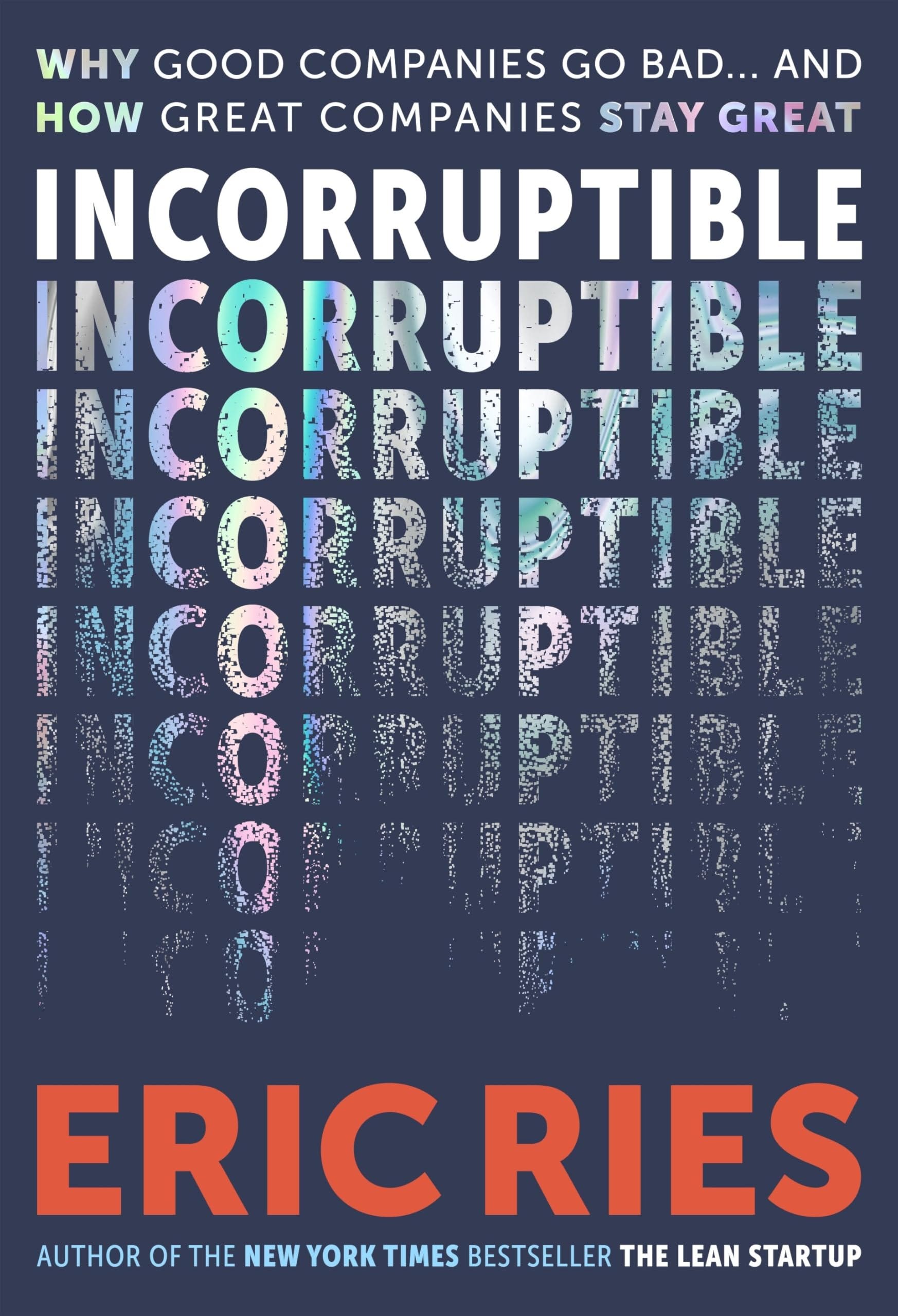
I sat down with Eric Ries — the architect of the Lean Startup methodology, founder of the Long-Term Stock Exchange, co-founder of Answer.AI, and author of the new instant New York Times bestseller Incorruptible: Why Good Companies Go Bad and How Great Companies Stay Great (Authors Equity, May 2026).
Eric was one of the people Anthropic’s founders consulted when they were architecting the company. What follows is the conversation, distilled in the four-layer structure Business Engineer readers know.
The Setup
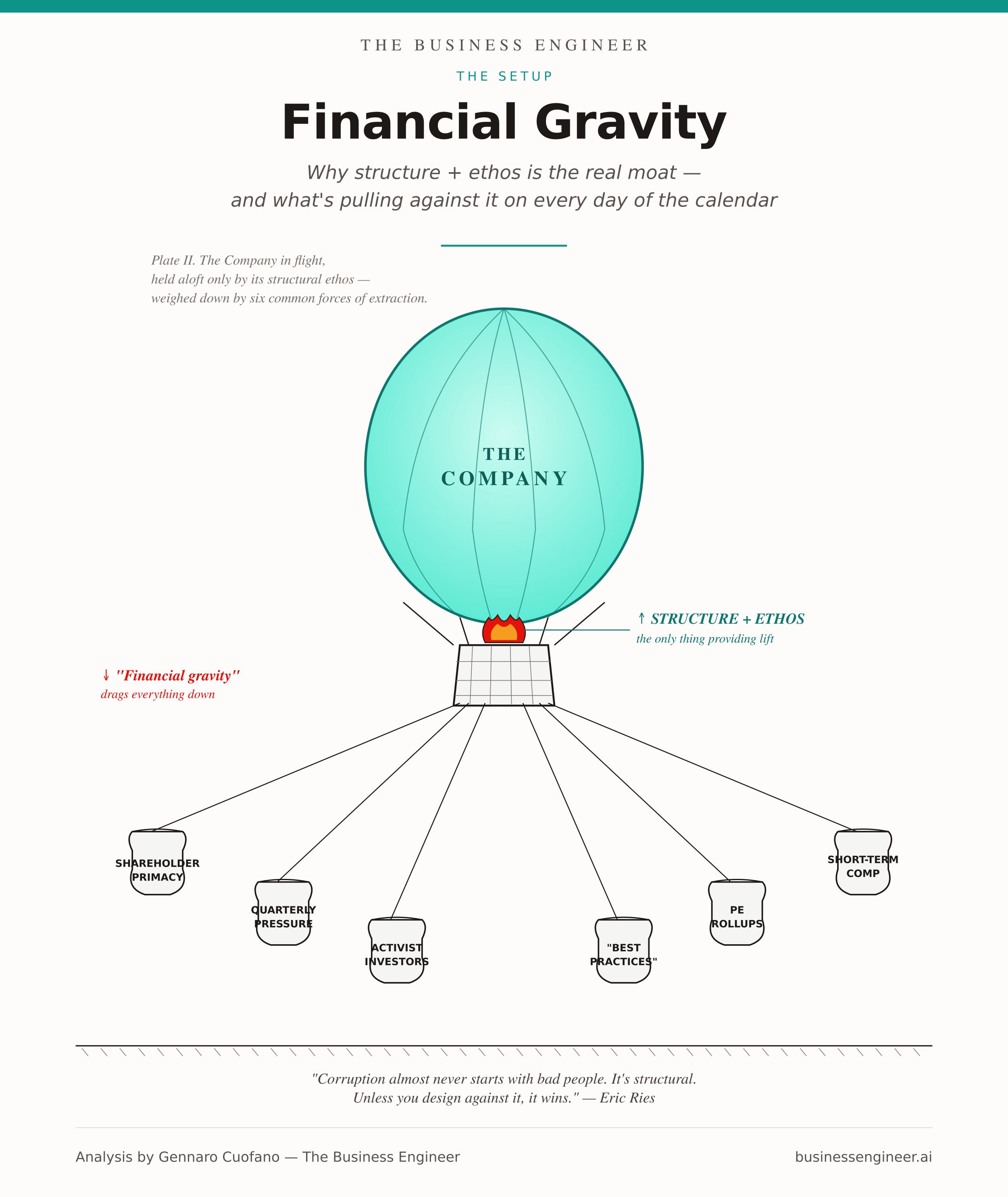
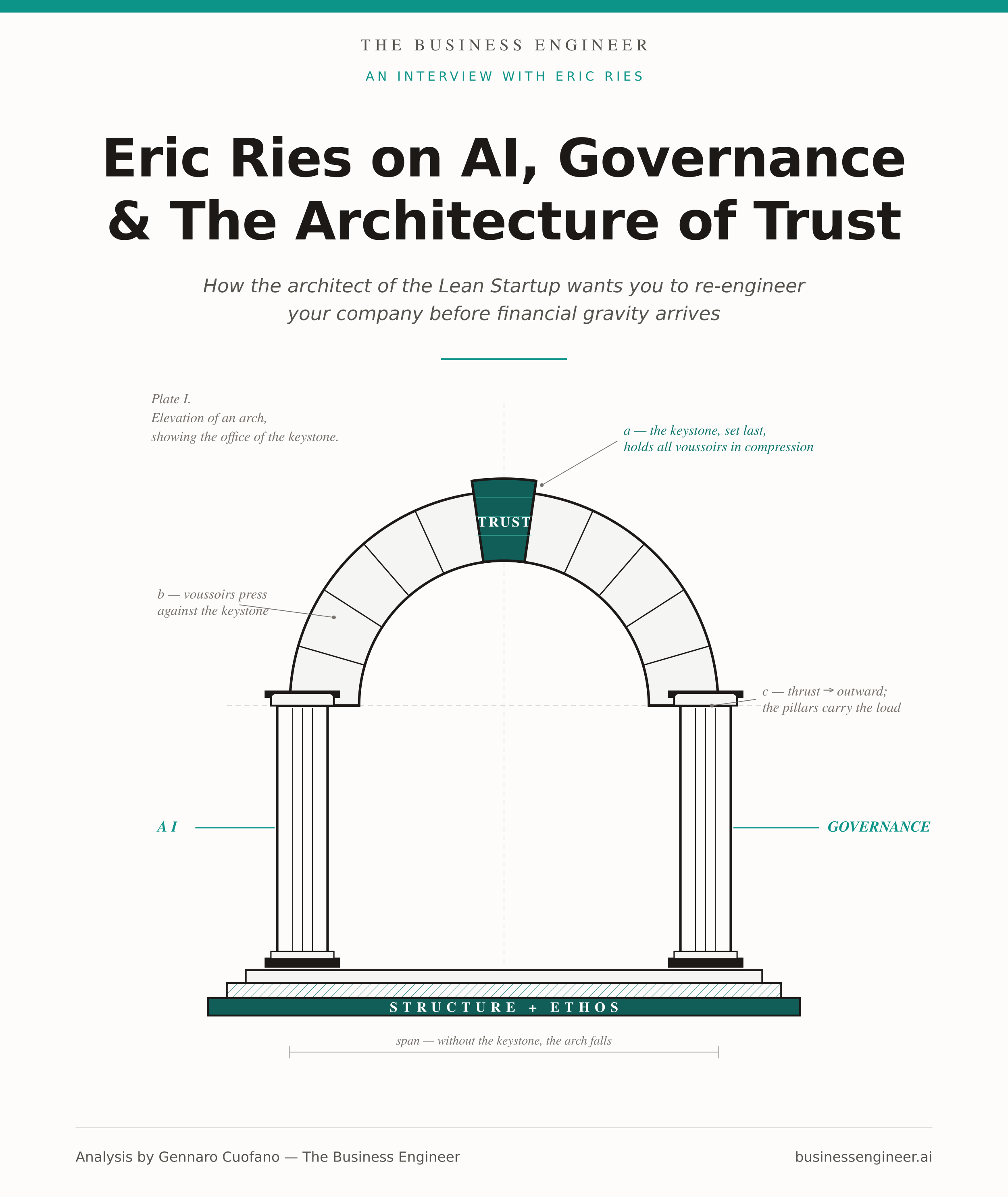
Ries is making a structural argument, not a moral one. He doesn’t want you to be a better person. He wants you to install load-bearing walls before the financial-gravity earthquake arrives. The thesis: every observed competitive advantage at Anthropic, Costco, Patagonia, Novo Nordisk, Tony’s Chocolonely recurses down to two ingredients — structure and ethos. Everything else is downstream.
Five things to know
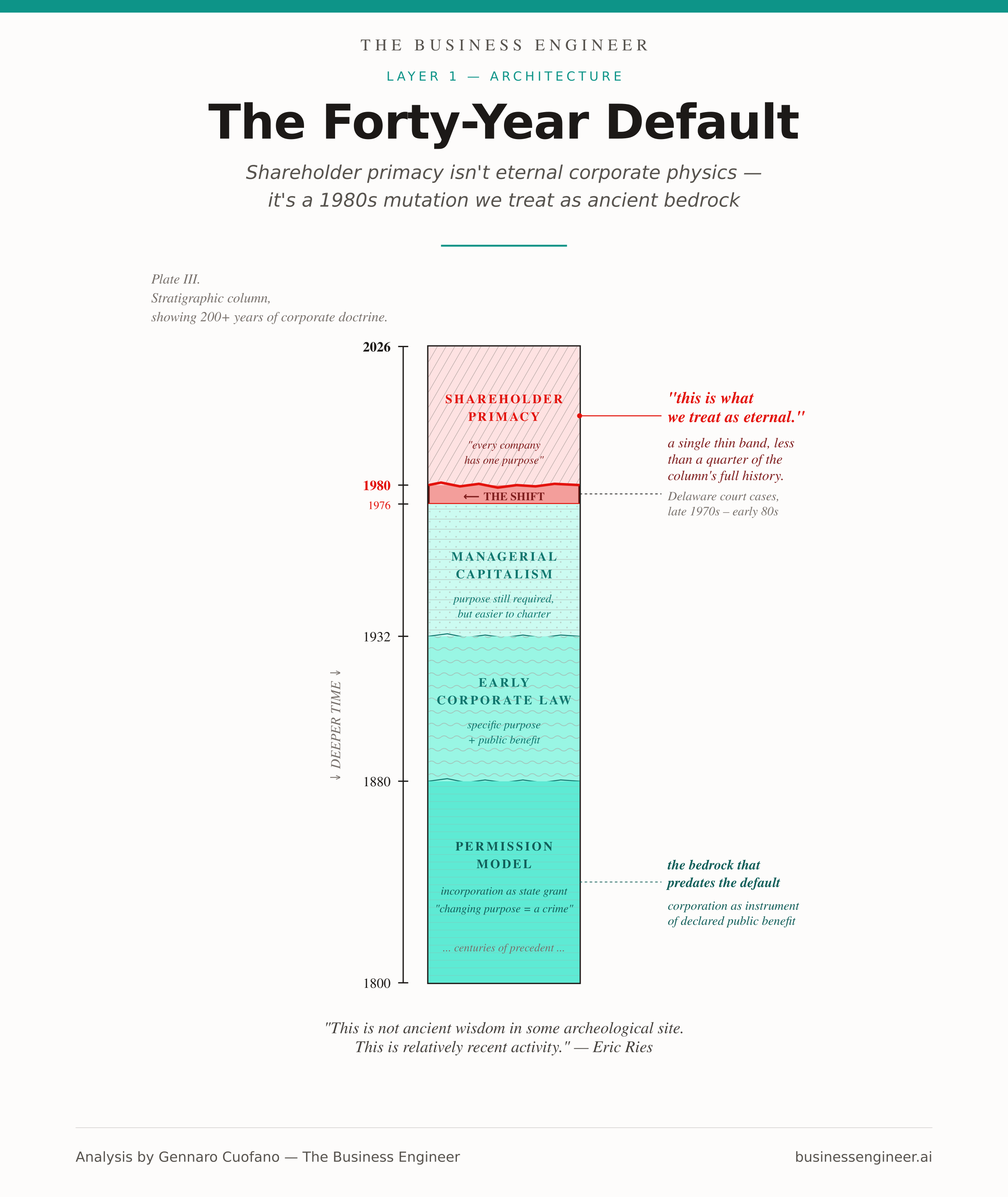
Shareholder primacy is forty years old, not eternal: Until the late 1970s, U.S. corporations had to declare a specific purpose and a public benefit just to incorporate. Single-purpose profit-maximization was enacted through a series of Delaware court cases in the 1980s. It is not ancient wisdom — it is a recent legal mutation that can be re-architected with a two-page filing.
Founder mode solves the wrong problem: It addresses immediate control. It does not address succession. The founder is not immortal. The structure is.
The Anthropic Recursion is the diagnostic: Lower inference cost → better architecture → better team → top talent picks them → trust in character → culture resists corruption → structure + ethos. Run the cascade on any winning company. You will land in the same bedrock.
The mission lock is a competitive moat, not a moral indulgence: Tony’s Chocolonely. Novo Nordisk. Vanguard. Anthropic. Once you accumulate enough “exceptional” cases, the rule of inevitability falsifies itself.
Harder is easier: Upfront governance friction — PBC filing, fiduciary commitments, mission guardian structure — creates counter-gravity. It reduces long-term coordination cost. The companies that skip it pay every quarter in talent, trust, and pricing power.
What it means
For AI-era founders, this is not theology — it is procurement spec. The companies that win the talent war, retain the most demanding users, and survive sovereign-scale pressure will be the ones whose charter, board structure, and operating culture are aligned around purpose before they are tested. The ones that aren’t will be hollowed out on schedule.
Layer 1 — Architecture: The Forty-Year Default