
Most people watching the AI arms race are watching the wrong thing.
They track model releases. They count parameter counts. They read into benchmark scores. They watch Nvidia’s stock price as a proxy for everything else.
These are useful signals, but they are downstream of something more fundamental that almost nobody discusses in the right frame: the physical infrastructure race happening beneath the model layer, and the structural logic governing who wins it.
The State of AI Compute

There is a number that keeps doubling, and nobody outside a handful of data centers fully appreciates what it means.
Understanding that story requires a different set of analytical tools than most people carry. The standard frame — market share, revenue, product roadmaps — misses the structural dynamics entirely.
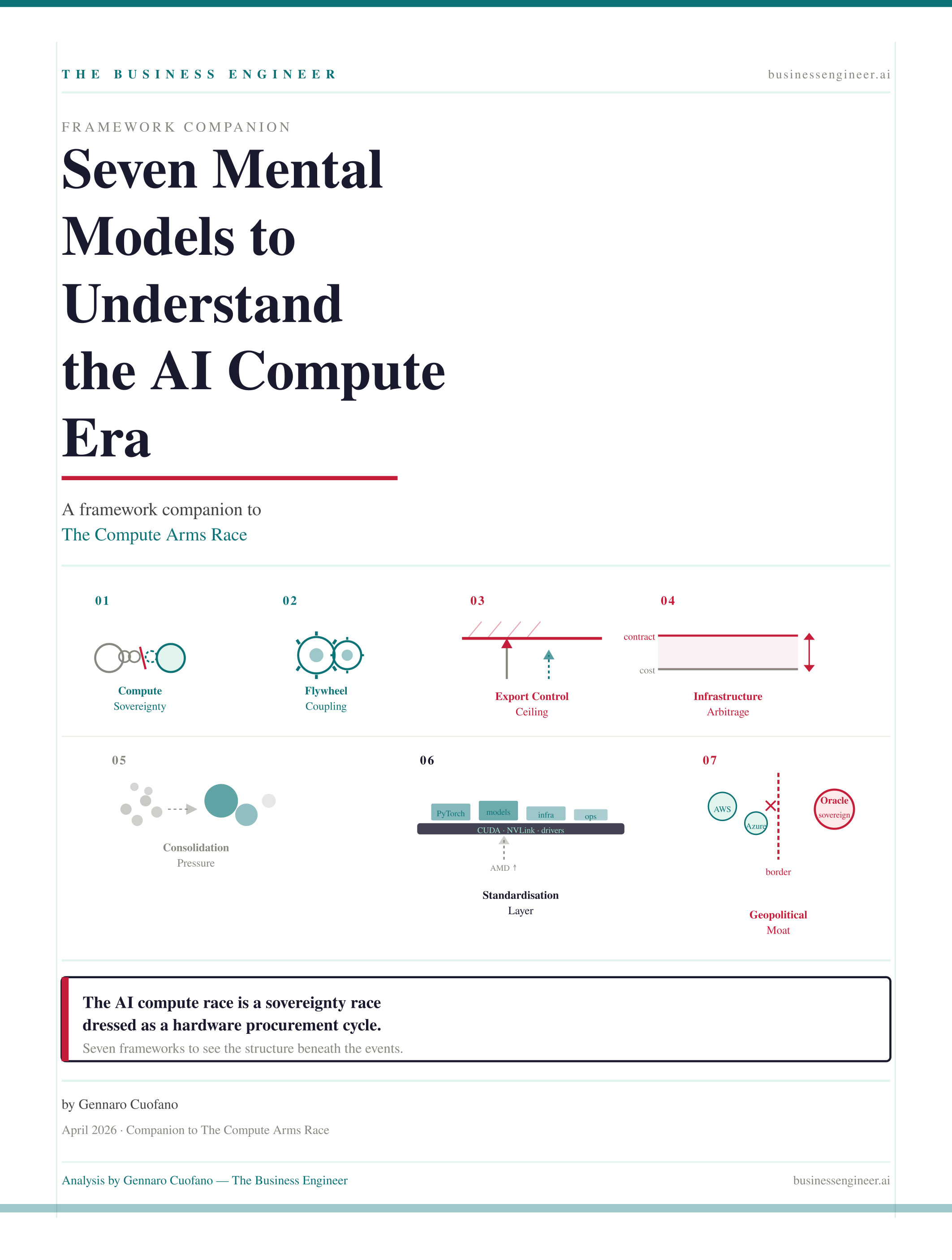
This piece is about the seven mental models that, taken together, give you a working map of the AI compute era. Each model is a transferable lens. Each can be applied beyond AI compute to any industry where infrastructure, supply chains, and platform ecosystems intersect.