

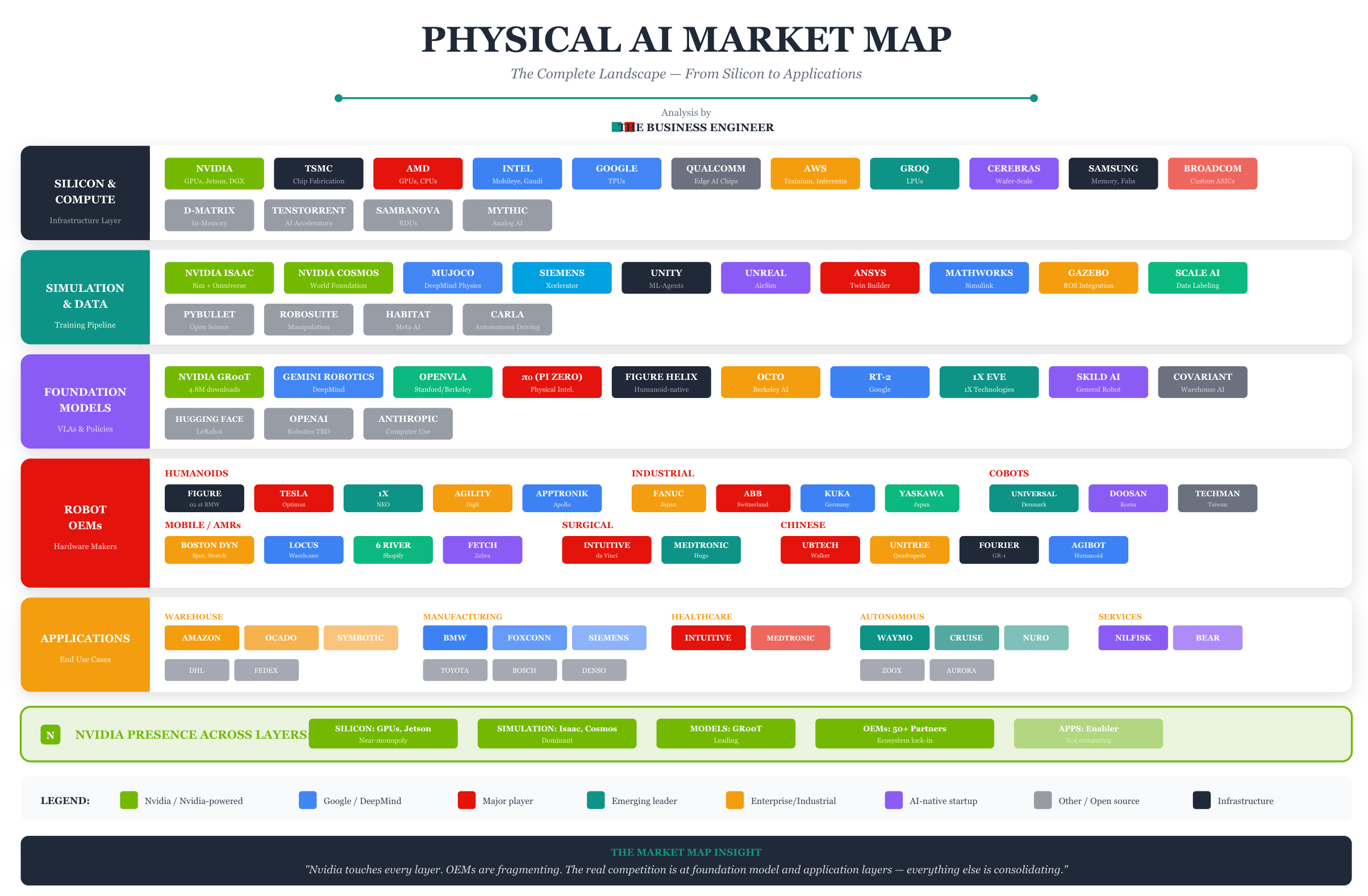
Physical AI represents the next major compute cycle after LLMs, and it’s structurally different from the current AI infrastructure landscape. While digital AI (LLMs, agents) operates in software, Physical AI bridges computation to the real world through robots, autonomous vehicles, and embodied systems.
The key insight: Physical AI doesn’t just consume AI infrastructure, it generates unprecedented quantities of grounded, physics-based training data that digital AI needs to advance. This creates a self-reinforcing flywheel that positions Physical AI as both the largest customer and the largest supplier of the next generation of AI.
Read Also:
Physical AI Is Crossing the Manufacturing Chasm

Physical AI, the convergence of artificial intelligence with robots that perceive, decide, and act in the real world, has reached the critical inflection point Geoffrey Moore identified as “crossing the chasm.”