


Progress is neither automatic nor inevitable. Carl Benedikt Frey’s How Progress Ends delivers a sweeping historical analysis that challenges the techno-optimist assumption that innovation naturally compounds over time.
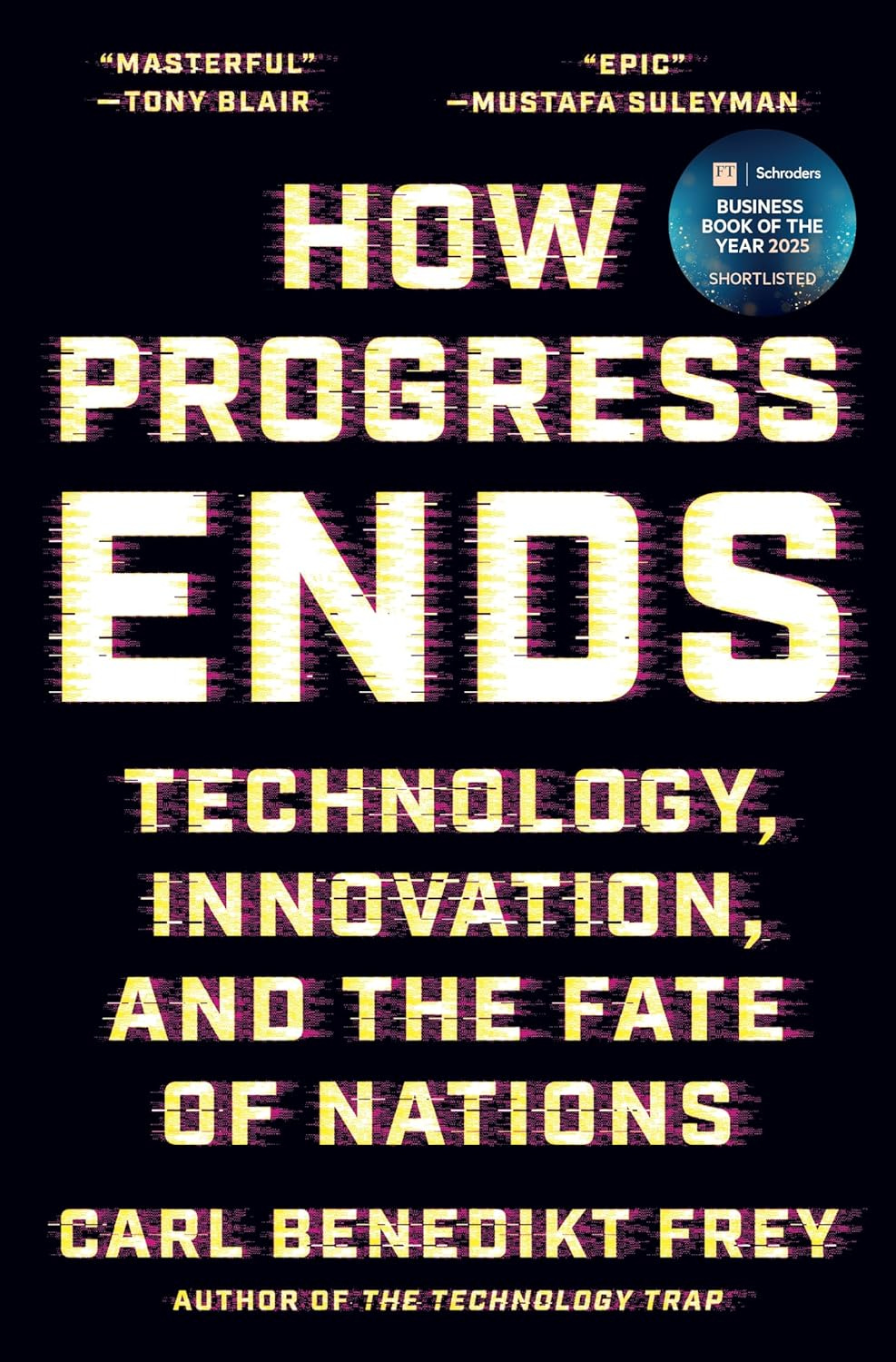
The book’s central insight—validated through centuries of comparative economic history—is that technological advancement depends critically on institutional architecture, not raw intelligence or resources.
The core paradox: discovery thrives in decentralized systems that encourage experimentation, but production benefits from centralized control. Sustained progress requires constantly shifting between these modes—and the fundamental barrier to technological change is institutional inertia, not capability.
“If progress was inevitable, it wouldn’t have taken 200,000 years for humanity to have an industrial revolution. Most countries around the world would be rich and prosperous. And if progress was inevitable, why do we see former technology leaders like Britain in decline?” — Carl Benedikt Frey