

I’ve been an AI practitioner, and what people would now call “AI-pilled,” since the early GPT models. But like almost everyone else, the real aha moment came with ChatGPT.
For many people, the implications became obvious sometime during 2023. For me, it was already clear on the night of November 30, 2022.
There were a few reasons.
First, I was already a tech executive selling AI services into the enterprise. ChatGPT immediately felt like one of those moments where you realize the software industry itself is about to be redefined.
Second, I was running one of the largest independent business blogs on the web, competing for attention with publications like Business Insider. It was equally obvious that the economics of that world were about to change dramatically.
Third, I’m an entrepreneur. So my instinct was not to sit back and theorize about what ChatGPT might become. It was to build with it.
By December 2022, I was already turning years of knowledge accumulated through FourWeekMBA into a conversational interface and launching an early chatbot around it. Some of you who followed me back then may even remember it.
That pattern has continued ever since.
I build with these tools for work, but also for fun. I don’t really play games. To me, this entire AI ecosystem is the amusement park.
Over the last few years I’ve built hundreds of small experiments, prototypes, workflows, agents, and increasingly larger applications. Partly because it feeds my entrepreneurial instinct, but also because there is no substitute for actually using the frontier tools yourself.
And there is a deeper reason.
Products like Claude Code a year and a half ago, and Grok Bot today, give you a privileged window into what enterprise AI may look like six to twelve months later.
Consumer and developer tools often expose the next interaction paradigm before the same architecture gets hardened, governed, integrated, and deployed inside enterprises.
That makes these moments worth studying very carefully.
Claude Code was one of them.
Grok Bot is another.
And what makes Grok Bot particularly interesting is that it reveals a second-order shift.

In the executive plan you will also find the Business Engineer’s Grok Bot Template.
For context, I have no affiliation with Grok Bot or anything connected to it, and no financial interest in promoting it. As always, I cover what I believe matters, especially when I see something that could represent a genuine turning point for you.
That’s exactly why I created this template: for you to experiment with it, learn how it works, and see firsthand how much it can multiply your business productivity.
In the executive plan you will also find the Business Engineer’s Grok Bot Template.
Everything up to this point describes the desk.
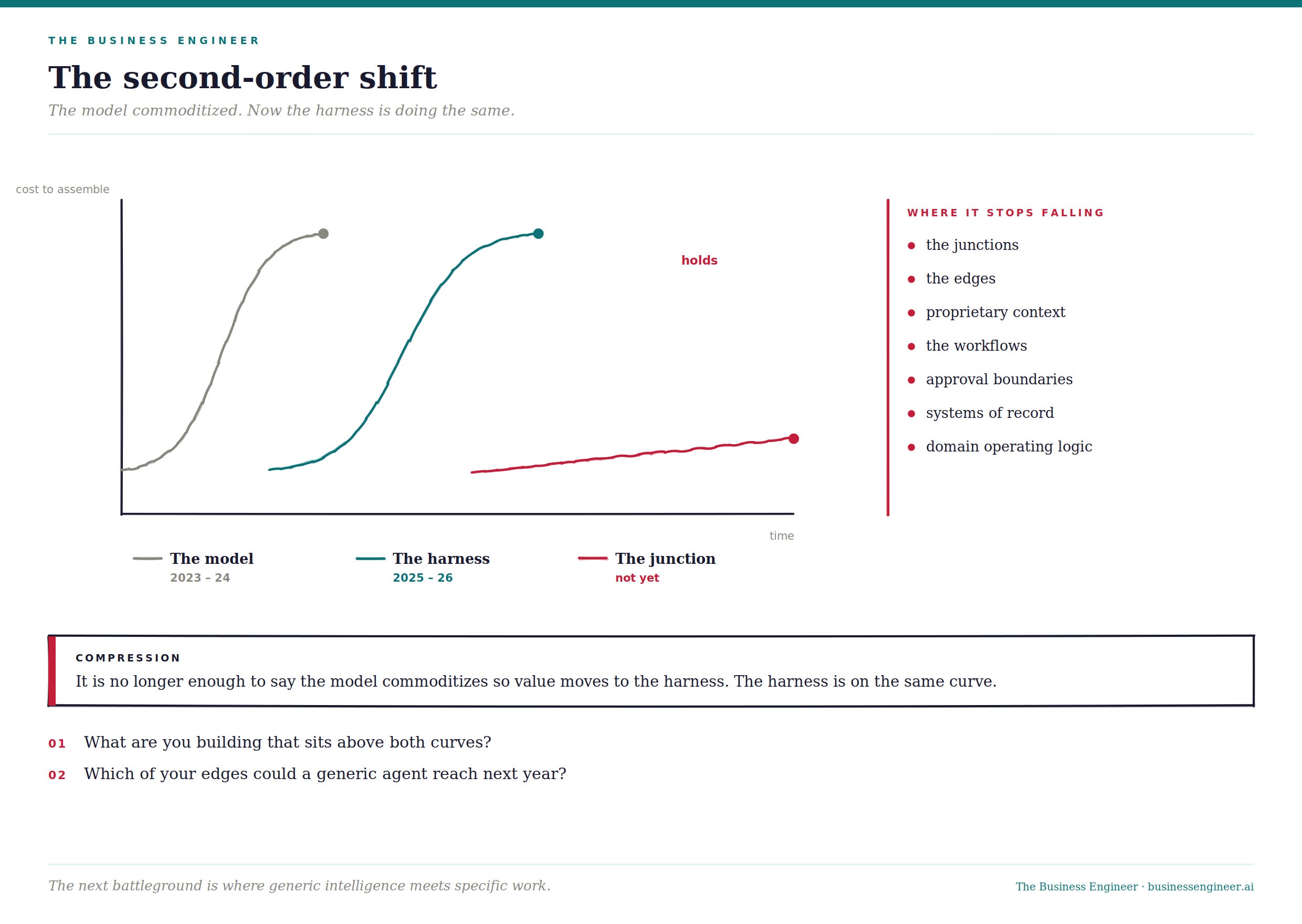
For the last couple of years, the industry has increasingly understood that the model alone is not the product. You need a harness around it: memory, tools, permissions, persistent environments, orchestration, workflows, schedules, approvals, and all the other machinery required to turn intelligence into useful work.
But Grok Bot shows that even the harness is now beginning to commoditize.
A year ago, building a genuinely useful agent harness could require hundreds of hours of engineering work. Today, increasingly capable agents can assemble surprisingly effective versions of that infrastructure in minutes.
That changes the strategic question again.
It is no longer enough to say:
The model will commoditize, therefore the value moves to the harness.
The harness itself is moving down the same curve.
If that continues over the next one to two years, the durable value moves further outward, toward the places where generic intelligence and generic harnesses meet the messy specificity of the real world.
The junctions.
The edges.
The proprietary context.
The workflows.
The approval boundaries.
The systems of record.
The domain-specific operating logic.
The narrow use cases where an agent actually has to intersect with how a company, industry, or profession works. That, to me, is the most important signal coming from Grok Bot.
The model is commoditizing.
The harness is beginning to commoditize too.
The next battleground is the junction between generic intelligence and specific work.

Beyond The AI Model
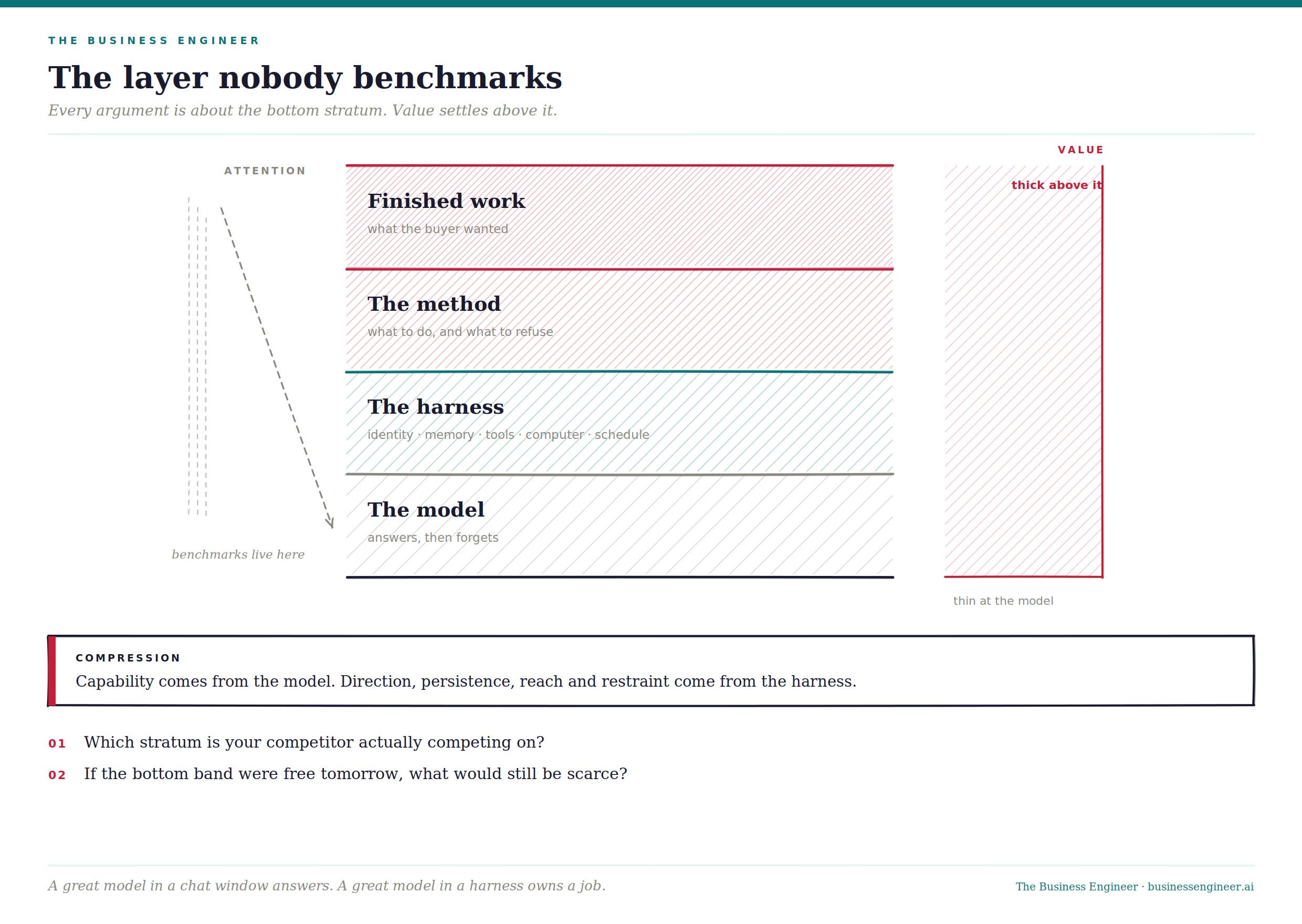
Nearly every discussion about AI starts with the model. Which model is smartest? Which one leads the benchmark? Which one has the largest context window? Which one reasons better, codes better, or uses tools more reliably?
Those questions matter, but they increasingly describe only one layer of the system. There is another layer above the model that determines whether intelligence becomes finished work.
The model supplies capability. Something else gives that capability a persistent job, memory, access to real systems, a computer on which to act, a schedule on which to operate, and boundaries around what it is allowed to do without you.
That layer is the harness.
A great model inside a chat window can answer a question. A great model inside a well-designed harness can own a job.
That is the starting point for this guide, because Grok Bot matters less as another AI application than as evidence of a larger transition: capabilities that previously required engineers to assemble are becoming packaged into a consumer product.
The harness is becoming a download.
Once that happens, the constraint changes. The question stops being Can I build an agent infrastructure? and becomes Can I define the job precisely enough for an agent to perform it?
That is a much bigger shift than it first appears.
What a harness actually is
Start with the simplest possible model interaction. You ask a question. The model receives the context available in that moment, generates an answer, and the interaction ends.
Useful, but fundamentally inert.
The model does not automatically know what role it has in your organization. It does not necessarily remember what happened last month. It cannot automatically sign into your operating systems. It does not have a durable computer waiting for it. It does not wake up every weekday at eight to perform the same job. And it should certainly not be allowed to execute every possible action without approval.
Everything that converts raw model intelligence into persistent work therefore sits around the model.
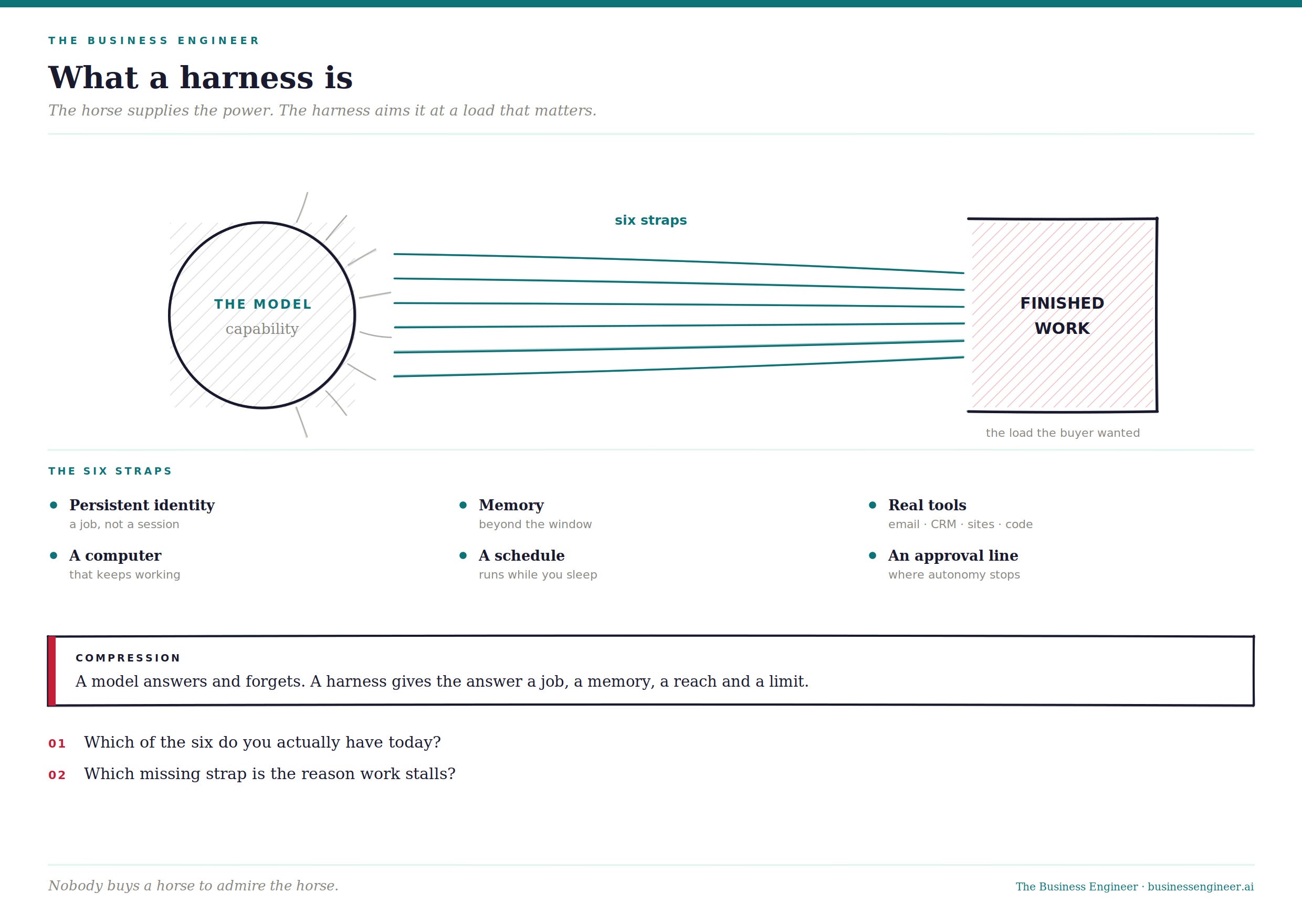
The metaphor of a harness is unusually precise. The horse supplies the power. The harness directs that power toward a particular load, in a particular direction, for a particular purpose.
An AI harness has six basic components:
Persistent identity. The agent has a job rather than a session that resets.
Memory beyond the current window. It does not relearn your company, preferences, standards, and projects every morning.
Access to real tools. It can operate inside email, Slack, GitHub, documents, CRMs, websites, internal applications, and other systems where the work actually lives.
A computer on which to act. The execution environment persists even after your own laptop closes.
A schedule or trigger. Work can start on a timetable or when a relevant event occurs.
An approval boundary. The system knows where autonomy stops and a human must return.
Capability comes from the model. Direction, persistence, reach, and restraint come from the harness.
The working unit is increasingly a rented model wrapped in an operating system, fed by owned context and governed by an owned method. Performance comes from the fit between those layers, not from the model alone.
See Also:
How to Build an Enterprise AI Harness

A method you have read is not necessarily a method you are running. The distinction sounds obvious, but it explains a surprisingly large part of what goes wrong when organizations try to operationalize AI. You can read a strategy book, agree with every argument, underline half the pages, and still make the next important decision exactly as you would have made it before.
The old constraint: the harness had to be built
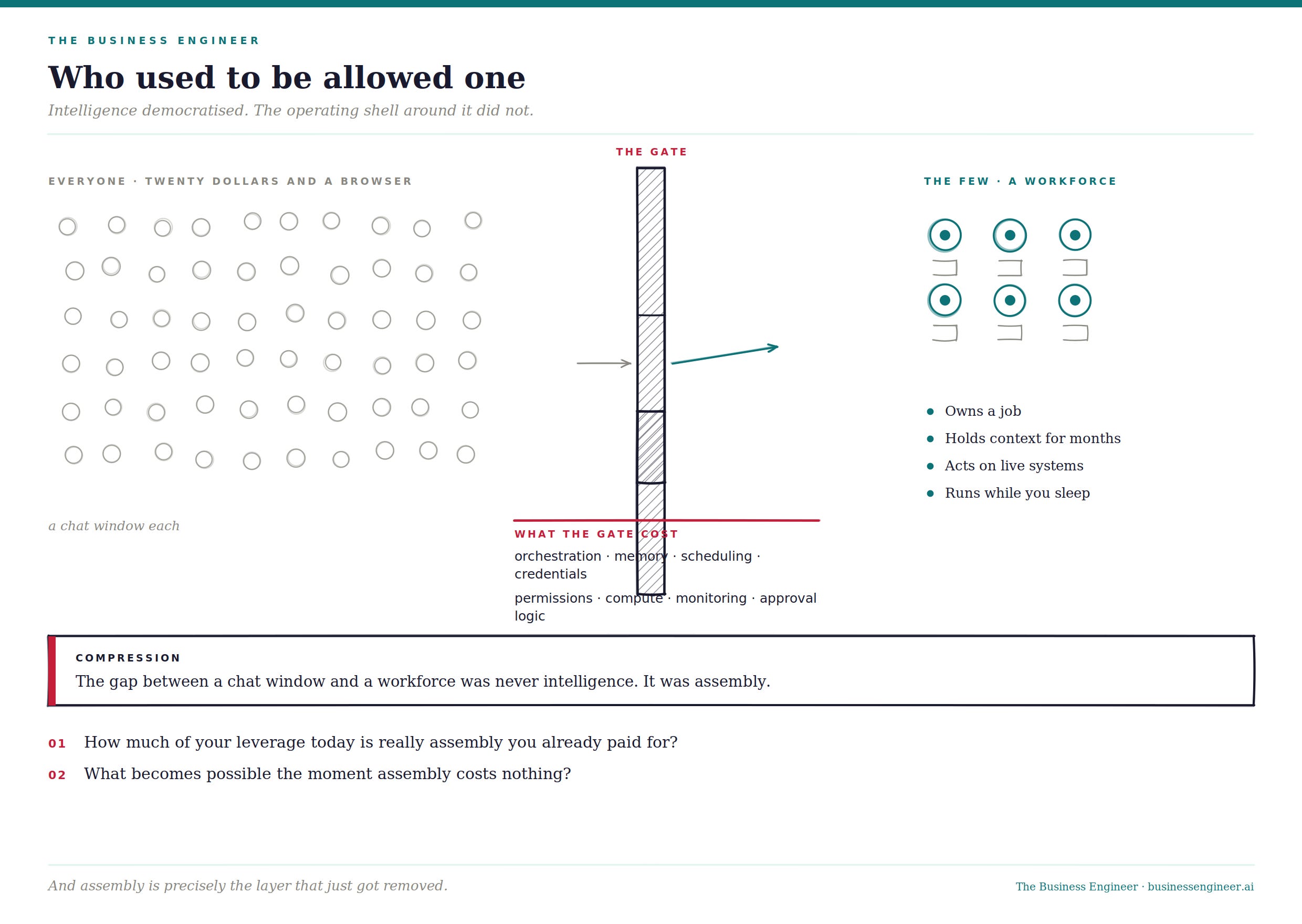
Frontier intelligence became broadly accessible remarkably quickly. For roughly the price of a normal software subscription, almost anyone could access models that would have looked extraordinary only a few years earlier.
But access to intelligence did not create equal access to leverage, because turning that intelligence into a persistent worker still required assembly.
You needed orchestration logic, memory, scheduling, credentials, permissions, a browser environment, compute, tool integrations, monitoring, and approval logic. Someone had to connect those components and make sure they continued working.
For engineers and technically sophisticated operators, that was possible. For everyone else, the effective product remained a chat window.
The result was a strange gap: intelligence had democratized, but the operating system around intelligence had not.
The gap between a chat window and an AI workforce was never only intelligence. It was assembly.
And assembly is precisely the layer products like Grok Bot are beginning to remove.
Why this feels like a second Claude Code moment
In the executive plan you will also find the Business Engineer’s Grok Bot Template.
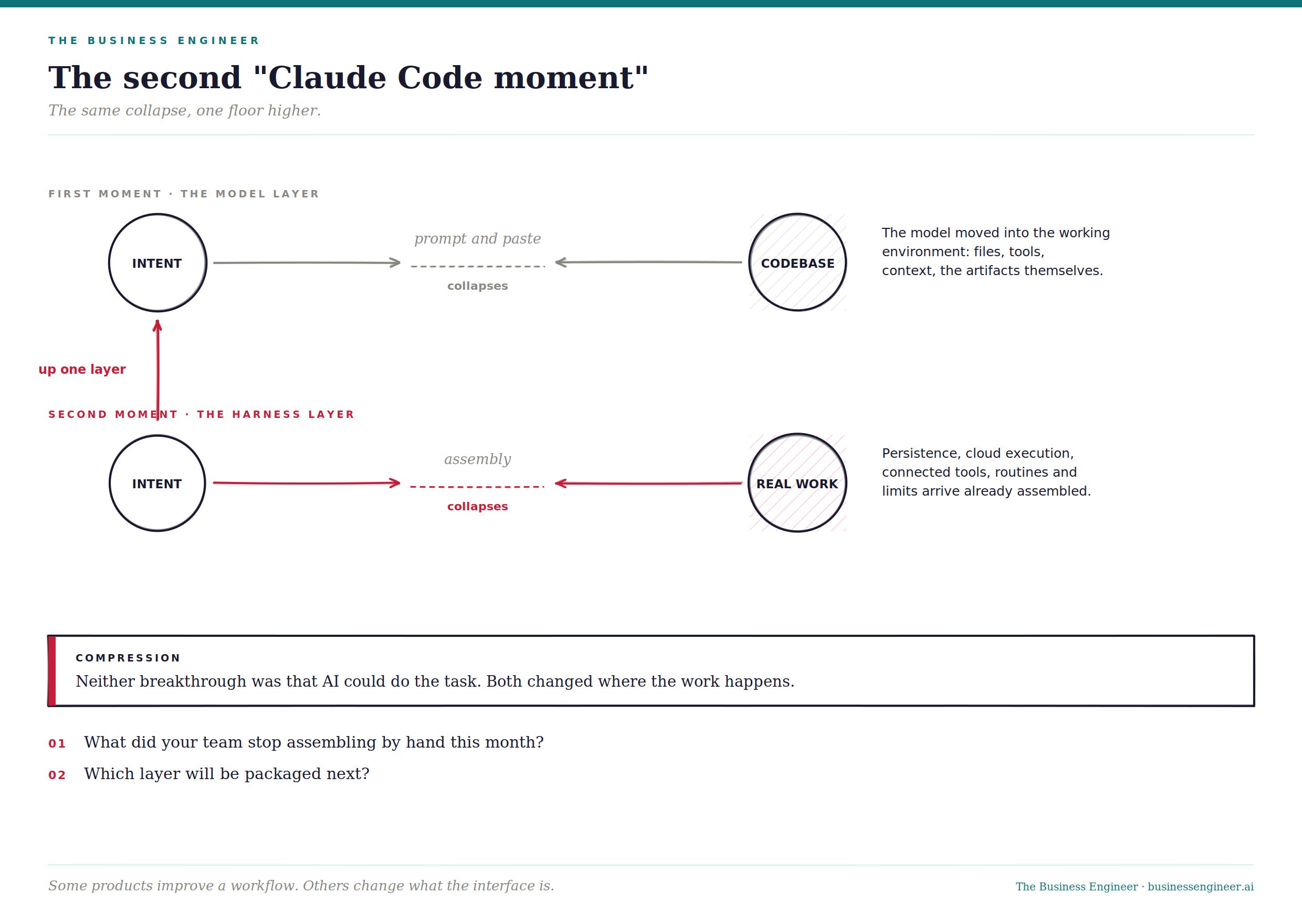
Some AI products improve an existing workflow. Others change what people believe the interface itself should be.
Claude Code was one of those products. The breakthrough was not simply that Claude could generate code. Models could already do that. The important shift was that the model moved into the working environment: inspecting the codebase, operating across files, using tools, maintaining context, changing the underlying artifacts, and participating directly in the workflow.
That changed user behavior because the distance between human intent and machine execution collapsed.
Grok Bot represents a similar shift one layer higher.
The breakthrough is not that AI can operate software. That had already been demonstrated. The breakthrough is the packaging of the harness: persistent agents, cloud execution, remembered sessions, connected tools, workflow memory, skills, routines, event triggers, multi-agent handoffs, human takeover, approval boundaries, and a messaging interface ordinary users already understand.
This is primarily a harness-layer innovation, not a model-layer innovation.
The underlying technologies existed. What disappeared was much of the assembly.
Read Also:
Grok Bot & The Fourth Moment of AI

Since the ChatGPT moment, the industry has gone through a series of inflection points that progressively moved the frontier of AI one layer up the stack.
The access curve tells the same story
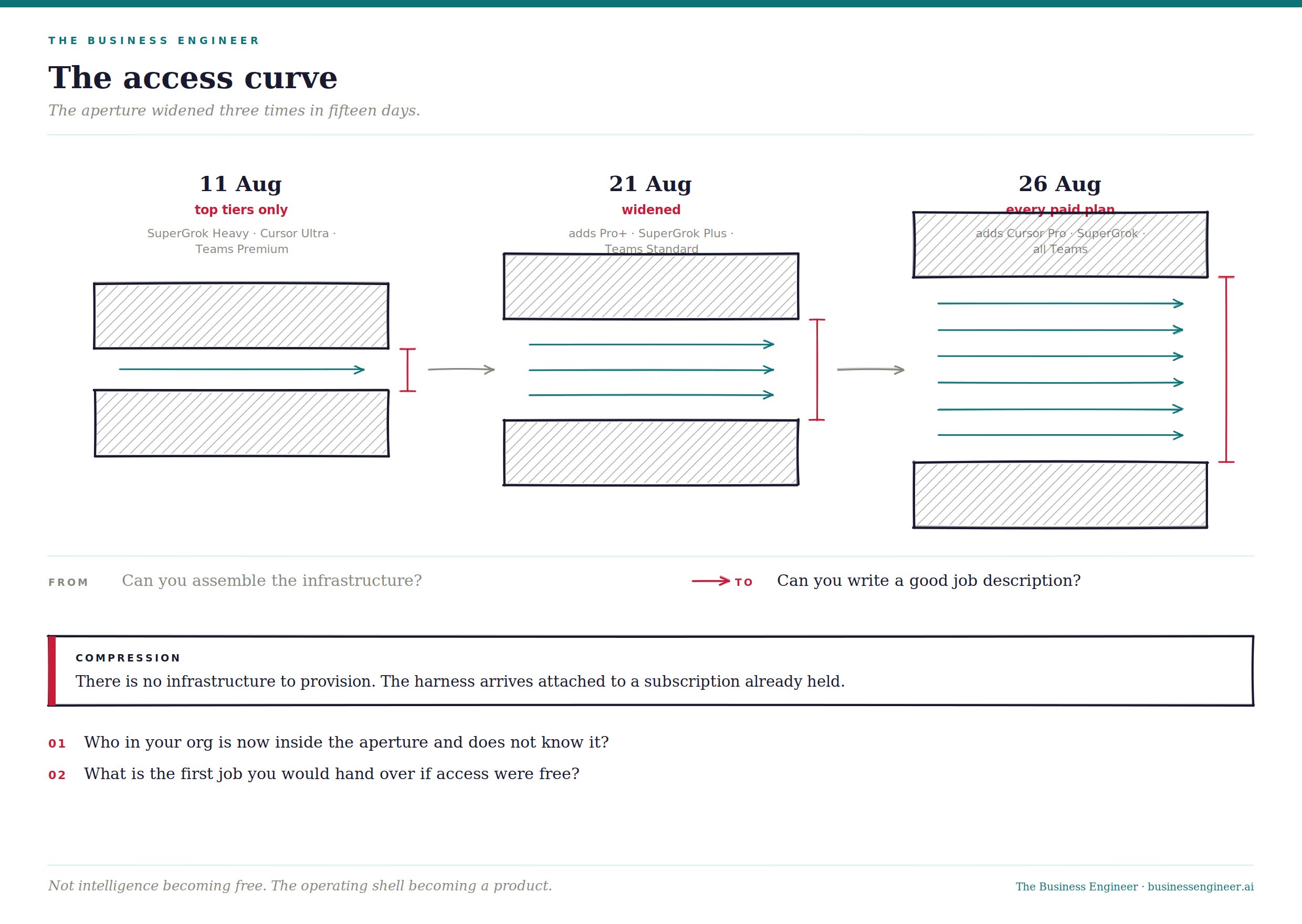
Grok Bot launched in beta on 11 August 2026. Access was initially concentrated in higher subscription tiers. It widened again during August and, by 26 August, had expanded across the paid Cursor plans and eligible SuperGrok plans.
There is no separate infrastructure deployment to provision. The harness arrives as an application attached to subscriptions users may already hold.
The entry requirement therefore moves from something resembling Can you assemble the infrastructure? to Can you write a sufficiently good job description?
That is the real democratization event.
Not intelligence becoming free. Not agents becoming perfect. Not every workflow suddenly becoming automatable.
The operating shell around the model is becoming a packaged product.
What did not get democratized
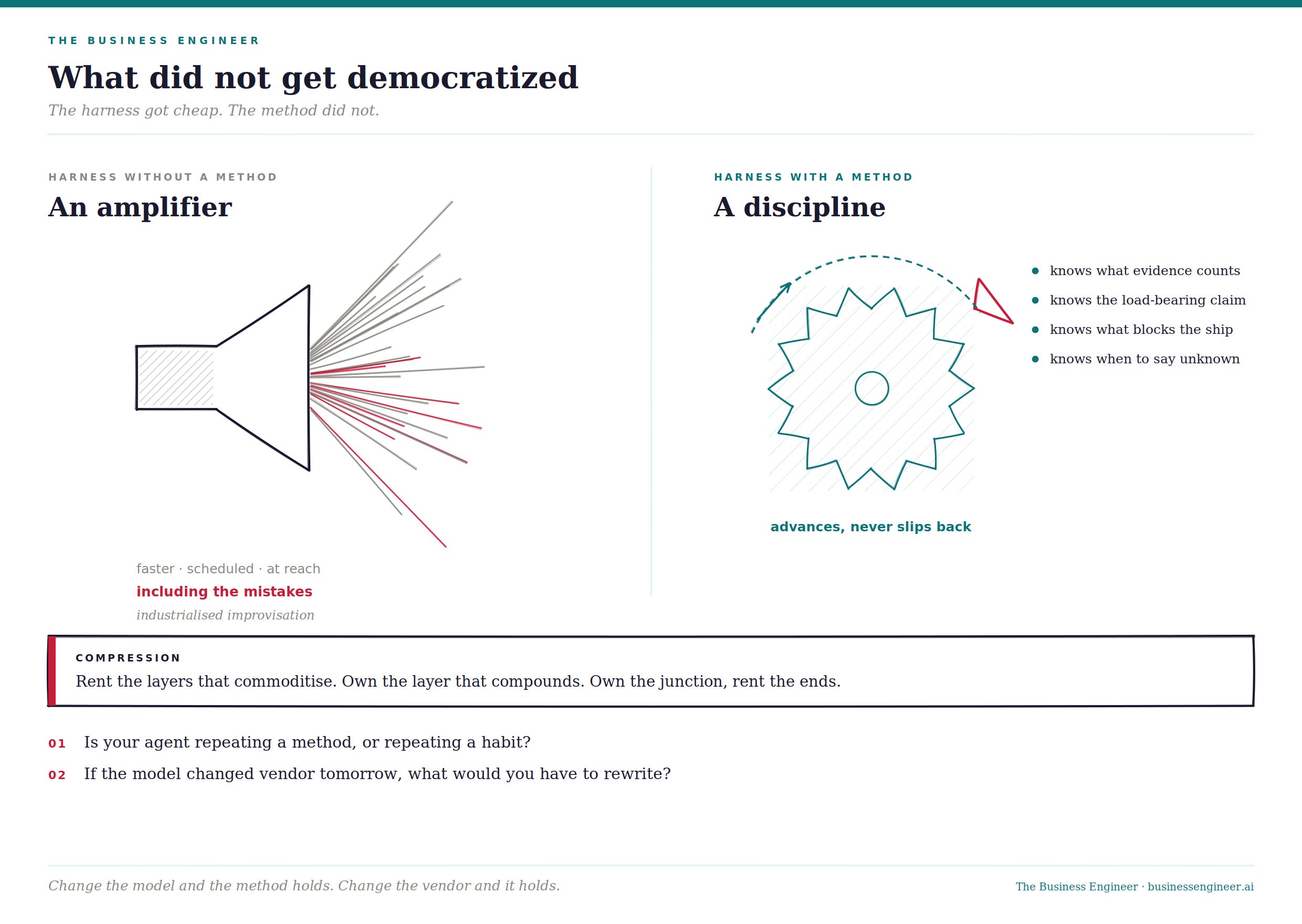
The harness became easier to acquire. The method did not.
This distinction is critical because a harness is an amplifier. It can take a process and execute it faster, repeat it, schedule it, run it across systems, and keep it alive while you are away.
But the harness itself has no opinion about whether the underlying process is good.
It does not know what evidence should count. It does not know which variable is load-bearing. It does not know which claim should block publication. It does not know when the intellectually honest output is simply: we do not have enough evidence to make this call.
Those rules come from the method.
A harness without a method gives you industrialized improvisation. Whatever you were already doing can now happen faster, more frequently, and at greater scale, including the mistakes.
A harness with a method becomes a discipline. The agent knows what must be established first, what evidence qualifies, which questions need answers, what constitutes a lock, what should remain unknown, what blocks delivery, and what artifact should ultimately be produced.
This also makes the method more durable than the underlying infrastructure. Change the model and the method can remain. Change the vendor and the method can remain. A cheaper model reaches sufficient capability and you reroute the workload. A better harness arrives and you move the method onto it.
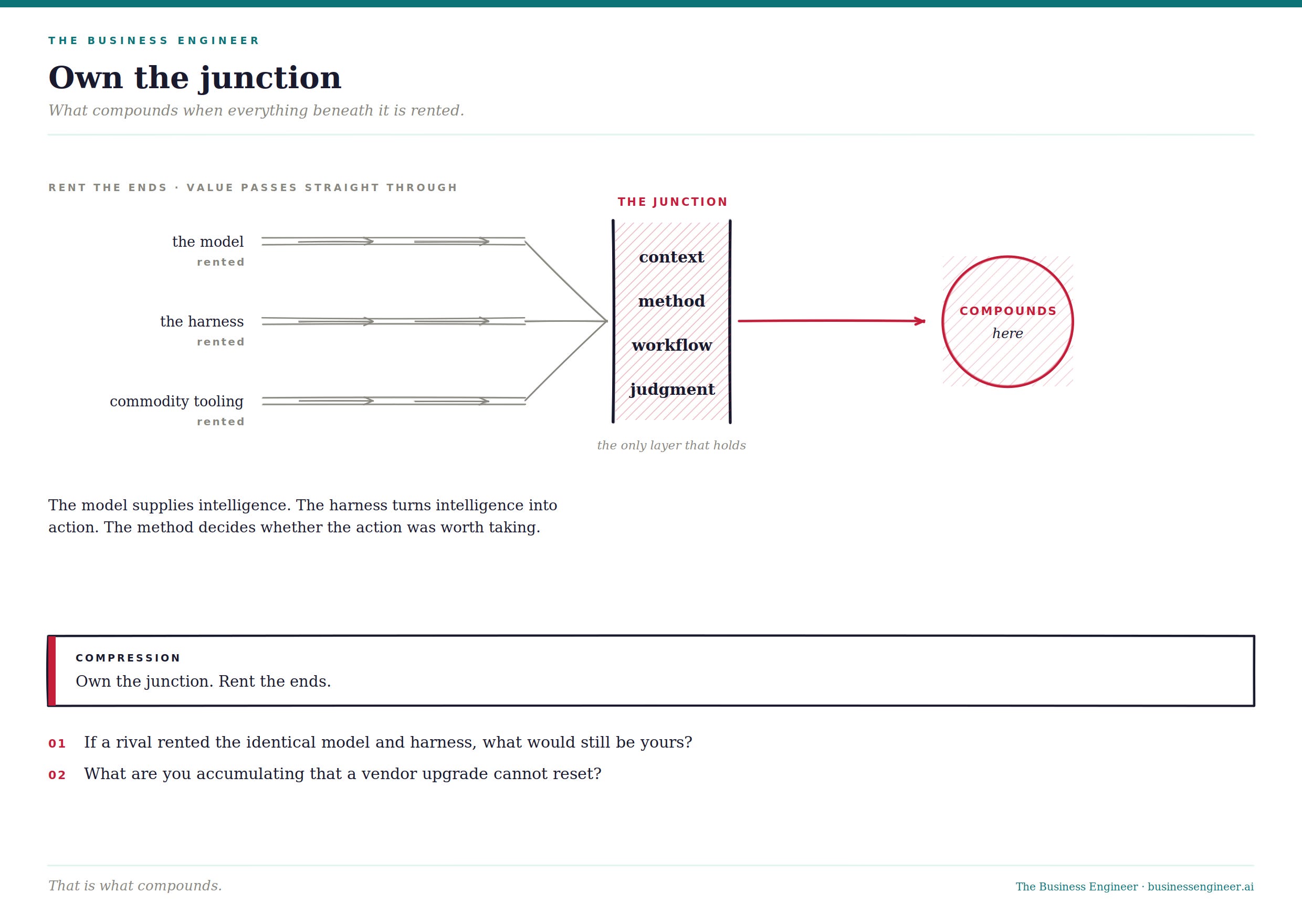
Rent the layers that commoditize. Own the layers that compound.
Increasingly, that may mean renting both the model and the harness while owning the context, decision logic, proprietary workflow, quality standard, and domain-specific method.
Own the junction. Rent the ends.
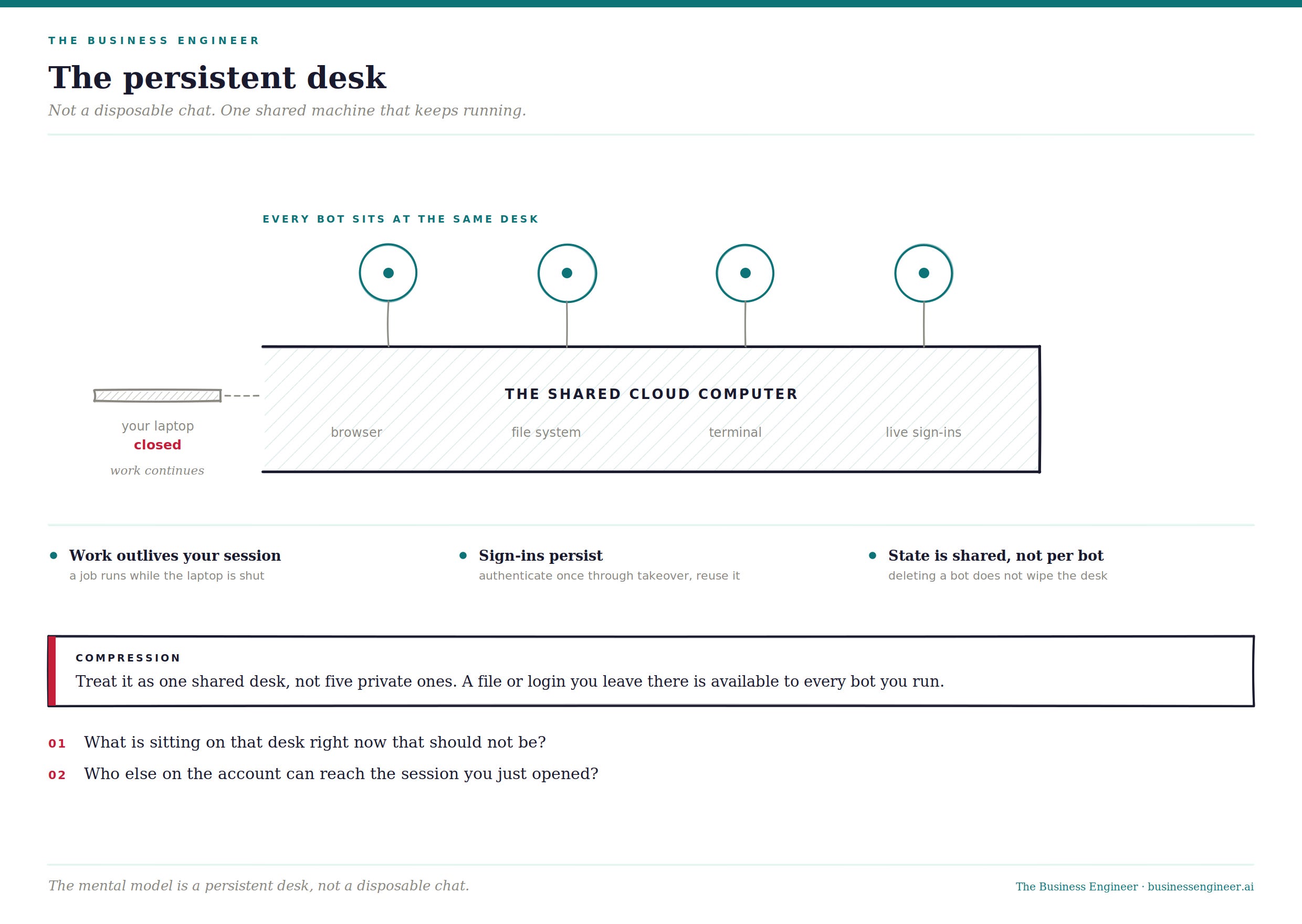
Grok Bot: the desk

Grok Bot gives you agents that persist. A Bot has a role, a conversation, access to tools and files, and the ability to work through a cloud execution environment while you are away.
It is not simply another chat thread. The agent can keep working after your laptop closes, preserve useful context across sessions, use connected applications and websites, run routines, and return when something requires your decision.
Three concepts are particularly important.
First, work happens on a persistent cloud computer. Your own laptop does not need to remain open while a background job runs.
Second, sign-ins and operating state can persist. Once you authenticate a service through the appropriate takeover flow, the session can remain available rather than forcing a fresh login every time the agent works.
Third, the environment should be treated as shared operating infrastructure. Files, sessions, and authenticated environments can outlive individual conversations or Bots. Deleting a Bot should not be treated as equivalent to wiping the underlying machine.
The correct mental model is therefore closer to a persistent AI desk than to a disposable chat session.
Bot, Group Chat, and Channel
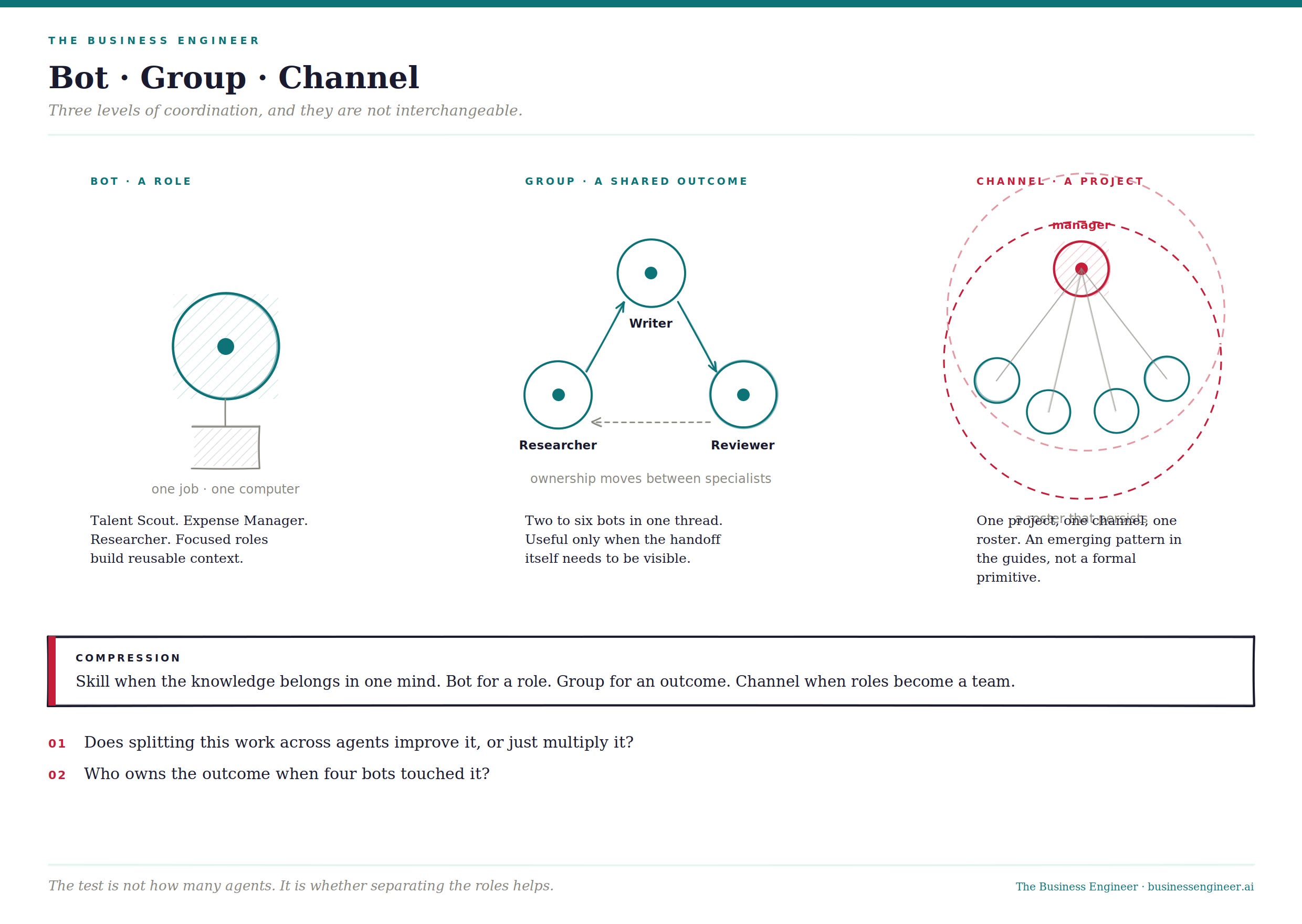
This distinction becomes important once Grok Bot moves beyond isolated agents.
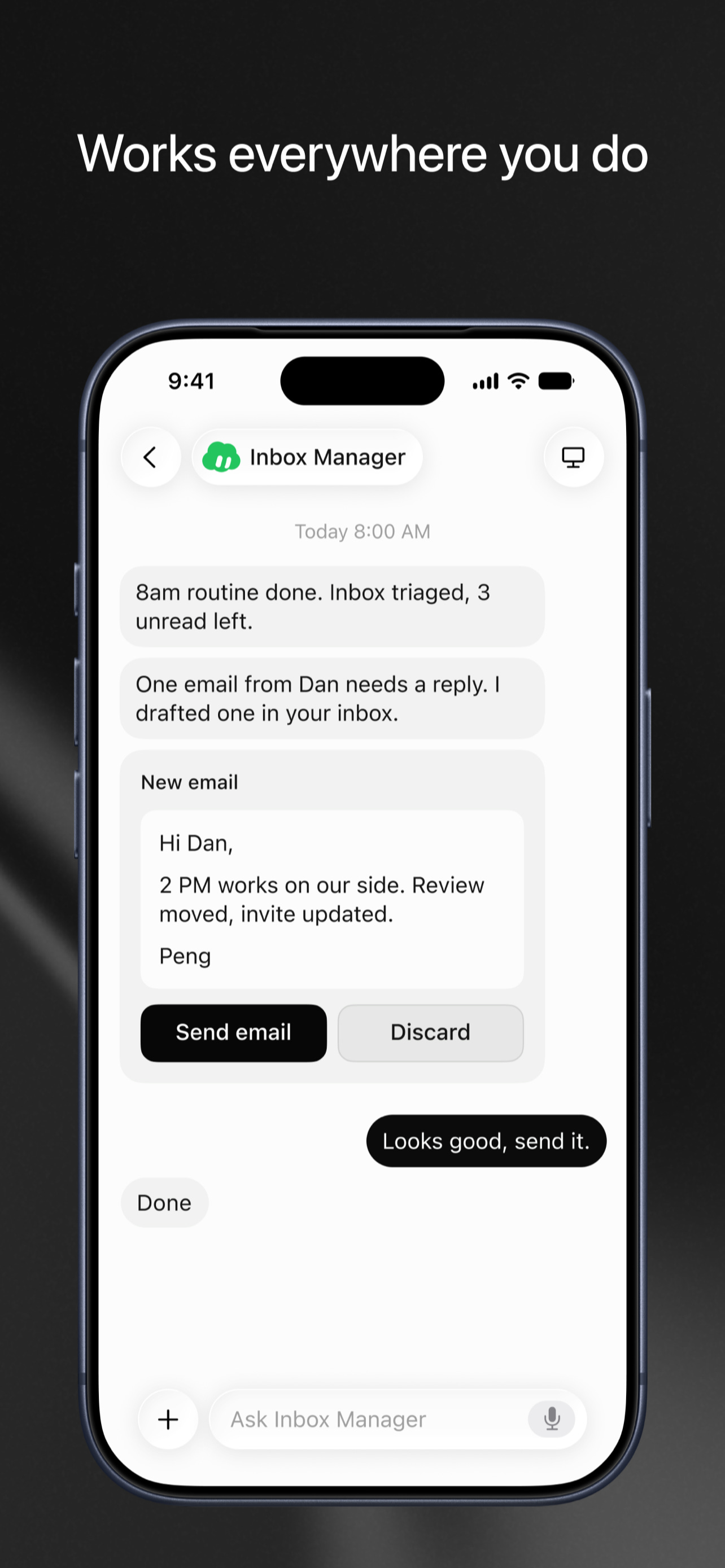
A Bot is a persistent role
A Bot should ideally own one enduring job: Talent Scout, Expense Manager, Researcher, Writer, Product Analyst, Account Monitor.
Focused Bots build coherent context around repeated work. A Bot called General Helper does not.
Use a single Bot when one role can own the outcome end to end.
A Group Chat coordinates several Bots around one outcome
Grok Bot allows several Bots to participate in the same collaborative conversation.
You can allow the Bots to determine who should respond, explicitly route work with @ mentions, or hand work between specialists.
A simple example is:
Researcher → Writer → Reviewer
The Researcher gathers and sources evidence. The Writer turns it into the deliverable. The Reviewer checks the result and surfaces blocking issues.
The rule is simple: one clear owner at every stage, even when several agents participate.
A Channel turns coordination into a project
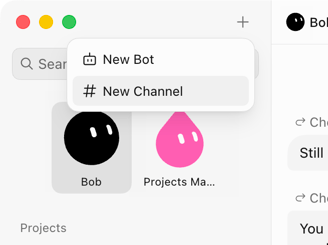
The newer pattern is Channels.
The structure is much closer to how human teams already work:
One project → one Channel → one roster.
Instead of keeping a Coder, Researcher, Writer, and Project Manager scattered across independent conversations, the Channel becomes the project-level space where the relevant Bots and the human coordinate.
That changes the conceptual model:
Bot = role
Group = shared outcome
Channel = persistent project or operating unit
The product terminology is still evolving, but the direction is clear. Grok Bot is moving from persistent agents toward persistent organizations of agents.
That matters for the Business Engineer architecture.
My Command Center deliberately starts with one head and many Skills, because a single analytical job benefits from a coherent reasoning state rather than several agents producing competing interpretations.
But Channels change where the boundary sits.
A single analytical job belongs inside the Command Center.
A larger project with genuinely separable roles may justify a Channel.
For example:
Business Engineer Command Center + Research Bot + Product Observer + Artifact Bot + Project Manager
The distinction is architectural, not cosmetic.
Use Skills when the knowledge should live inside one mind. Use Bots when a role deserves persistent independent context. Use a Channel when several persistent roles need to coordinate around a shared project.
Access
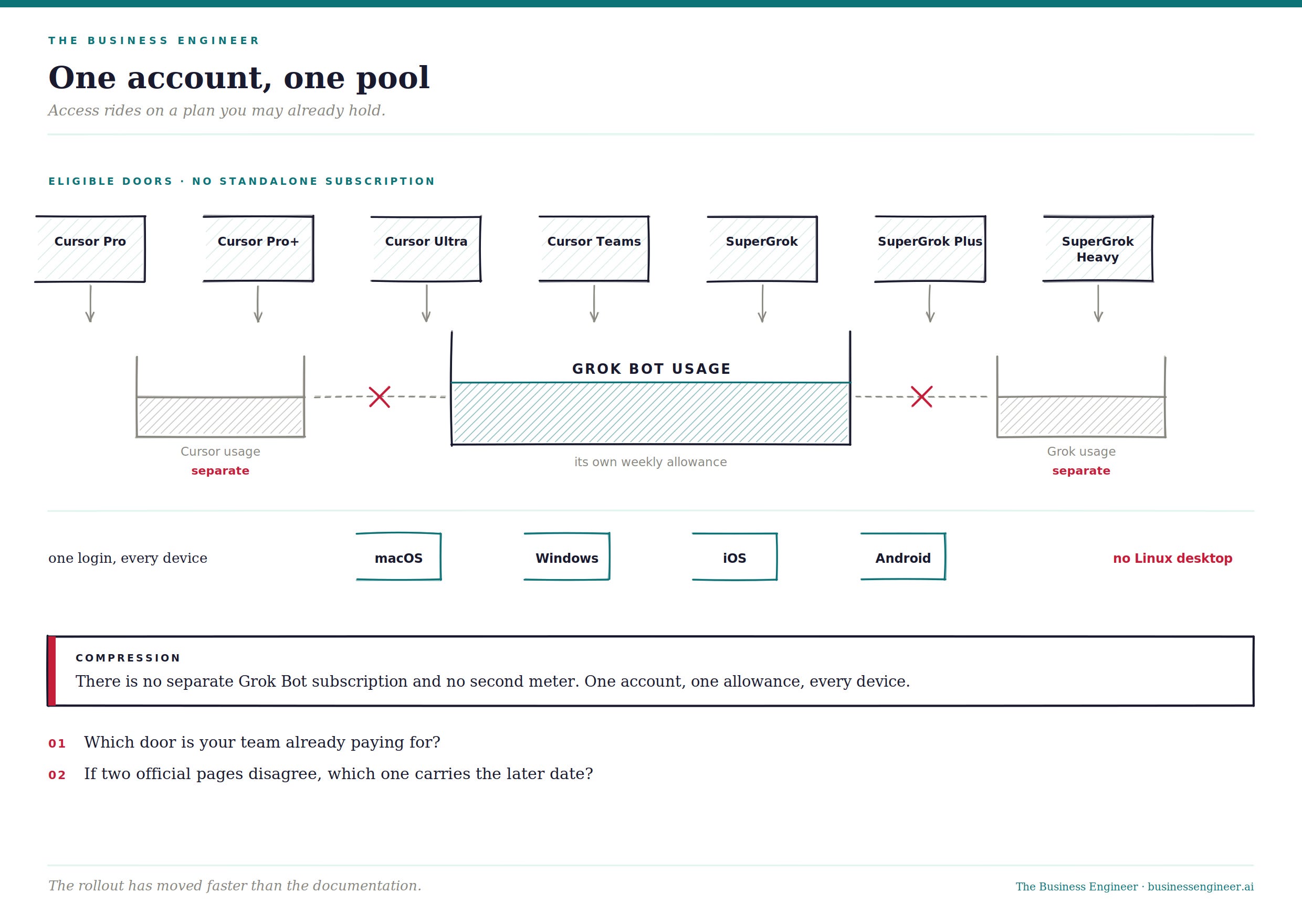
There is no standalone Grok Bot subscription. Access currently comes through eligible Cursor or SuperGrok plans.
Desktop support includes macOS and Windows. Mobile support includes iOS and Android. There is currently no Linux desktop application listed.
Authentication uses a Cursor account rather than a separate Grok Bot login. Organizations using SSO complete their normal organizational authentication flow.
Cloud data storage must also be supported by the account. Legacy Privacy Mode accounts may need to move to a compatible data configuration before Grok Bot can operate.
Grok Bot receives its own usage allocation, separate from ordinary Cursor and Grok usage. Higher subscription tiers primarily affect that allowance rather than exposing fundamentally different agent features.
One practical warning: the rollout has moved faster than every documentation page. If two official pages disagree on plan eligibility, check the update date rather than assuming your account is wrong.
Setup
1. Install the application
Open the Grok Bot access page and choose the correct build.
On macOS, select Apple silicon or Intel. If you are unsure, open Apple menu → About This Mac. A Chip field indicates Apple silicon; a Processor field indicates Intel.
On Windows, choose the appropriate x64 or Arm64 installer.
On mobile, install the application and authenticate with the same account. Usage belongs to the account rather than requiring another subscription for each device.
2. Sign in
Choose Get started from the welcome screen, or Sign In with Cursor from Settings if you are already inside the application.
Authentication completes in the browser, after which you return to Grok Bot.
During the initial setup, the application may ask which tools you use. Those answers shape suggested teammates. They do not automatically connect those services.
3. Create the first Bot
Choose New → Create new agent, then configure its name, title, description, and avatar.
Give it one primary job.
The description should contain rules that remain true across tasks. The conversation should contain the work happening now.
For example:
Persistent description: Never send an external message without my approval.
Current conversation: Review these 20 accounts and identify which require follow-up this week.
That separation is important:
Description = standing operating rules.
Conversation = current assignment.
4. Give it a properly bounded task
A strong request usually specifies five things:
Outcome: what should be true when the job is complete?
Sources: where should the agent look?
Constraints: what must it not assume or do?
Deliverable: what should come back?
Approval boundary: at what point must it stop and ask you?
The goal is not to write an elaborate prompt. The goal is to define a job that can terminate.
5. Connect the tools it needs
For supported services, go to Settings → Plugins, install the appropriate connector, and complete authentication through the provider’s browser flow.
For websites without a dedicated connector, the Bot can use the browser running on its cloud computer. When authentication is required, open Agent Computer, take control, enter the password, passkey, CAPTCHA, or two-factor code yourself, then return control to the Bot.
Never paste passwords or API keys directly into chat.
The takeover mechanism exists precisely so the agent can use an authenticated environment without reading the underlying credential.
6. Get the job right once, then automate it
A Skill describes how to perform a task.
A Routine tells a Bot when to run a workflow, either on a schedule or, where supported, after an event.
The sequence should be:
Run manually → correct the method → save it as a Skill → test it again → create a Routine.
Do not automate an unstable process.
Automation scales the method you already have, including its mistakes.
Teach a task
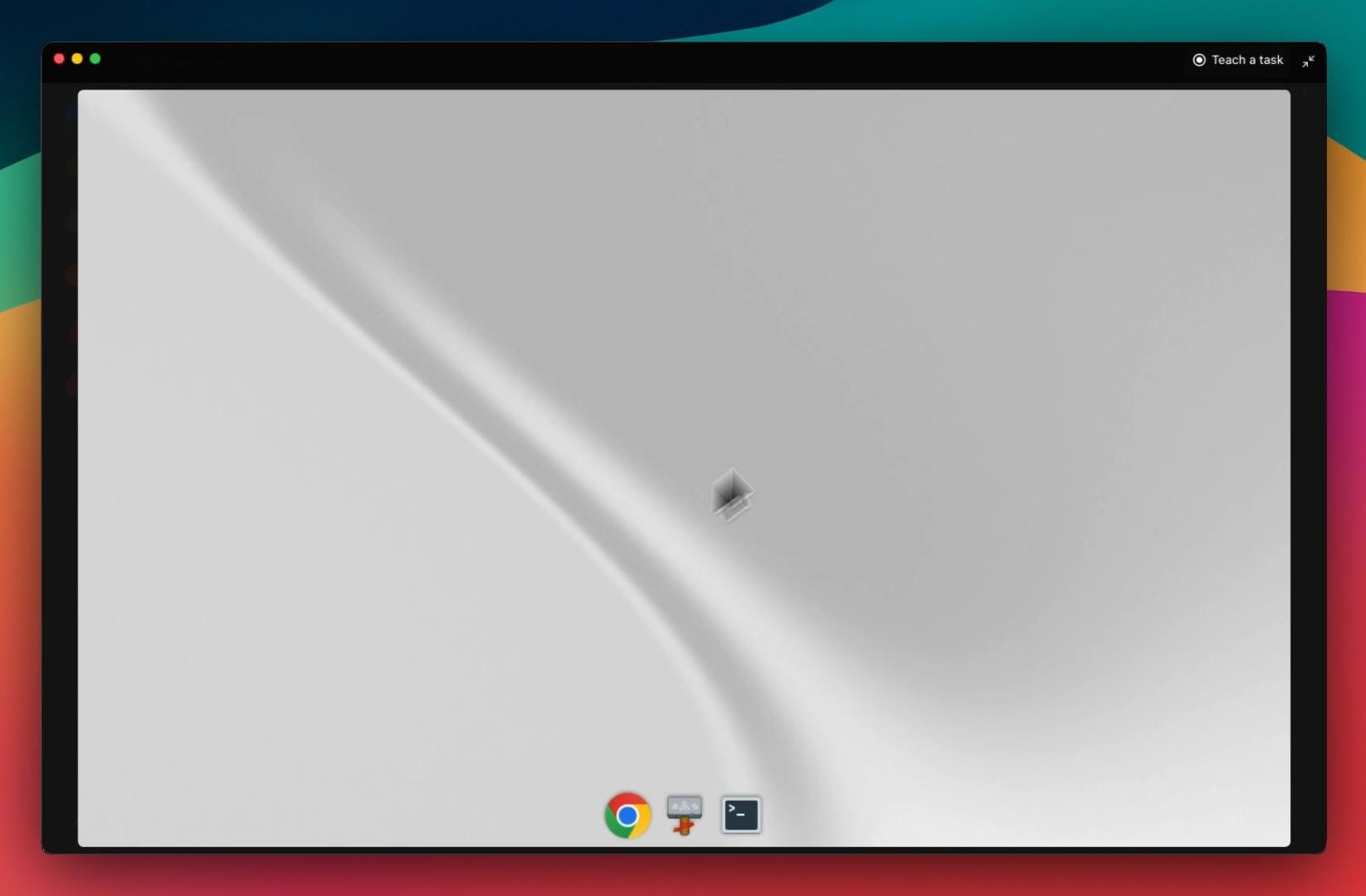
Where Teach a task is available, you can demonstrate a browser workflow instead of describing every step.
Open the Bot’s computer, choose Teach a task, describe the intended result, and perform the workflow once yourself.
The system records visible screen activity and turns the demonstration into a draft process.
Treat that output as a starting point, not a finished operating model.
A demonstration shows mechanics. It rarely captures every exception, decision rule, approval boundary, or quality criterion.
Those still need to be written explicitly.
Routines and event triggers
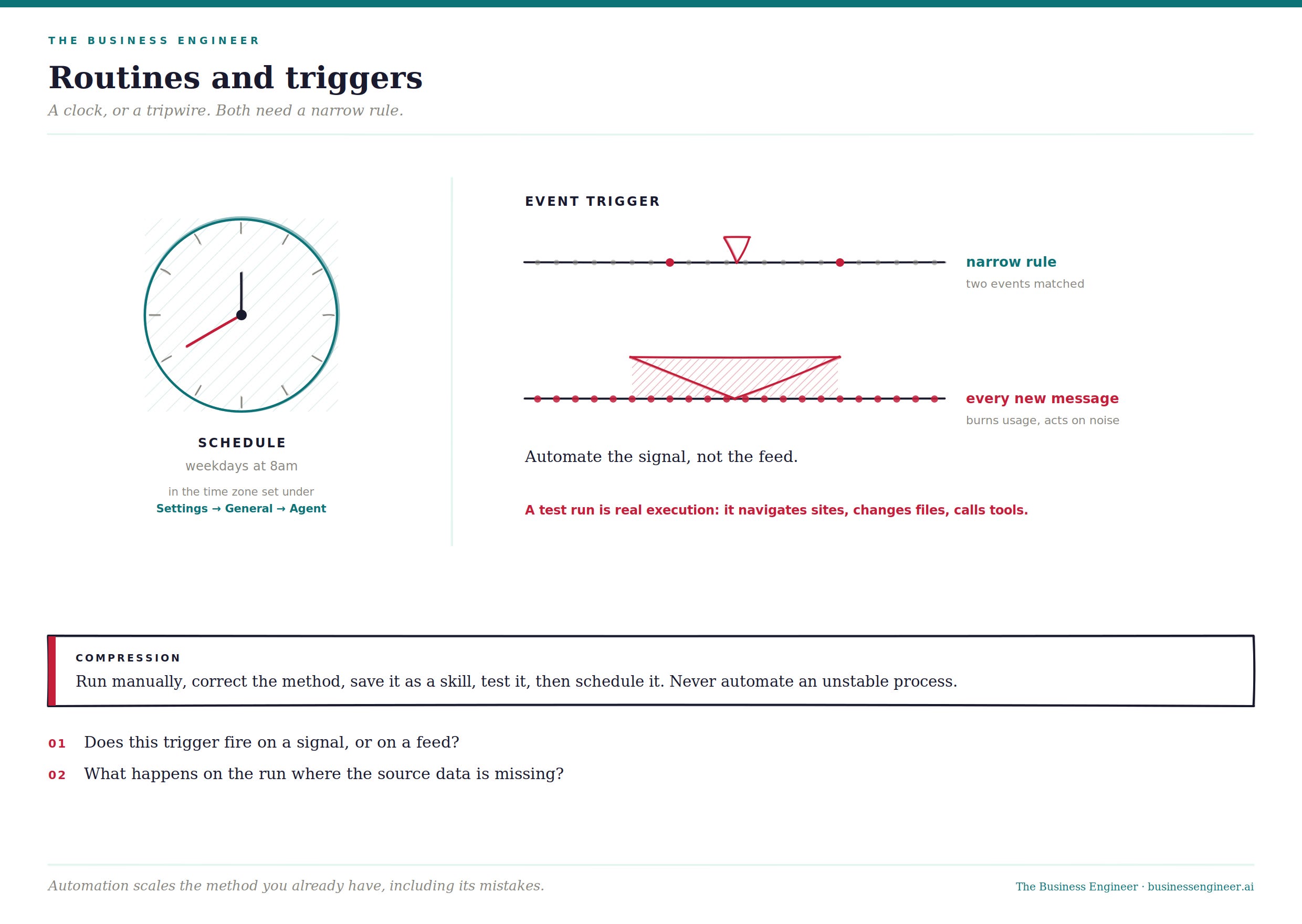
Scheduled routines use the time zone configured in Settings → General → Agent.
That setting determines what “8 AM” actually means.
Event-triggered workflows may react to integrations such as Slack or GitHub events. Those triggers are conceptually separate from the plugins the Bot uses to perform the resulting work.
Keep trigger rules narrow.
Listening to every message in a busy system consumes usage and encourages agents to act on noise.
Automate the signal, not the feed.
And remember that a test run is real execution. It can navigate websites, change files, and call connected tools.
Anything that can send, purchase, delete, publish, or modify production systems should remain behind explicit human approval until the workflow has been validated.
Where the important controls live
Open conversation details and then Agent settings to edit the Bot’s identity, description, avatar, notifications, and routines.
Two updates should not be confused:
Check for Updates updates the Grok Bot application itself.
Update Agent Computer refreshes the execution environment.
They solve different problems.
Reset Agent Computer should be a last resort because unsynced state may be lost.
Execution on Local Computer allows a Bot to operate on the physical desktop in front of you. Local approval rules should not automatically be assumed to apply on every other machine.
Under Plugins, Marketplace contains available integrations and packaged Skills, while Yours contains what has been installed or enabled.
Hiding a Bot removes it from the sidebar but does not necessarily stop its routines.
Deleting a Bot removes its profile, conversation, and routines, but should not be treated as wiping the shared execution environment or every authenticated session it used.
Sections help with navigation, but a Channel is the stronger abstraction when what you actually need is a project with several collaborating roles.
When something stops working
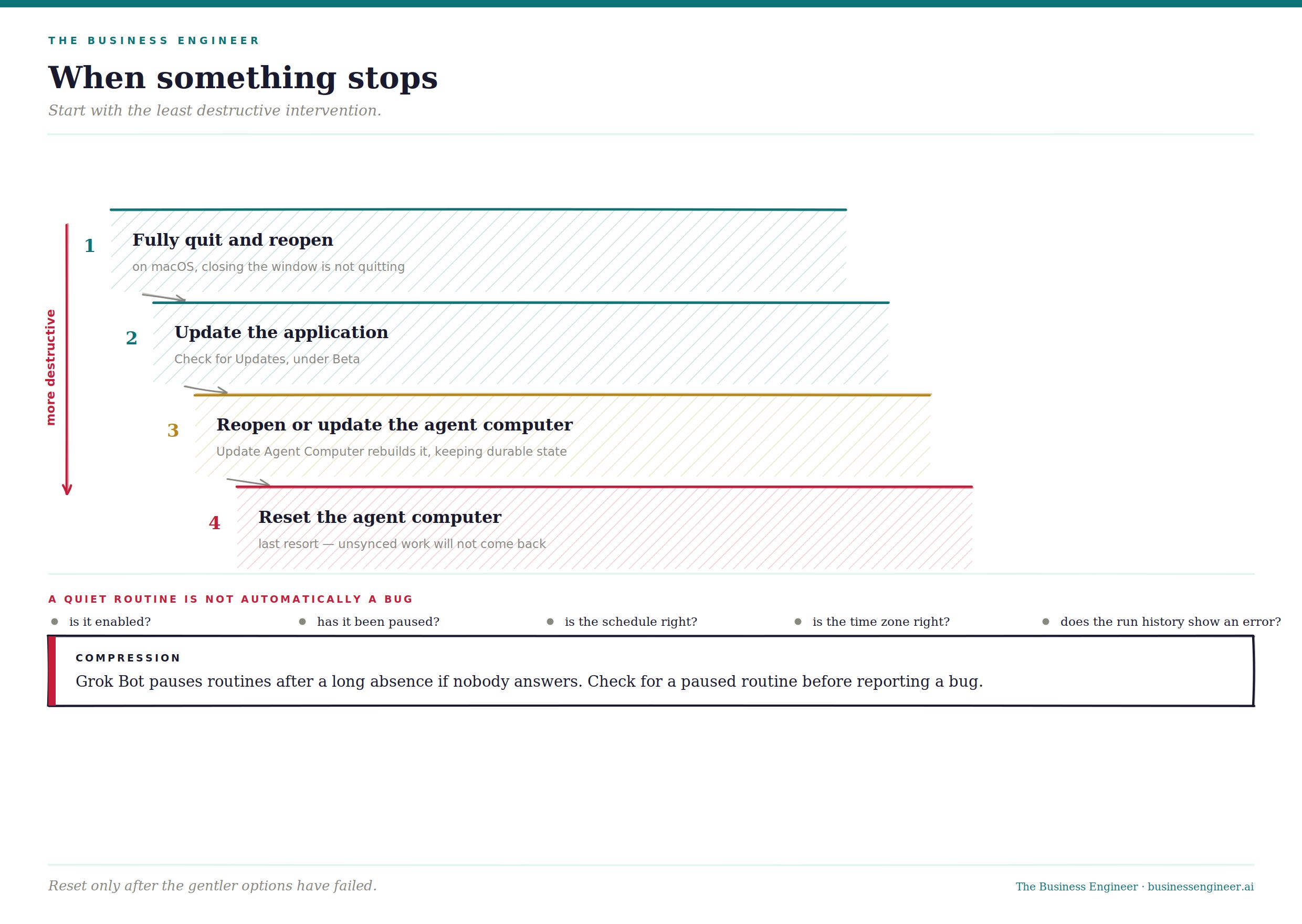
Start with the least destructive intervention.
Fully quit the application, then reopen it. On macOS, closing the window is not the same as quitting the application.
If the problem persists, update the application.
If the execution environment appears stuck, reopen or update the agent computer.
Use Reset only after the less destructive options have failed.
A routine that has gone quiet is not necessarily broken either. Check whether it is enabled, whether it has been paused, whether the schedule and time zone are correct, and whether the run history shows an error.
The Business Engineer Command Center: The Template

Everything up to this point describes the desk.
Now we get to the layer that matters more.
The Business Engineer Command Center is a method designed to run on top of that infrastructure.
It is not a collection of generic prompts. It is not a chatbot that dumps business frameworks. And it does not need four agents talking over one another simply because the platform supports multi-agent collaboration.
It starts as one agent with one coherent analytical operating system.
The specialist analytical capabilities live inside that agent as Skills.
Give it a company, a deck, a demo, or an analytical question. It determines what job it has received, establishes the relevant locks, performs the required analysis, runs QA, and produces the appropriate artifact.
Lock first, analyze second
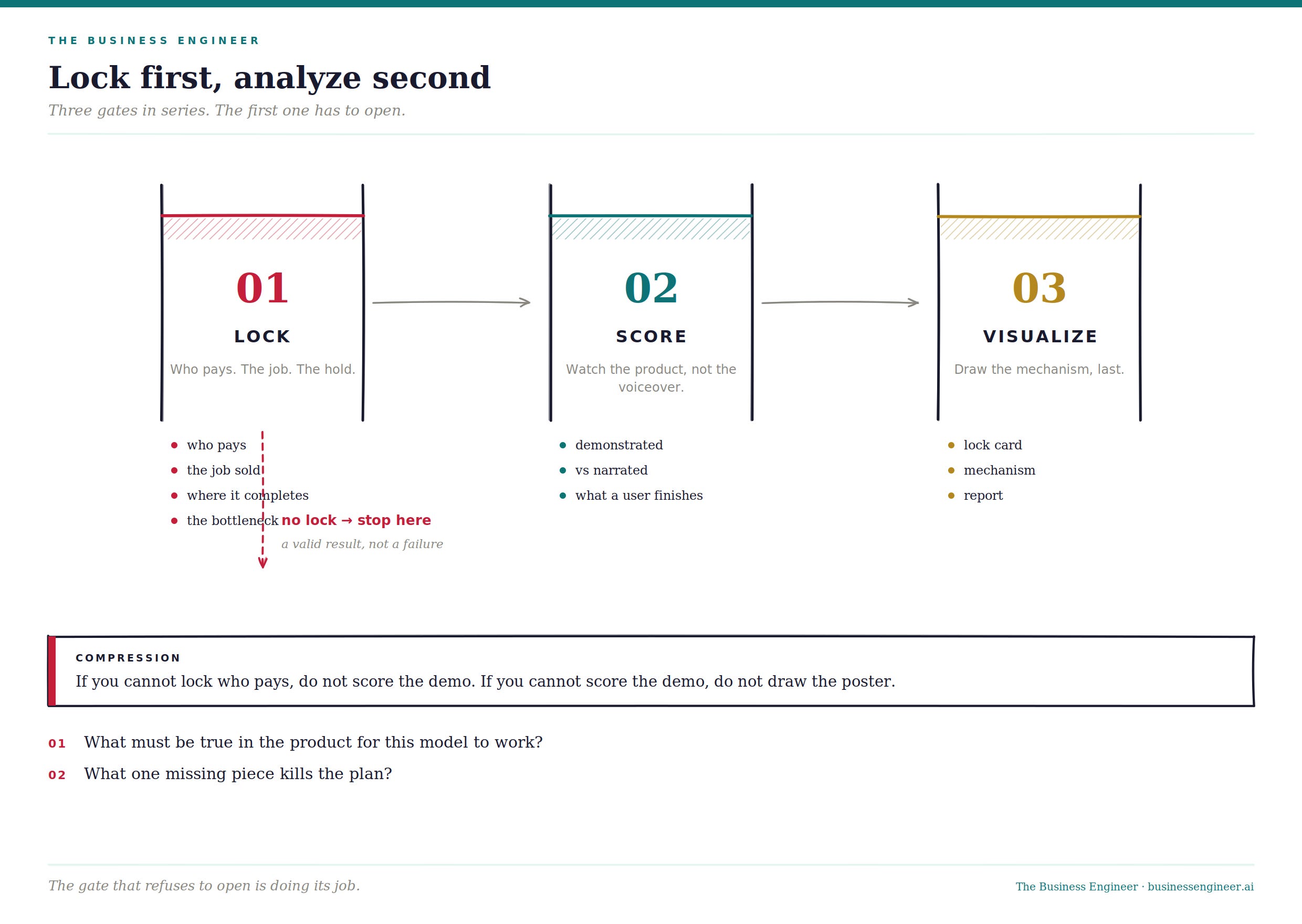
The Command Center begins by identifying the fundamental business reality underneath the material.
Who pays? What are they actually paying for? Where does the workflow complete? What is the operating mechanism? What remains valuable if the underlying model can be rented somewhere else? Where is the bottleneck? What evidence could materially change the conclusion?
These are locks.
The purpose of a lock is to stop the analysis from floating into abstraction.
A beautiful product demo does not matter if you cannot identify the buyer. A persuasive pitch does not matter if you cannot identify where value actually accumulates. An impressive model does not create a durable business if all of the value disappears the moment another provider reaches comparable capability.
Lock first. Score second. Visualize third.
If the lock is missing, the system is allowed to stop.
That is a feature, not a failure.
The engine
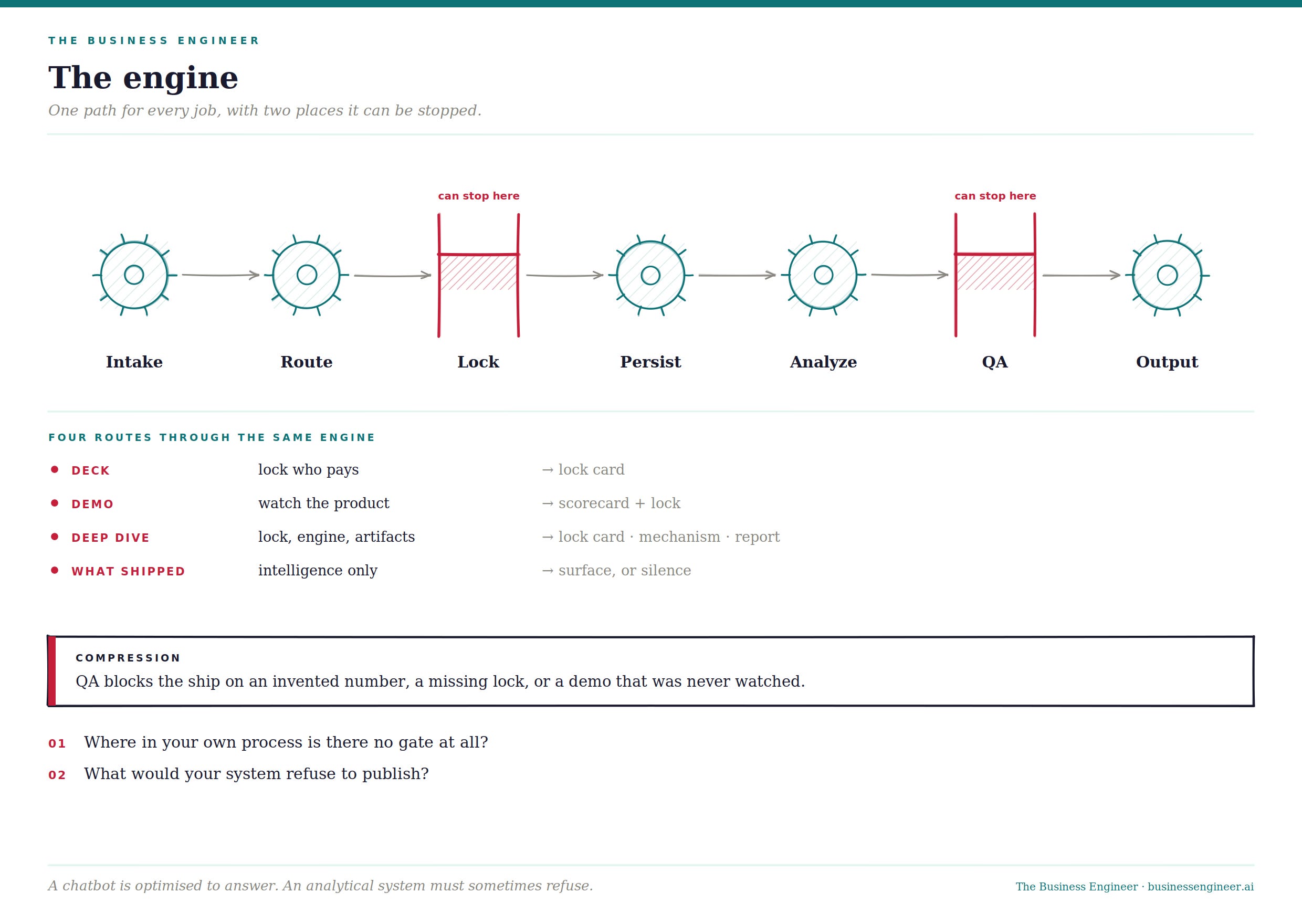
Every job follows the same underlying path:
Intake → Route → Lock → Persist → Analyze → QA → Output Pack
The bigger picture
The most important implication of Grok Bot is not Grok Bot itself.
The product will change. Competitors will converge on similar architectures. Models will improve. Harnesses will become cheaper. Capabilities that look differentiated today will become platform primitives tomorrow.
That is precisely why the method matters.
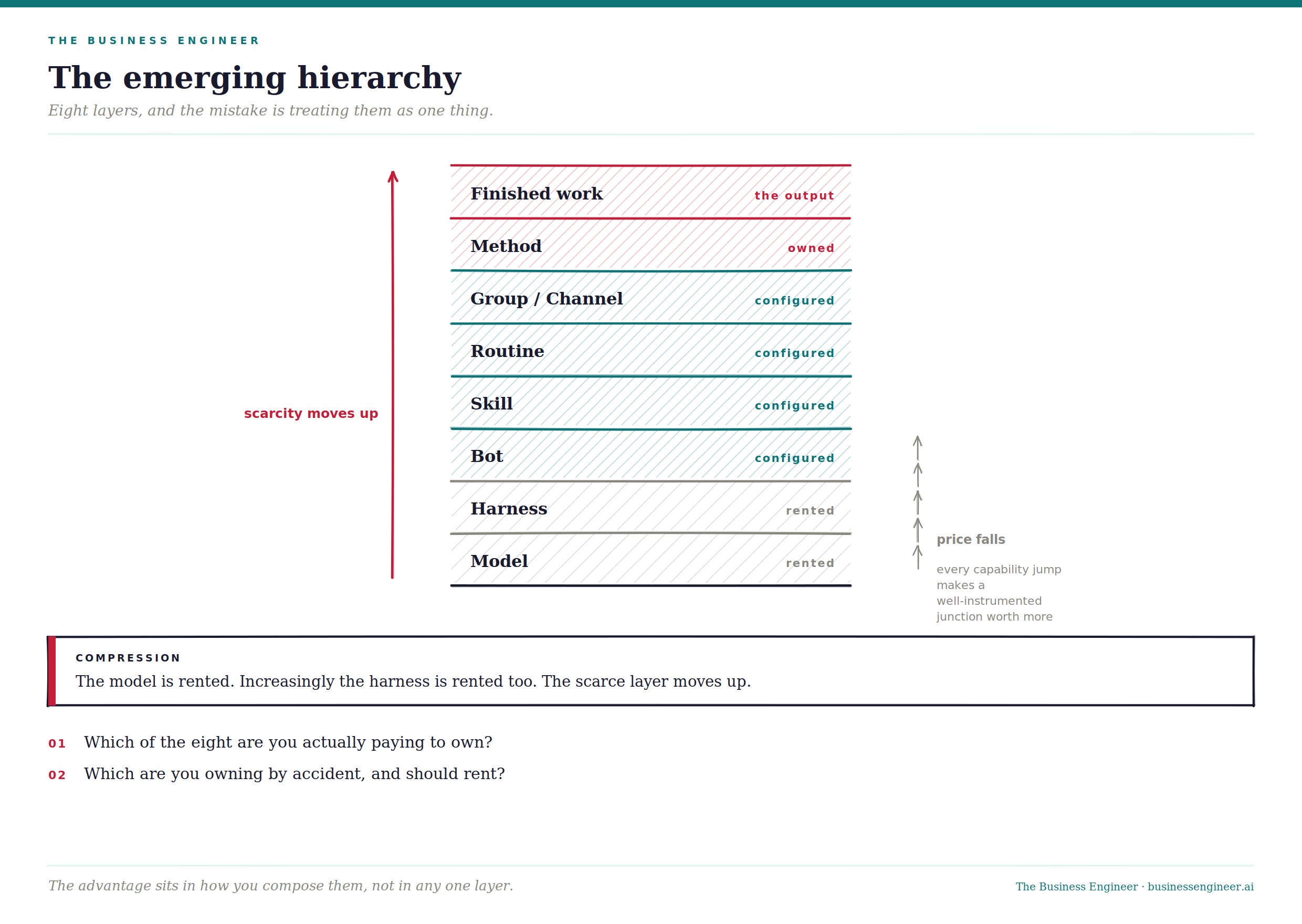
If the model is rented and the harness can increasingly be rented too, the scarce layer moves upward toward proprietary context, operating logic, workflows, institutional memory, judgment, decision rules, approval structures, and domain-specific methods.
The model supplies intelligence.
The harness turns intelligence into persistent action.
The method determines whether that action is worth performing.
Channels add another layer: they let persistent agents become persistent teams.
That gives us the emerging hierarchy:
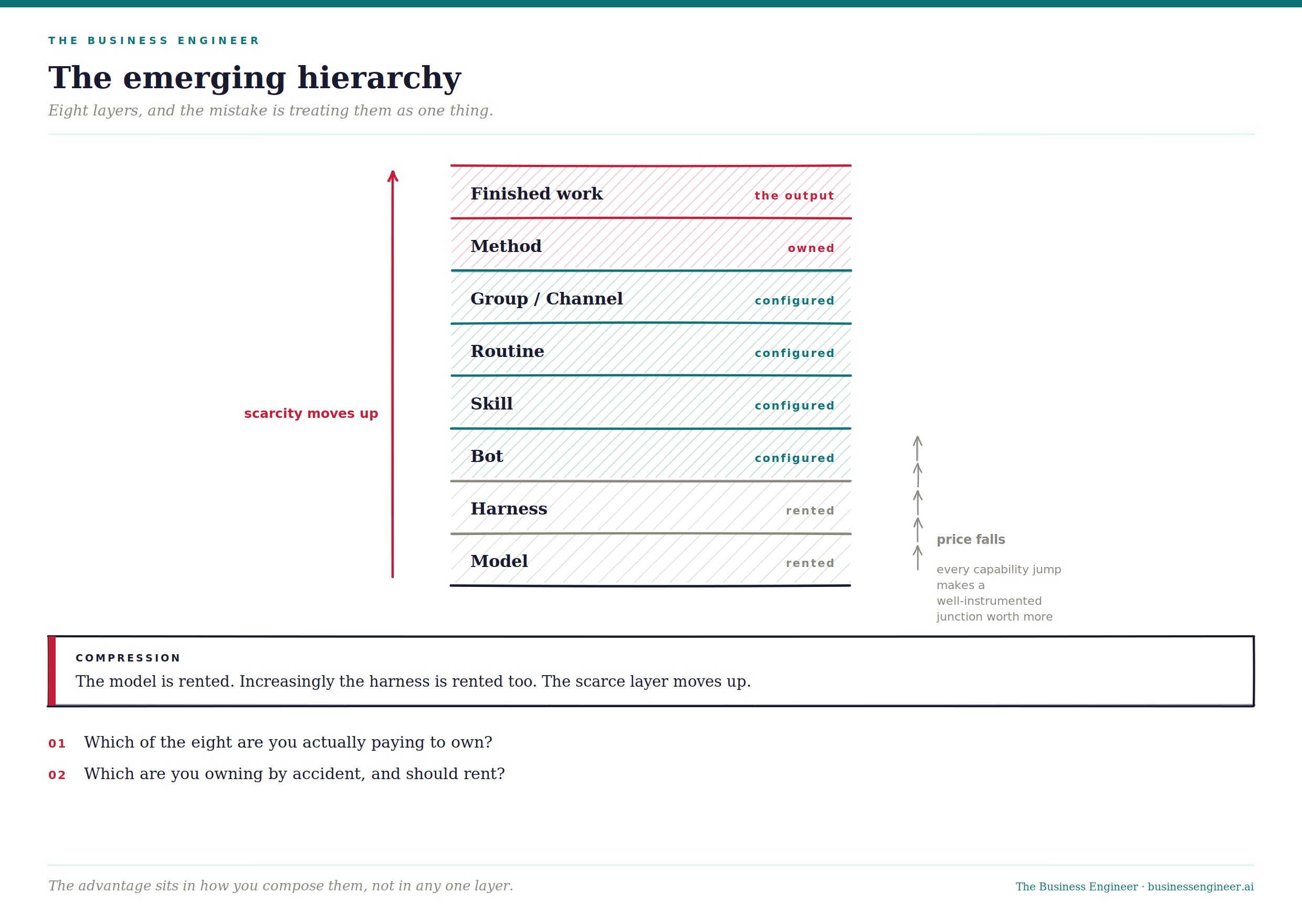
Model → Harness → Bot → Skill → Routine → Group/Channel → Method → Finished Work
The mistake is to treat all of those as the same thing.
They are not.
And the competitive advantage increasingly sits in how you compose them.
The next generation of AI products will not be judged only by the quality of their answers. They will be judged by how much real work reaches completion.
And the next generation of AI operators will not differentiate themselves because they have access to a better model. Everyone will have access to very good models.
They will differentiate themselves through the systems wrapped around those models: the context, the method, the workflows, the controls, the standards, the judgment.
That is what compounds.
The model is rented. Increasingly, the harness may be rented too. Own the method. Own the context. Own the junction.
With massive ♥️ Gennaro Cuofano, The Business Engineer
I like this:
If that continues over the next one to two years, the durable value moves further outward, toward the places where generic intelligence and generic harnesses meet the messy specificity of the real world.
The junctions.
The edges.
The proprietary context.
The workflows.
The approval boundaries.
The systems of record.
The domain-specific operating logic.
The model is commoditizing.
The harness is beginning to commoditize too.
The next battleground is the junction between generic intelligence and specific work.
Why - because as a (strategic) business analyst, I see the bigger picture, connect the dots, recognise the power of intersections and create solutions based on my extensive business experience.